

383
Wealth
🍎
Armenian Pomegranate
Armenia
Armenia's beloved national fruit — the pomegranate representing fertility, prosperity, and the blessing of 365 seeds for each day of the year.
4.6Learn more →

The pomegranate of the Caucasus — Azerbaijan's national symbol representing prosperity, fertility, and the beauty of life's abundance.
The pomegranate (nar in Azerbaijani, sharing the Armenian and Persian word for the fruit) is Azerbaijan's national symbol, appearing on national emblems and celebrated annually at the Goychay Pomegranate Festival in October — one of the Caucasus's largest agricultural festivals. Azerbaijan's Goychay district, south of the Greater Caucasus range, produces pomegranates of extraordinary quality: larger, sweeter, and more brilliantly ruby-red than varieties from elsewhere.
In Azerbaijani folk culture, the pomegranate is the guest of honor at weddings — a bride breaks a pomegranate at the threshold of her new home, and the number and direction of scattered seeds is read as an omen for the couple's fertility and prosperity. This ritual parallels Greek and Georgian pomegranate customs, revealing the shared ancient Caucasian-Mediterranean understanding of the fruit's power.
Azerbaijani Sufi poetry — notably that of the 18th-century poet Vagif — uses the pomegranate as a recurring metaphor for the beloved's lips (ruby red, perfectly formed) and for the beloved's complexity (beautiful exterior concealing a multitude of passionate seeds). This poetic tradition makes the Azerbaijani pomegranate specifically associated with romantic beauty alongside its broader luck meanings.
The Azerbaijani Pomegranate traces its origins to Azerbaijan, where it has been revered for generations as a powerful symbol of prosperity and abundance. Historical records and oral traditions suggest that early versions of this charm appeared centuries ago, when communities in Azerbaijan first began attributing supernatural qualities to objects drawn from their natural and spiritual environment.
Over time, the Azerbaijani Pomegranate evolved from a regional folk object into a widely recognized talisman. Traders, travelers, and migrants carried it across borders, introducing it to new cultures that often adopted and adapted it to fit their own belief systems. Today it is found in azerbaijan and beyond, each culture adding its own layer of meaning and ritual to the charm's enduring legacy.
In its homeland of Azerbaijan, the Azerbaijani Pomegranate occupies a revered place in both daily life and ceremonial practice. It is not merely decorative — it is woven into the fabric of cultural identity, appearing in celebrations, rites of passage, and household traditions that have been passed down through generations.
Beyond Azerbaijan, the Azerbaijani Pomegranate has gained recognition in azerbaijan and other regions, where it is valued for its symbolic connection to financial prosperity. Scholars of material culture and anthropologists note that charms like the Azerbaijani Pomegranate serve a dual psychological function: they provide a tangible focus for hope and intention, and they connect their owners to a living cultural tradition that transcends individual experience.
To get the most from your Azerbaijani Pomegranate, keep it in a place where you will see it daily — on a desk, nightstand, or near your front entrance. Physical proximity reinforces the intention behind the charm and serves as a regular reminder of your goals.
Traditional practice recommends handling the charm with clean hands and respectful intention. Many practitioners in Azerbaijan advise setting a clear purpose when you first acquire the charm: hold it, state your wish or goal silently or aloud, and then place it in its chosen position. Periodically cleansing the charm — by passing it through incense smoke, placing it under moonlight, or simply wiping it with a clean cloth — is believed to refresh its energy.
If the charm is meant to be worn (as jewelry or a carried token), keep it close to your body throughout the day. If it is a household object, place it in the area of your home most associated with its purpose — for example, near a workspace for success charms, or by the bed for love and health charms.
Romantic beauty and complexity, fertility, prosperity scattered abundantly like seeds, national pride, and the Caucasian understanding of abundance as both beautiful and overwhelming.
Break a pomegranate at the threshold of a new home or business to scatter abundance in all directions. Display Azerbaijani pomegranate ceramics or paintings in the home's prosperity area. Give pomegranate-themed gifts at weddings to bless the couple's fertility and joy.
The Goychay Pomegranate Festival attracts over 40,000 visitors annually and features pomegranate wine, pomegranate jam, pomegranate tea, and pomegranate brandy alongside the fruit in its natural form. Festival participants drink pomegranate juice pressed fresh on-site from fruit varieties not available outside the region.
Both treat the pomegranate as supremely lucky. Azerbaijani tradition adds romantic-poetic dimensions (the Sufi poetry tradition using pomegranate as beauty metaphor) and the wedding threshold ritual that Armenian tradition doesn't emphasize as centrally.
In Azerbaijani wedding tradition, 'the more the better' — seeds scattered in every direction mean prosperity flowing abundantly everywhere. Any specific counting is less important than the generous scattering.
Yes — pomegranate juice carries the fruit's essence and is especially powerful for health blessings. Drink it while setting an intention, or pour a small amount at a new threshold as a liquid blessing.
The Azerbaijani Pomegranate originates from Azerbaijan, where it has been used as a wealth charm for centuries. Its influence has since spread to azerbaijan and many other regions worldwide.
Break a pomegranate at the threshold of a new home or business to scatter abundance in all directions. Display Azerbaijani pomegranate ceramics or paintings in the home's prosperity area. Give pomegranate-themed gifts at weddings to bless the couple's fertility and joy. For best results, set a clear intention when you first acquire the charm and keep it in a prominent, respectful location.
Yes, giving a Azerbaijani Pomegranate as a gift is considered a generous and meaningful gesture in most traditions. In Azerbaijan, gifted charms are often believed to carry even stronger energy than those purchased for oneself, because they come with the goodwill and intention of the giver.
Many practitioners recommend periodically cleansing your Azerbaijani Pomegranate to refresh its energy. Common methods include passing it through incense smoke, placing it in moonlight overnight, rinsing it under clean water (if the material allows), or simply wiping it down with a clean cloth while setting a fresh intention.
While the Azerbaijani Pomegranate originated in the cultural traditions of Azerbaijan, it is not exclusive to any single religion. It has been adopted and adapted by people of many faiths and backgrounds, each bringing their own interpretation to its symbolism and use.
Armenia
Armenia's beloved national fruit — the pomegranate representing fertility, prosperity, and the blessing of 365 seeds for each day of the year.
Greece
Greece's sacred fruit of Persephone — the pomegranate bursting with seeds symbolizing abundance, fertility, and eternal renewal.
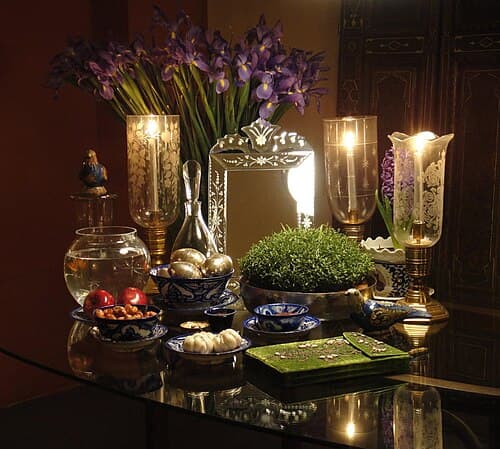
Iran
The seven-S Nowruz table — Iran's ancient New Year blessing ritual arranging seven symbolic items to invite spring's full abundance.

