
85
General
🪔
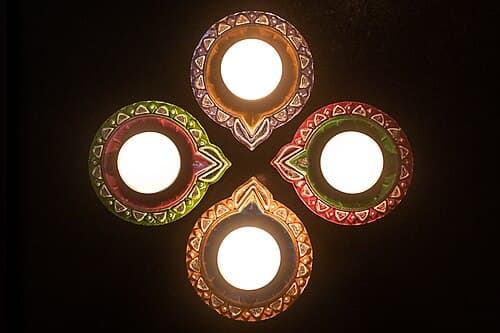
Diya Lamp
India
The clay oil lamp is the most fundamental symbol of the dispelling of darkness and the inviting of divine light into one's life.
4.8Learn more →

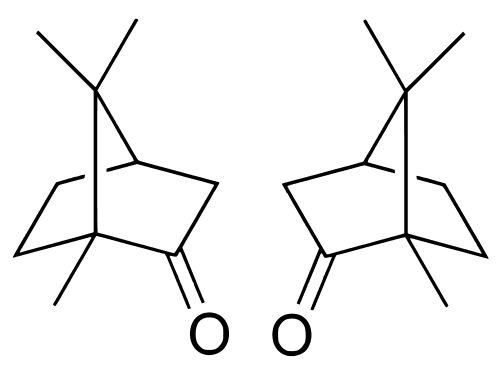
Camphor burned in prayer rituals purifies the atmosphere, burns completely without residue symbolizing the ego's dissolution, and is the most complete offering to the divine.
Camphor (kapoor or karpooram) holds a position of unique honor in Hindu and Buddhist ritual because of one extraordinary physical property: when burned, it leaves no residue. Pure camphor combusts completely and perfectly, leaving not a trace of ash or material behind. This property makes it the supreme symbol of the ego's complete dissolution in the divine — a metaphor for the ideal human life, fully offered and fully consumed in service to the sacred, leaving nothing behind for the sake of personal gain or legacy. This theological profundity makes camphor burning not merely a purification act but a philosophical statement made in fire.
In Hindu puja, the aarti (waving of light) performed at the culmination of every worship ceremony typically uses camphor as the primary light source. The devotee holds a camphor flame and waves it in clockwise circles before the deity, then brings it to all those present, who pass their hands over the flame and touch their faces — receiving the deity's blessing through the medium of the purified camphor light. This intimate transmission of divine light through touch is one of the most emotionally resonant moments of Hindu worship, and camphor's role at its center makes it irreplaceable.
Beyond its ritual function, camphor's sharp, medicinal fragrance is believed to drive away negative entities and purify the electromagnetic environment of a space. Scientific analysis confirms that camphor's volatile compounds are strongly antibacterial, antifungal, and insecticidal — making camphor burning a practical disinfection method as well as a spiritual purification act. Placing camphor tablets in the corners of a room, burning camphor during illness in the household, and keeping camphor near food storage areas are all folk practices that have genuine sanitary merit independent of their spiritual framing.
The Camphor traces its origins to India, where it has been revered for generations as a powerful symbol of safety and spiritual defense. Historical records and oral traditions suggest that early versions of this charm appeared centuries ago, when communities in India first began attributing supernatural qualities to objects drawn from their natural and spiritual environment.
Over time, the Camphor evolved from a regional folk object into a widely recognized talisman. Traders, travelers, and migrants carried it across borders, introducing it to new cultures that often adopted and adapted it to fit their own belief systems. Today it is found in india, nepal, sri lanka and beyond, each culture adding its own layer of meaning and ritual to the charm's enduring legacy.
In its homeland of India, the Camphor occupies a revered place in both daily life and ceremonial practice. It is not merely decorative — it is woven into the fabric of cultural identity, appearing in celebrations, rites of passage, and household traditions that have been passed down through generations.
Beyond India, the Camphor has gained recognition in india, nepal, sri lanka and other regions, where it is valued for its symbolic connection to spiritual guardianship. Scholars of material culture and anthropologists note that charms like the Camphor serve a dual psychological function: they provide a tangible focus for hope and intention, and they connect their owners to a living cultural tradition that transcends individual experience.
To get the most from your Camphor, keep it in a place where you will see it daily — on a desk, nightstand, or near your front entrance. Physical proximity reinforces the intention behind the charm and serves as a regular reminder of your goals.
Traditional practice recommends handling the charm with clean hands and respectful intention. Many practitioners in India advise setting a clear purpose when you first acquire the charm: hold it, state your wish or goal silently or aloud, and then place it in its chosen position. Periodically cleansing the charm — by passing it through incense smoke, placing it under moonlight, or simply wiping it with a clean cloth — is believed to refresh its energy.
If the charm is meant to be worn (as jewelry or a carried token), keep it close to your body throughout the day. If it is a household object, place it in the area of your home most associated with its purpose — for example, near a workspace for success charms, or by the bed for love and health charms.
The complete offering of self to the divine, purification of space from negative entities, the spiritual light of the divine revealed and shared with all present, and the ego dissolved without residue.
Burn camphor tablets in a camphor lamp (kapoor aarti lamp) or in a fireproof container during daily puja. Wave the flame clockwise in circles before the deity during aarti. Bring the flame to family members after the puja to receive blessings. Place camphor tablets in corners of rooms, wardrobes, and storage spaces for purification. Burn camphor when entering a new home or business to clear previous energetic residue.
The world's largest camphor tree is in Japan, where the camphor tree (Cinnamomum camphora) has been considered sacred for millennia — the famous Kusunoki at Kashima Shrine is over 1,000 years old and is designated a 'Special Natural Monument.' In Japan, as in India, camphor trees are believed to be dwelling places of powerful spirits, connecting the two traditions' reverence for the tree across vastly different cultural contexts.
Yes. Ritual camphor (bhimseni kapoor or puja kapoor) is the purest natural form, derived from the camphor tree, and burns cleanly with almost no residue. Industrial or synthetic camphor (naphthalene-based) is chemically different and should never be used in religious rituals, as it does not burn cleanly and its fumes are more toxic. Always use edible-grade or temple-grade natural camphor for puja purposes.
Camphor (C10H16O) is a terpenoid compound that undergoes complete sublimation when burned — it converts directly from solid to gas and then combusts fully into carbon dioxide and water vapor, leaving no solid residue. This complete combustion requires purity: impure camphor leaves residue. The purer the camphor, the cleaner the burn, which is why the purest grades are reserved for highest ritual purposes.
Yes. Rotating camphor flame around a person in a counter-clockwise motion is used in several South Indian traditions to remove negative energy, evil eye, and spiritual blockages. This practice (called dristi parihara in Tamil tradition) uses the camphor's purifying combustion to absorb and destroy whatever negativity it encounters as it circles the person. The ritual ends with the camphor being extinguished in salt water or buried.
The Camphor originates from India, where it has been used as a protection charm for centuries. Its influence has since spread to india, nepal, sri lanka and many other regions worldwide.
Burn camphor tablets in a camphor lamp (kapoor aarti lamp) or in a fireproof container during daily puja. Wave the flame clockwise in circles before the deity during aarti. Bring the flame to family members after the puja to receive blessings. Place camphor tablets in corners of rooms, wardrobes, and storage spaces for purification. Burn camphor when entering a new home or business to clear previous energetic residue. For best results, set a clear intention when you first acquire the charm and keep it in a prominent, respectful location.
Yes, giving a Camphor as a gift is considered a generous and meaningful gesture in most traditions. In India, gifted charms are often believed to carry even stronger energy than those purchased for oneself, because they come with the goodwill and intention of the giver.
Many practitioners recommend periodically cleansing your Camphor to refresh its energy. Common methods include passing it through incense smoke, placing it in moonlight overnight, rinsing it under clean water (if the material allows), or simply wiping it down with a clean cloth while setting a fresh intention.
While the Camphor originated in the cultural traditions of India, it is not exclusive to any single religion. It has been adopted and adapted by people of many faiths and backgrounds, each bringing their own interpretation to its symbolism and use.
India
The clay oil lamp is the most fundamental symbol of the dispelling of darkness and the inviting of divine light into one's life.

India
Turmeric root is a sacred healing spice used as a talisman for purification, protection, and auspicious new beginnings.

India
The elephant-headed Hindu deity Ganesha is the remover of obstacles and the lord of new beginnings.
India
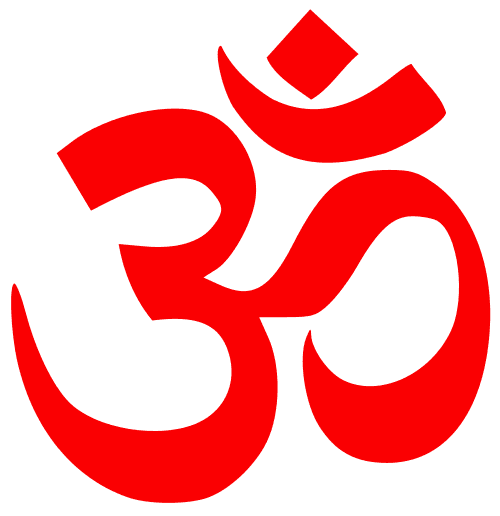
The primordial sound of the universe, Om is the most sacred symbol in Hinduism, Buddhism, and Jainism.

