
85
General
🪔
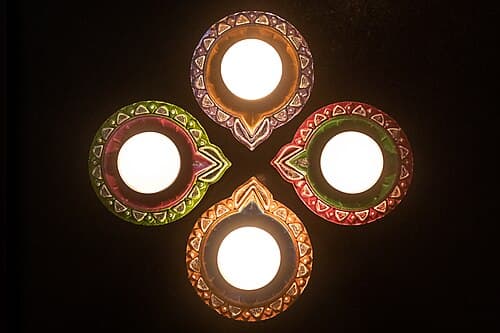
Diya Lamp
India
The clay oil lamp is the most fundamental symbol of the dispelling of darkness and the inviting of divine light into one's life.
4.8Learn more →


The world's first widely used currency, cowrie shells have been symbols of wealth, fertility, and divine feminine power across Asia for millennia.
Cowrie shells (Cypraea moneta and related species) were the world's most widespread natural currency before the minting of coins, used from Africa to China to the Americas in trade systems that predate recorded history by thousands of years. In South Asia, they circulated as currency into the 20th century in some rural areas, and their association with money, prosperity, and the goddess Lakshmi remains deeply embedded in folk practice. The shell's form — smooth, oval, and with a toothed slit — has led to universal associations with the feminine, the womb, fertility, and birth across dozens of cultures independently.
In Hindu practice, cowrie shells are prominently associated with Lakshmi, and a pattern of 16 cowrie shells is used in the Laxmi puja that forms the central ritual of Diwali. The shells are cast like dice in divination practices, thrown in sets of 16 to answer questions about fortune and future, a practice called cowrie divination that connects South Asia to virtually identical practices in West Africa and the African diaspora religions. This transcultural use of cowrie shells as both money and spiritual objects is one of the most remarkable examples of universal human symbolic consensus.
As personal talismans, cowrie shells are strung on red or gold thread and worn as bracelets or necklaces, placed in money boxes and safes to multiply wealth, and sewn into clothing and accessories as protective decoration. A cowrie shell placed in a baby's crib protects the child from the evil eye. Fishermen across the Indian Ocean coastline carry cowrie shells for protection at sea. In tantric practice, the cowrie is used on altars as a representation of the goddess and as a vessel for sacred offerings.
Wealth, fertility, divine feminine power, protection on water, and the multiplicative energy of money attracting more money.
Place seven cowrie shells in a small red pouch and keep in your wallet or safe for wealth attraction. String cowrie shells in a bracelet for personal protection. Keep cowrie shells on the Lakshmi altar, especially during Diwali. Place one cowrie shell under the mattress of a pregnant woman for fertility protection.
The Hindi and Urdu word 'kaudi' (cowrie shell) appears in the expression 'ek kaudi nahi' (not even a cowrie shell) — a colloquial phrase for being completely broke that has survived in everyday speech even though cowrie shells stopped circulating as actual currency generations ago.
Numbers associated with Lakshmi are preferred: 1 (unity), 5 (the five elements), 7 (seven seas of abundance), 9 (Navami, completion), and 16 (the number used in the classic Lakshmi puja). Seven shells in a red pouch is perhaps the most commonly recommended configuration for personal wealth attraction.
Shells found naturally on a beach during an auspicious occasion are considered especially potent, carrying the energy of the ocean's abundance. Store-bought shells are effective after proper cleansing in saltwater and sunlight. Shells that were previously used in jewelry may carry others' energy and should be cleansed thoroughly before use as talismans.
Yes. The traditional 16-cowrie divination (used in India as well as in Yoruba traditions) involves throwing all 16 shells and reading how many land opening-side up versus down. This requires learning the specific pattern meanings. Even a simpler 3-shell or 5-shell toss, with intentions clearly stated, is used as a folk oracle.
India
The clay oil lamp is the most fundamental symbol of the dispelling of darkness and the inviting of divine light into one's life.

India
The nazar battu is India's traditional evil eye repellent, a black effigy or symbol that absorbs jealous glances and protects its bearer.

Sri Lanka
The carved semicircular moonstone at temple entrances depicts the journey of the soul from worldly desire to liberation.

India
The pot filled with sacred water and crowned with a coconut and mango leaves represents the universe and invites the gods to reside within.

