
117
Protection
🗿
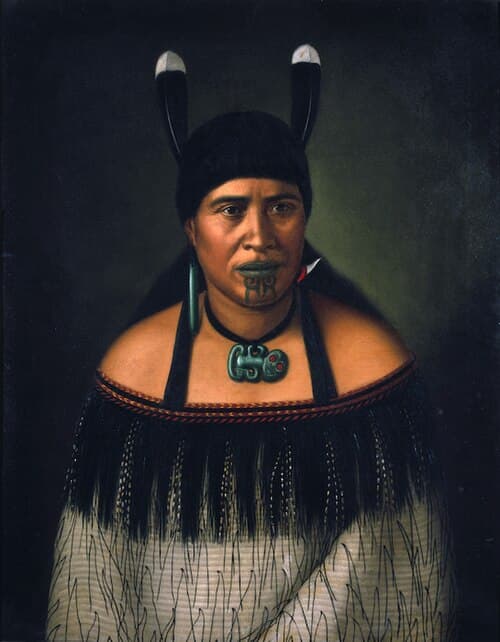
Maori Hei-tiki
New Zealand
The sacred humanoid pendant of the Maori, worn as a powerful charm of ancestral protection, fertility, and good fortune.
4.9Learn more →


The intertwining double twist of Maori carving, gifted as a charm of enduring bonds, loyalty, and two paths forever joined.
The Pikorua — the Maori double twist or triple twist — is among the most emotionally resonant of all New Zealand pendants. Its form depicts two or more paths that weave together, separate, and rejoin in a continuous flowing curve. The symbol expresses the Maori understanding of relationship: that two individuals can walk their own distinct paths through life while remaining fundamentally connected, returning to each other through every turn and transition. It is the charm of love that survives absence, of friendship that endures distance, and of bonds forged so deeply they persist beyond physical separation.
The double twist (often called the 'twist' or 'infinity twist') represents two individuals sharing a life journey, making it the pre-eminent gift between partners and close friends. The triple twist extends this to encompass family, community, or the three-way bond of past, present, and future generations. Traditionally carved in pounamu or bone, the fluid, interlocking curves required extraordinary skill from the carver — the charm itself embodied the patience and dedication it symbolised.
Giving a Pikorua is a declaration of lasting loyalty. In New Zealand it is a traditional engagement and wedding gift. It is also given at farewells — when friends or family emigrate, when a child leaves home, or when partners must be separated — as a physical promise that the paths will rejoin. The charm's flowing form makes it one of the most visually beautiful of all Pacific pendants.
The Maori Twist (Pikorua) traces its origins to New Zealand, where it has been revered for generations as a powerful symbol of romantic devotion and emotional connection. Historical records and oral traditions suggest that early versions of this charm appeared centuries ago, when communities in New Zealand first began attributing supernatural qualities to objects drawn from their natural and spiritual environment.
Over time, the Maori Twist (Pikorua) evolved from a regional folk object into a widely recognized talisman. Traders, travelers, and migrants carried it across borders, introducing it to new cultures that often adopted and adapted it to fit their own belief systems. Today it is found in new zealand and beyond, each culture adding its own layer of meaning and ritual to the charm's enduring legacy.
In its homeland of New Zealand, the Maori Twist (Pikorua) occupies a revered place in both daily life and ceremonial practice. It is not merely decorative — it is woven into the fabric of cultural identity, appearing in celebrations, rites of passage, and household traditions that have been passed down through generations.
Beyond New Zealand, the Maori Twist (Pikorua) has gained recognition in new zealand and other regions, where it is valued for its symbolic connection to romantic fulfillment. Scholars of material culture and anthropologists note that charms like the Maori Twist (Pikorua) serve a dual psychological function: they provide a tangible focus for hope and intention, and they connect their owners to a living cultural tradition that transcends individual experience.
To get the most from your Maori Twist (Pikorua), keep it in a place where you will see it daily — on a desk, nightstand, or near your front entrance. Physical proximity reinforces the intention behind the charm and serves as a regular reminder of your goals.
Traditional practice recommends handling the charm with clean hands and respectful intention. Many practitioners in New Zealand advise setting a clear purpose when you first acquire the charm: hold it, state your wish or goal silently or aloud, and then place it in its chosen position. Periodically cleansing the charm — by passing it through incense smoke, placing it under moonlight, or simply wiping it with a clean cloth — is believed to refresh its energy.
If the charm is meant to be worn (as jewelry or a carried token), keep it close to your body throughout the day. If it is a household object, place it in the area of your home most associated with its purpose — for example, near a workspace for success charms, or by the bed for love and health charms.
Enduring bonds between individuals, loyalty through separation, the beautiful weaving of two or more lives, and the promise of reunion.
Give a Pikorua as a gift to seal a bond of love, friendship, or family loyalty — ideally at a significant transition point. Wear your own as a reminder of those you love across any distance. If separated from a loved one, hold the charm during moments of missing them and trace the intertwining paths with your finger.
Some Pikorua designs incorporate a third strand — the triple twist — which in Maori tradition can represent the joining of past, present, and future, or the bond between child, parent, and grandparent. A triple twist pendant given at a birth ties the baby to three generations simultaneously.
It is explicitly for any deep bond — friendship, family, or romantic love. The double twist represents any two people who choose to weave their lives together, regardless of the nature of their relationship.
This is a beautiful practice — matching pendants worn by both partners reinforce the shared meaning. However, it is equally meaningful as a one-way gift from one person to another as a declaration of lasting loyalty.
While pounamu is traditionally most powerful when gifted, buying your own Pikorua is perfectly acceptable. Many people purchase one as a self-directed intention to call lasting, loyal love and friendship into their lives.
The Maori Twist (Pikorua) originates from New Zealand, where it has been used as a love charm for centuries. Its influence has since spread to new zealand and many other regions worldwide.
Give a Pikorua as a gift to seal a bond of love, friendship, or family loyalty — ideally at a significant transition point. Wear your own as a reminder of those you love across any distance. If separated from a loved one, hold the charm during moments of missing them and trace the intertwining paths with your finger. For best results, set a clear intention when you first acquire the charm and keep it in a prominent, respectful location.
Yes, giving a Maori Twist (Pikorua) as a gift is considered a generous and meaningful gesture in most traditions. In New Zealand, gifted charms are often believed to carry even stronger energy than those purchased for oneself, because they come with the goodwill and intention of the giver.
Many practitioners recommend periodically cleansing your Maori Twist (Pikorua) to refresh its energy. Common methods include passing it through incense smoke, placing it in moonlight overnight, rinsing it under clean water (if the material allows), or simply wiping it down with a clean cloth while setting a fresh intention.
While the Maori Twist (Pikorua) originated in the cultural traditions of New Zealand, it is not exclusive to any single religion. It has been adopted and adapted by people of many faiths and backgrounds, each bringing their own interpretation to its symbolism and use.
New Zealand
The sacred humanoid pendant of the Maori, worn as a powerful charm of ancestral protection, fertility, and good fortune.

New Zealand
The unfurling silver fern spiral of Maori art, worn as a charm of new beginnings, growth, and the continuous renewal of life.

Brazil
The stone of unconditional love, carried as the most universal charm for opening the heart to romantic love, self-love, and compassionate healing.

