
127
General
🪢
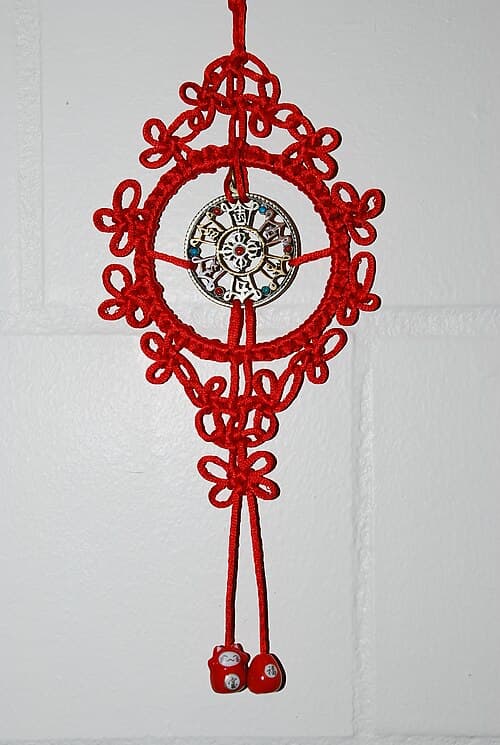
Chinese Knot
China
Chinese decorative knots are intricate single-cord creations representing unity, good fortune, and the endless continuity of blessings — each pattern carries its own specific meaning.
4.3Learn more →


The red string bracelet is one of East Asia's most widely worn protective charms, believed to ward off evil, bind fated relationships, and carry the protective power of the color red.
The red string (hong xian) holds a remarkably diverse set of meanings and uses across East Asian cultures, united by the shared symbolism of red as a color of protection, vitality, and the repelling of malevolent forces. In Chinese folk belief, the red string is most powerfully associated with the Moon God Yue Lao, who ties an invisible red string around the ankles of those who are fated to meet and marry. This 'red thread of fate' (Yue Lao de hong xian) connects soul mates across any distance, any obstacles, and even across multiple lifetimes — the string can stretch or tangle but never break. The image of an invisible red string connecting people destined for each other has become one of East Asia's most enduring romantic metaphors.
In Japanese folklore, the same concept (en no ito, the thread of fate) exists but connects through the pinky finger rather than the ankle. Japanese matchmaking traditions are deeply intertwined with this image, and shrines dedicated to Yue Lao (known in Japan as Tsukisama or the love deity at Tanabata festivals) are visited by those seeking romantic connections. The Korean version (빨간 실, bbalgan sil) similarly emphasizes fate and connection, with the string binding the ring finger.
Beyond romantic fate, wearing a red string bracelet is considered a general protective practice across all these cultures. The red color actively repels evil spirits and the evil eye. In Chinese tradition, red strings are given to newborns to protect them during their vulnerable early months, and to children on their zodiac year (ben ming nian), when they are considered especially susceptible to negative influences. The string should be tied by someone who loves the wearer, as the love embedded in the tying activates the protection.
The binding of fated connections, protection from evil and the evil eye, the vitality and fire of the color red applied as a continuous personal shield, and the love that ties the giver to the receiver.
Have someone who loves you tie the red string around your left wrist with three, six, or nine knots (all lucky numbers). The string should be made of silk or pure wool red thread. Wear it continuously; if it breaks naturally, it has absorbed its full load of negative energy and should be replaced. Do not cut it — let it break or untie naturally.
The Japanese legend of the red thread was adapted into a global internet meme in the early 2000s, helping spread the concept of the 'red thread of fate' far beyond East Asian cultural communities and making it one of the few traditional Asian folk concepts to achieve genuine global recognition purely through online storytelling.
Tradition specifies that a loved one ties it for you, as the love and good intention in the tying activates the protective power. Self-tying is widely practiced and generally considered acceptable, especially with the clear intention of self-protection, but the relational version is considered more powerful.
A breaking red string is widely interpreted positively: the string absorbed a significant negative energy or deflected a harmful event that was headed toward the wearer. Replace it promptly. Never repair a broken luck string — the broken piece has completed its protective purpose and should be buried or burned, not knotted back together.
In most Chinese and Japanese traditions, the left wrist is preferred, as the left side is considered the receiving side (closest to the heart in Chinese meridian theory). Some traditions specify the left ankle. Korean practice and some Kabbalah-influenced versions (which use the same red string symbolism) also use the left wrist.
China
Chinese decorative knots are intricate single-cord creations representing unity, good fortune, and the endless continuity of blessings — each pattern carries its own specific meaning.

Japan
Omamori are sacred Japanese amulets sold at Shinto shrines and Buddhist temples, offering specific divine blessings for love, safety, success, health, or any of dozens of specialized needs.

South Korea
Norigae are exquisite Korean ornamental pendants that adorned the hanbok of aristocratic women, carrying complex auspicious symbols for love, fertility, longevity, and protection.

China
Shuang Xi — the Double Happiness character — is China's most recognized symbol of marital joy, formed by writing the character for 'happiness' twice in a single united form.

