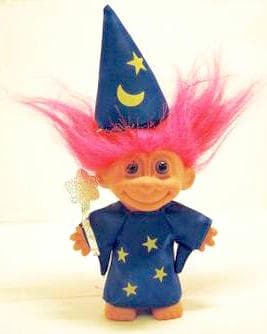
The troll doll was created in 1959 by Danish woodcutter Thomas Dam, who carved the first one from wood as a birthday gift for his daughter. Unable to afford a toy for her, he created a figure inspired by Scandinavian folk tales of forest trolls — creatures that, despite their wild appearance, were considered lucky rather than threatening by many Nordic peoples. Dam's creation was so popular that a local shopkeeper began selling them, and within a few years, 'Dam Things' troll dolls had become a global toy phenomenon.
In the 1960s, troll dolls became one of the first major toy crazes, with millions sold across America and Europe. College students kept them as good luck charms on exam days; gamblers placed them on slot machines and poker tables. The dolls' exuberant, impossible hair (often made of nylon in shocking colors) and their wide, permanent grins made them inherently cheerful objects that seemed to broadcast positive energy.
The Nordic troll of folk tradition was a complex figure — capable of both help and harm, associated with the hidden forces of nature, sometimes wise and sometimes foolish. As a lucky charm, the troll doll captures the lucky, beneficial face of troll mythology: the wild forest spirit that brings fortune to those who treat it well. It remains in production today and has appeared in two major animated films.