

292
Protection
🎨
Australian Aboriginal Dot Painting Charm
Australia
A sacred art form encoding Dreamtime stories and ancestral wisdom as a talisman of connection and guidance.
4.7Learn more →

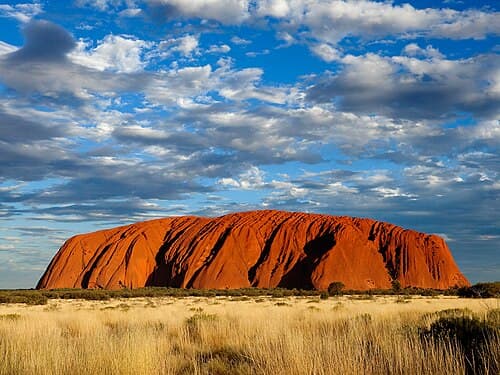
A sacred sandstone pebble from Australia's spiritual heartland, carried as a charm of grounding, ancestral power, and transformation.
Uluru — rising 348 metres from the flat red desert of the Northern Territory — is the physical and spiritual centre of Australia for the Anangu people, whose connection to this site stretches back at least 10,000 years. The rock is composed of arkose sandstone stained deep red by iron oxide, and it changes colour dramatically through the day, glowing orange at dawn and violet at dusk. The Anangu hold Uluru as a living being, threaded with Dreaming paths called Tjukurpa that govern law, ceremony, and relationship. A small stone that echoes Uluru's distinctive red hue (never taken from the site itself, where removal is both illegal and spiritually harmful) carries the archetype of this sacred centre.
Uluru-inspired charms are typically crafted from red ochre sandstone or laterite sourced ethically from other Australian locations, then shaped and polished to evoke the monument's form. The Anangu teach that Uluru grounds and centres those who approach it with respect, and this quality extends to its symbolic representatives. Healers and therapists keep such charms to anchor scattered energy; travellers carry them to remain rooted in identity while far from home.
The rock is also associated with profound transformation — thousands of visitors report inexplicable emotional releases and life-changing realisations in its presence. A charm aligned with Uluru invites that transformative energy into everyday settings, prompting the holder to release what no longer serves and stand firm in their deepest truth.
Spiritual grounding, ancestral connection, transformative power, and the stability of the sacred centre within and around you.
Hold the stone in both hands during periods of anxiety or disorientation and press it firmly against the earth or floor beneath you. Breathe slowly and visualise roots extending downward. Keep it on a natural surface rather than a shelf — it connects best when touching wood, soil, or stone.
Tourists once routinely took pebbles from Uluru as souvenirs, only to mail them back years later accompanied by letters describing bad luck and misfortune — the park receives hundreds of returned rocks annually, a phenomenon rangers call 'sorry rocks.'
Yes, provided it is not actually taken from Uluru or Kata Tjuta (which is illegal under Australian law and deeply disrespectful to the Anangu). Ethical charms are crafted from similar sandstone sourced elsewhere and sold with the blessing of Indigenous artisans.
The Anangu teach that Uluru's stones carry powerful spiritual energy that does not belong in private hands. Many who take them report a run of misfortune — though sceptics suggest this is guilt-driven confirmation bias, the Anangu's wishes deserve respect regardless.
Many Australians living abroad keep an Uluru-inspired stone as a literal piece of home. Its grounding quality helps maintain a sense of identity and belonging even across great distances.
Australia
A sacred art form encoding Dreamtime stories and ancestral wisdom as a talisman of connection and guidance.

Mexico
The volcanic glass of truth and protection, carried as a powerful charm for revealing hidden truths, cutting karmic ties, and shielding against negative energy.

Brazil
The iron-rich stone of grounding and strength, carried as a charm for earthing scattered energy, building physical resilience, and standing firm in one's power.

