

45
Protection
🔵
Turquoise
Iran
The ancient sky-stone of the world's oldest cultures, worn as a charm of protection, communication, and the sacred turquoise bridge between earth and heaven.
4.8Learn more →

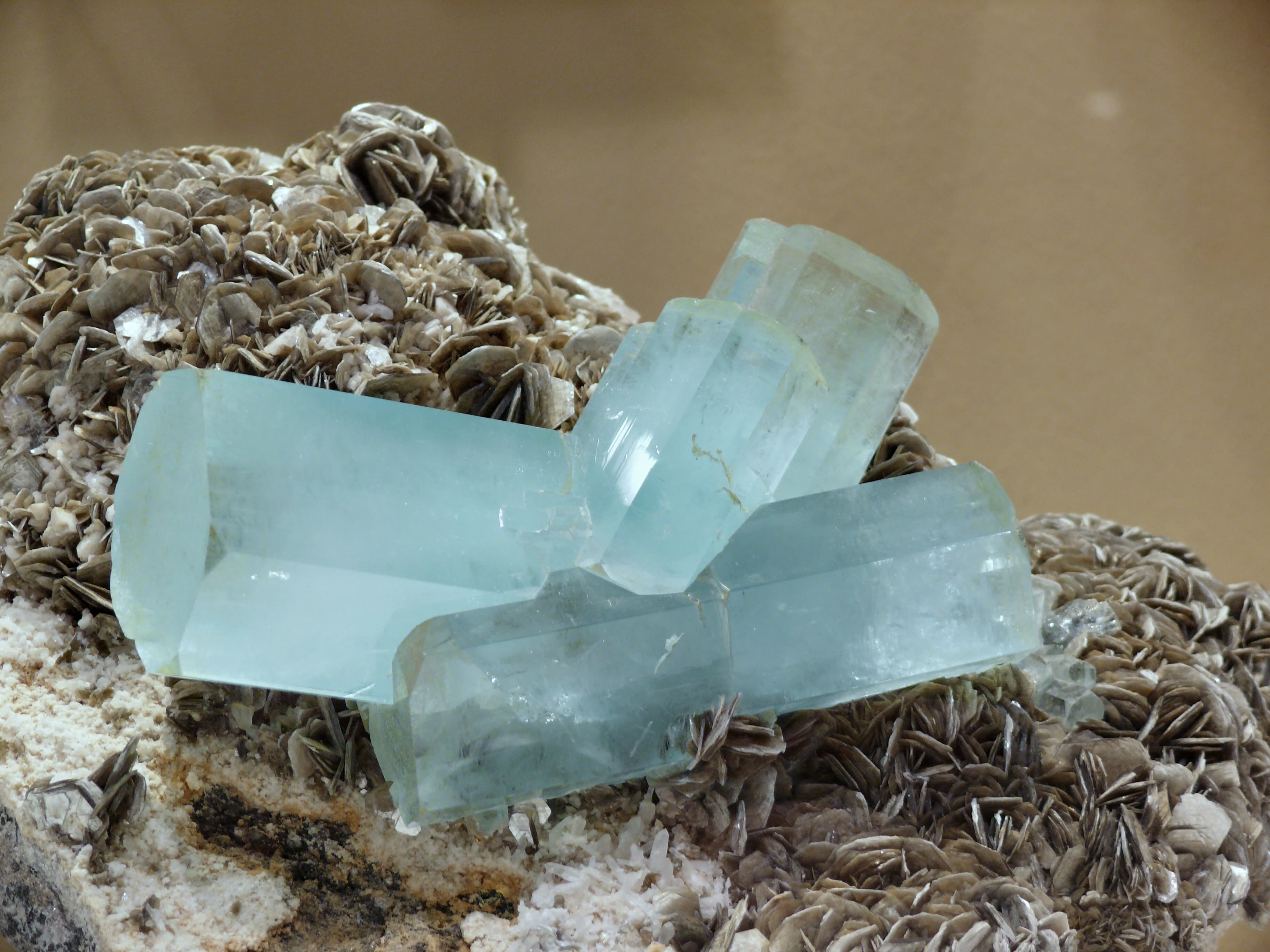
The serene blue-green beryl of the sea, carried as a charm for clear communication, emotional calm, courageous truth, and safe passage through any life crossing.
Aquamarine is a blue-green variety of beryl (the same mineral family as emerald), its colour caused by traces of iron in the crystal structure. Brazil's Minas Gerais state produces the finest and largest specimens, including the famous Dom Pedro aquamarine — at 26 kg the world's largest faceted gemstone — now displayed at the Smithsonian. Pakistan's mountainous Gilgit-Baltistan region produces gems of exceptional clarity and deep blue colour, while Nigeria and Madagascar contribute commercial-grade material.
The stone's name comes from the Latin aqua marina — 'water of the sea' — and its association with the ocean is ancient and universal. Roman sailors carried aquamarine carvings of Neptune as protection against shipwreck and storm; the stone was called the 'sailor's stone' across the Mediterranean world. Greek mythology linked it to the Sirens' underwater treasure. In medieval Europe, aquamarine was used in scrying bowls filled with water, the stone's presence believed to enhance the water's revelatory powers.
Aquamarine's primary modern associations are with clear, courageous communication — particularly the communication of difficult truths, sensitive feelings, or long-suppressed words. It is the throat chakra stone that helps one speak from the heart with calm confidence rather than defensive bluntness or emotional overwhelm. It is also associated with emotional healing, the release of grief and fear, and the kind of still, clear perception that comes when turbulent waters settle to mirror-like smoothness.
The Aquamarine traces its origins to Brazil, where it has been revered for generations as a powerful symbol of healing and vitality. Historical records and oral traditions suggest that early versions of this charm appeared centuries ago, when communities in Brazil first began attributing supernatural qualities to objects drawn from their natural and spiritual environment.
Over time, the Aquamarine evolved from a regional folk object into a widely recognized talisman. Traders, travelers, and migrants carried it across borders, introducing it to new cultures that often adopted and adapted it to fit their own belief systems. Today it is found in brazil, pakistan, nigeria and beyond, each culture adding its own layer of meaning and ritual to the charm's enduring legacy.
In its homeland of Brazil, the Aquamarine occupies a revered place in both daily life and ceremonial practice. It is not merely decorative — it is woven into the fabric of cultural identity, appearing in celebrations, rites of passage, and household traditions that have been passed down through generations.
Beyond Brazil, the Aquamarine has gained recognition in brazil, pakistan, nigeria and other regions, where it is valued for its symbolic connection to physical and mental wellbeing. Scholars of material culture and anthropologists note that charms like the Aquamarine serve a dual psychological function: they provide a tangible focus for hope and intention, and they connect their owners to a living cultural tradition that transcends individual experience.
To get the most from your Aquamarine, keep it in a place where you will see it daily — on a desk, nightstand, or near your front entrance. Physical proximity reinforces the intention behind the charm and serves as a regular reminder of your goals.
Traditional practice recommends handling the charm with clean hands and respectful intention. Many practitioners in Brazil advise setting a clear purpose when you first acquire the charm: hold it, state your wish or goal silently or aloud, and then place it in its chosen position. Periodically cleansing the charm — by passing it through incense smoke, placing it under moonlight, or simply wiping it with a clean cloth — is believed to refresh its energy.
If the charm is meant to be worn (as jewelry or a carried token), keep it close to your body throughout the day. If it is a household object, place it in the area of your home most associated with its purpose — for example, near a workspace for success charms, or by the bed for love and health charms.
Clear and courageous communication, emotional calm, the release of grief, safe passage through difficult crossings, and the serene clarity of settled deep waters.
Wear at the throat to support honest, emotionally intelligent communication. Hold during difficult conversations where you need to express something painful or true with calm conviction. Place near water in your environment — beside a bowl of water, near a fish tank, or in a bathroom — to amplify its calming aquatic energy.
The Dom Pedro aquamarine, carved by German gem sculptor Bernd Munsteiner from a 45 kg rough crystal, weighs 10,363 carats (2.1 kg) and stands 36 cm tall. Munsteiner spent months carving it into an abstract obelisk form with internal reflections, creating what many consider the greatest gemstone sculpture in history.
Both are blue gemstones used interchangeably in jewellery, but they are different minerals. Aquamarine is beryl; topaz is a silicate. Most blue topaz is irradiated colourless topaz; natural blue topaz is extremely rare. Aquamarine's natural colour and beryl composition give it distinct metaphysical qualities associated with water and truth.
It is the traditional gemstone for the 19th wedding anniversary and the modern birthstone for March. Its associations with clear communication and the calming of troubled waters make it particularly appropriate for relationship milestones.
Its calming, still-water energy is particularly helpful for anxiety states characterised by emotional turbulence or communication fears. It helps settle the nervous system and encourages the grounded, centred perspective from which clear action becomes possible.
The Aquamarine originates from Brazil, where it has been used as a health charm for centuries. Its influence has since spread to brazil, pakistan, nigeria and many other regions worldwide.
Wear at the throat to support honest, emotionally intelligent communication. Hold during difficult conversations where you need to express something painful or true with calm conviction. Place near water in your environment — beside a bowl of water, near a fish tank, or in a bathroom — to amplify its calming aquatic energy. For best results, set a clear intention when you first acquire the charm and keep it in a prominent, respectful location.
Yes, giving a Aquamarine as a gift is considered a generous and meaningful gesture in most traditions. In Brazil, gifted charms are often believed to carry even stronger energy than those purchased for oneself, because they come with the goodwill and intention of the giver.
Many practitioners recommend periodically cleansing your Aquamarine to refresh its energy. Common methods include passing it through incense smoke, placing it in moonlight overnight, rinsing it under clean water (if the material allows), or simply wiping it down with a clean cloth while setting a fresh intention.
While the Aquamarine originated in the cultural traditions of Brazil, it is not exclusive to any single religion. It has been adopted and adapted by people of many faiths and backgrounds, each bringing their own interpretation to its symbolism and use.
Iran
The ancient sky-stone of the world's oldest cultures, worn as a charm of protection, communication, and the sacred turquoise bridge between earth and heaven.

Sri Lanka
The ethereal stone of the feminine divine, worn as a charm of intuition, emotional balance, new beginnings, and the luminous mystery of lunar cycles.

