
5
Protection
🖐️
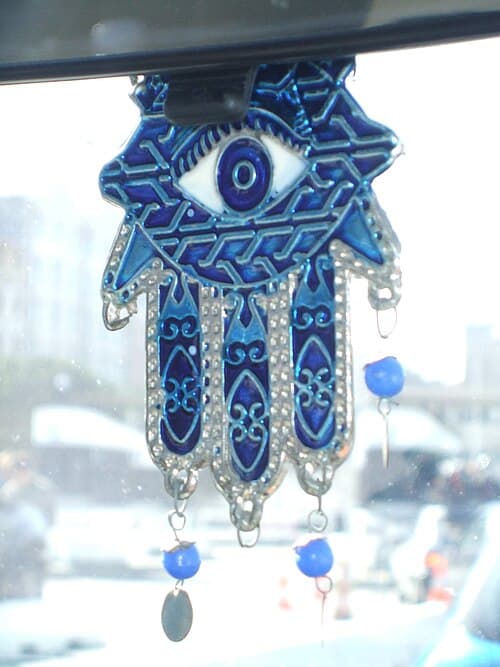
Hamsa Hand
Middle East
An open palm amulet warding off the evil eye across Middle Eastern and North African cultures.
4.9Learn more →

South Asia
7 charms from this country
Pakistan's charm traditions draw from Islam, Sufi mysticism, and ancient South Asian folk practice. The hand of Fatima (hamsa) appears as a protective amulet throughout Pakistan, particularly in Sindhi and Balochi embroidery traditions. The evil eye (nazar) is taken extremely seriously — blue glass eye beads are hung above doorways, from vehicles, and in cradles to deflect the malicious gaze.
Tasbih prayer beads are carried by millions as both a devotional practice and a calming talisman. The crescent and star of the national flag reflect Islamic identity, and these symbols appear on household amulets. In Sufi shrines across the country, devotees tie colorful threads to lattice gates and leave offerings in hopes of having prayers answered.
Middle East
An open palm amulet warding off the evil eye across Middle Eastern and North African cultures.
Middle East / North Africa
The sacred open palm named for the Prophet Muhammad's daughter, a cornerstone of Islamic protective symbolism.
India
The open palm amulet protects against the evil eye and channels divine blessing, appearing across Hindu, Muslim, and Jewish traditions throughout South Asia.

Middle East
The crescent moon and star, a symbol of Islamic faith found on mosques, flags, and protective amulets across the Muslim world.

Brazil
The serene blue-green beryl of the sea, carried as a charm for clear communication, emotional calm, courageous truth, and safe passage through any life crossing.

India
The blue-and-white eye amulet protects against the malicious gaze of envy, widely used across South Asian communities.
India
The nazar battu is India's traditional evil eye repellent, a black effigy or symbol that absorbs jealous glances and protects its bearer.

