
280
Protection
🔱
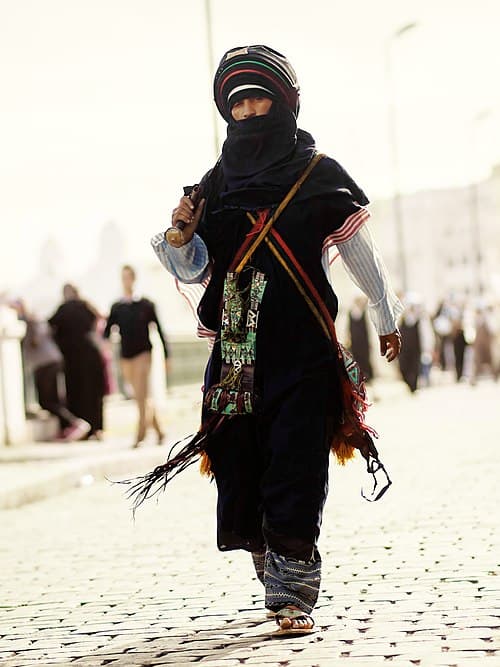
Tuareg Silver Pendant
Mali / Niger
Handcrafted silver jewelry of the Tuareg nomads — beautiful protective amulets encoding desert survival wisdom.
4.8Learn more →


Ancient geometric symbols woven into Berber carpets — each pattern a protective charm and map of the weaver's world.
The Amazigh (Berber) peoples of North and West Africa — from Morocco and Algeria to the Tuareg-related peoples of the Sahel — have woven protective geometric symbols into their textiles for thousands of years. Berber carpet weaving is a women's art: passed from mother to daughter, the geometric designs encode family history, prayers, and protective intentions in a visual language that is simultaneously universal (the same basic symbols appear across thousands of kilometers of Berber territory) and locally specific (each community has its own variations and additional symbols). The diamond, zigzag, cross, and central eye motif appear consistently across this vast territory as fundamental protective symbols.
The central symbol in Berber carpet protective work is often the eye — rendered as a diamond or rhombus with a central dot — which serves as protection against the evil eye (al-ayn). This symbol, woven into the center of a carpet or repeated throughout its field, creates a protective field in the space the carpet occupies: laying it in a home is believed to protect the household from envy, malicious intent, and spiritual attack. The zigzag border pattern represents water — a blessing and protection. Diamonds represent femininity and fertility. Crossed lines represent the four cardinal directions and the wholeness of the world.
The meditative process of weaving these patterns — hours of focused, repetitive work in which the weaver's prayers and intentions are quite literally woven into the fabric — makes finished Berber textiles genuinely charged objects. Many weavers report that their best work is done in a state of focused prayer, with each knot or weft-thread passage a deliberate act of intention. The resulting textiles carry this accumulated spiritual energy in a form that persists in any space where they are displayed or used.
Protection of the household from evil eye and spiritual attack, the blessing of feminine creative power channeled through focused craft, connection to vast weaving tradition spanning millennia, and the encoding of prayer in physical form.
Place a genuine Berber carpet with traditional patterns in a central living space to protect the household. The central eye or diamond motif should be positioned where it is most visible. Small Berber textile fragments with protective symbols can be used as wall hangings, prayer mats, or altar cloths.
Berber women traditionally kept their pattern repertoire secret from outsiders and even from women of other families, treating the specific combination of symbols as proprietary family knowledge. A woman's carpet could thus identify her family of origin, her marital status, and her community's specific traditions to anyone who knew how to read the code — a textile census as much as a protective charm.
Authentic hand-woven Berber carpets show slight irregularities in pattern and pile height consistent with handwork. The back of a genuine carpet reveals the hand-knotted or woven structure clearly. Mass-produced 'Berber style' machine carpets have perfectly uniform backs. Purchasing through cooperatives of Amazigh weavers — particularly in Morocco and Algeria — ensures authenticity.
In the weaving tradition itself, intention matters — the weaver's prayers and protective intentions activate the symbols. For the user, awareness and respect for the tradition are considered to enhance the symbols' efficacy. Many practitioners believe the symbols carry their power regardless, as they are encoded in the structure itself.
Red is the primary protective color in Berber tradition — it wards off evil eye, represents the life force of blood and fire, and marks important transition points in patterns. The extensive use of red in Berber carpets is not arbitrary but a structural element of the protective system encoded in the textile.
Mali / Niger
Handcrafted silver jewelry of the Tuareg nomads — beautiful protective amulets encoding desert survival wisdom.

West Africa
Islamic-influenced West African leather amulet containing Quranic verses for divine protection.
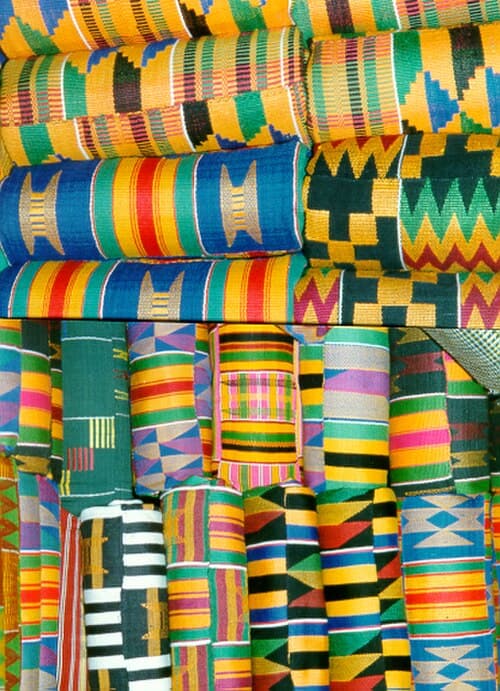
Ghana
Woven silk and cotton fabric of the Akan whose patterns encode proverbs, royal achievements, and ancestral pride.

