

244
Wealth
👑
Ashanti Golden Stool Symbol
Ghana
Symbol of the Ashanti Empire's sacred Golden Stool — repository of the nation's soul and ultimate emblem of royal power.
4.9Learn more →

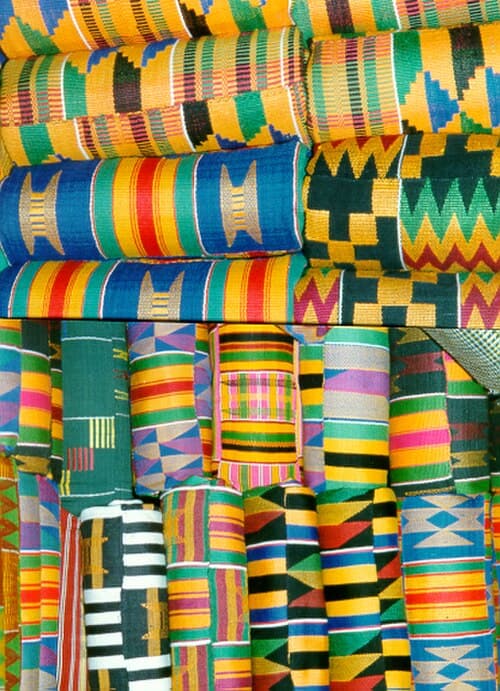
Woven silk and cotton fabric of the Akan whose patterns encode proverbs, royal achievements, and ancestral pride.
Kente cloth — known in Akan as nwentoma (woven cloth) — is one of Africa's most recognizable and globally celebrated textile traditions. Originating among the Asante and Ewe peoples of Ghana, kente is woven on narrow looms in strips of approximately 10-12 centimeters wide, then stitched together to create the broad, brilliantly colored cloth worn as royal regalia and ceremonial dress. The distinctive geometric patterns are not mere decoration — each named pattern (there are over 300 documented designs) encodes a specific proverb, historical event, or philosophical statement. Wearing kente is thus a form of wearing wisdom and heritage on one's body.
Historically, kente was exclusively royal cloth — only the Asantehene and paramount chiefs could commission and wear the most elaborate patterns. The finest kente was woven from imported silk thread, unraveled from European fabrics and rewoven into Asante patterns, a remarkable act of cultural transformation. Over time, access to kente broadened, and it became the cloth of celebration across Ghanaian society — worn at funerals, naming ceremonies, festivals, and graduations. In the 20th century, African American civil rights leaders adopted kente as a symbol of African heritage, and it became a globally recognized emblem of black cultural pride.
As a luck charm and spiritual object, pieces of kente cloth — or small fabric charms made from kente — carry the energy of the pattern they display. Choosing a kente pattern for its specific proverb meaning is a way of wearing an intention: a pattern meaning 'if you know the beginning, the end will not elude you' serves as a talisman for someone beginning a major project. The cloth itself, as a product of extraordinary labor and skill, embodies the Akan virtue of craftsmanship as a form of devotion.
Royal heritage and cultural pride, specific wisdom encoded in chosen patterns, the virtue of skilled craftsmanship, Akan identity and ancestral connection, and celebration of achievement.
Research the specific meaning of a kente pattern before wearing or displaying it, choosing one whose proverb aligns with your current intention or need. Wear kente at graduation ceremonies, important presentations, and cultural celebrations. Frame a piece for display in a home office as a wisdom talisman.
The most expensive and prestigious kente is called asasia, reserved exclusively for the Asantehene. Its patterns are state secrets — a new design is created for each Asantehene's reign and may not be copied. The Master Weaver responsible for the royal patterns holds one of the most privileged and closely guarded positions in Ashanti court life.
Asante kente is characterized by geometric patterns and bold, bright colors — typically with more gold and yellow. Ewe kente incorporates figurative elements (animals, tools, humans) into its patterns and uses a wider range of colors including earth tones. Ewe patterns are generally read as narrative, while Asante patterns are more abstract and proverb-based.
This is a frequently debated cultural question. Most Ghanaians welcome appreciation of kente by anyone who treats it with respect and knowledge. They distinguish between respectful wearing (understanding the tradition) and cultural appropriation (using it as costume without acknowledgment). Learning about the patterns before wearing is a meaningful sign of respect.
Numerous resources document kente pattern names and their associated proverbs. The Ghana National Cultural Centre in Kumasi and accredited Ghanaian cultural organizations publish guides. Reputable kente vendors, particularly those from weaving communities like Bonwire, can explain the meanings of their patterns.
Ghana
Symbol of the Ashanti Empire's sacred Golden Stool — repository of the nation's soul and ultimate emblem of royal power.

Ghana
The supreme Akan symbol meaning 'Except for God' — a declaration of divine supremacy and protection.

Ghana
Miniature brass figures used to weigh gold dust — encoding Akan proverbs and wisdom in tiny sculptural form.

