

246
Success
🐦
Sankofa Adinkra
Ghana
The Akan symbol of a bird looking backward — representing wisdom in learning from the past to build the future.
4.7Learn more →


The supreme Akan symbol meaning 'Except for God' — a declaration of divine supremacy and protection.
Gye Nyame is the most recognizable of all Adinkra symbols, born from the Akan people of Ghana and Ivory Coast. Its name translates from Twi as 'Except for God' or 'Only God,' an expression found throughout Akan oral tradition that acknowledges the absolute supremacy of the divine creator, Nyame, above all earthly forces and powers. The symbol itself is rendered as a stylized, elegant glyph that appears on everything from kente cloth and funeral shrouds to modern jewelry and tattoos. Its visual beauty has made it one of the most reproduced African symbols in the world.
Historically, Adinkra symbols were stamped onto cloth using carved calabash gourds and dye made from the bark of the badie tree. Worn especially at funerals and important ceremonies, Adinkra-stamped cloth communicated philosophical messages, proverbs, and spiritual intentions without words. Gye Nyame, with its proclamation of divine sovereignty, served as the ultimate statement of faith and humility before the creator. Wearing it was both an act of devotion and a shield, declaring that no human or spiritual adversary could prevail against one who stands under divine protection.
Today, Gye Nyame appears on Ghana's official seals, government buildings, and cultural institutions, making it not just a personal talisman but a symbol of national identity. For individuals, it serves as a powerful reminder to release anxiety and trust in a higher power, functioning as both spiritual protection and a philosophical anchor during difficult times.
The Gye Nyame Adinkra traces its origins to Ghana, where it has been revered for generations as a powerful symbol of safety and spiritual defense. Historical records and oral traditions suggest that early versions of this charm appeared centuries ago, when communities in Ghana first began attributing supernatural qualities to objects drawn from their natural and spiritual environment.
Over time, the Gye Nyame Adinkra evolved from a regional folk object into a widely recognized talisman. Traders, travelers, and migrants carried it across borders, introducing it to new cultures that often adopted and adapted it to fit their own belief systems. Today it is found in ghana, ivory coast and beyond, each culture adding its own layer of meaning and ritual to the charm's enduring legacy.
In its homeland of Ghana, the Gye Nyame Adinkra occupies a revered place in both daily life and ceremonial practice. It is not merely decorative — it is woven into the fabric of cultural identity, appearing in celebrations, rites of passage, and household traditions that have been passed down through generations.
Beyond Ghana, the Gye Nyame Adinkra has gained recognition in ghana, ivory coast and other regions, where it is valued for its symbolic connection to spiritual guardianship. Scholars of material culture and anthropologists note that charms like the Gye Nyame Adinkra serve a dual psychological function: they provide a tangible focus for hope and intention, and they connect their owners to a living cultural tradition that transcends individual experience.
To get the most from your Gye Nyame Adinkra, keep it in a place where you will see it daily — on a desk, nightstand, or near your front entrance. Physical proximity reinforces the intention behind the charm and serves as a regular reminder of your goals.
Traditional practice recommends handling the charm with clean hands and respectful intention. Many practitioners in Ghana advise setting a clear purpose when you first acquire the charm: hold it, state your wish or goal silently or aloud, and then place it in its chosen position. Periodically cleansing the charm — by passing it through incense smoke, placing it under moonlight, or simply wiping it with a clean cloth — is believed to refresh its energy.
If the charm is meant to be worn (as jewelry or a carried token), keep it close to your body throughout the day. If it is a household object, place it in the area of your home most associated with its purpose — for example, near a workspace for success charms, or by the bed for love and health charms.
Divine supremacy, absolute faith in God, protection through spiritual surrender, and the acknowledgment that human power is finite before the divine.
Wear a pendant or ring bearing the Gye Nyame symbol during challenging times when you need strength. Meditate on its meaning — surrender worry to a higher power — to reduce anxiety. Place it above a doorway to protect a home under divine guardianship.
The Adinkra system contains over 100 distinct symbols, each encoding a specific proverb or philosophical concept. They were originally created by the Gyaman people of what is now Ivory Coast, and the word 'adinkra' itself reportedly derives from 'Adinkra,' a Gyaman king whose symbol-covered cloth was captured by the Asante after a war in the early 19th century.
The symbol's creators, the Akan people, have generally shared their symbols broadly. Most Ghanaian cultural authorities encourage respectful use by anyone who appreciates their meaning, though understanding and honoring the cultural context is considered important.
Traditional use involves intentionally choosing a symbol for its specific meaning and wearing it with awareness of that meaning. Purely decorative use without knowledge of the symbol is common but considered less spiritually potent by practitioners.
Yes — Adinkra cloth traditionally combines multiple symbols to create layered philosophical statements. Pairing Gye Nyame with symbols like Sankofa (learning from the past) or Dwennimmen (strength and humility) creates a rich personal statement.
The Gye Nyame Adinkra originates from Ghana, where it has been used as a protection charm for centuries. Its influence has since spread to ghana, ivory coast and many other regions worldwide.
Wear a pendant or ring bearing the Gye Nyame symbol during challenging times when you need strength. Meditate on its meaning — surrender worry to a higher power — to reduce anxiety. Place it above a doorway to protect a home under divine guardianship. For best results, set a clear intention when you first acquire the charm and keep it in a prominent, respectful location.
Yes, giving a Gye Nyame Adinkra as a gift is considered a generous and meaningful gesture in most traditions. In Ghana, gifted charms are often believed to carry even stronger energy than those purchased for oneself, because they come with the goodwill and intention of the giver.
Many practitioners recommend periodically cleansing your Gye Nyame Adinkra to refresh its energy. Common methods include passing it through incense smoke, placing it in moonlight overnight, rinsing it under clean water (if the material allows), or simply wiping it down with a clean cloth while setting a fresh intention.
While the Gye Nyame Adinkra originated in the cultural traditions of Ghana, it is not exclusive to any single religion. It has been adopted and adapted by people of many faiths and backgrounds, each bringing their own interpretation to its symbolism and use.
Ghana
The Akan symbol of a bird looking backward — representing wisdom in learning from the past to build the future.
Ghana
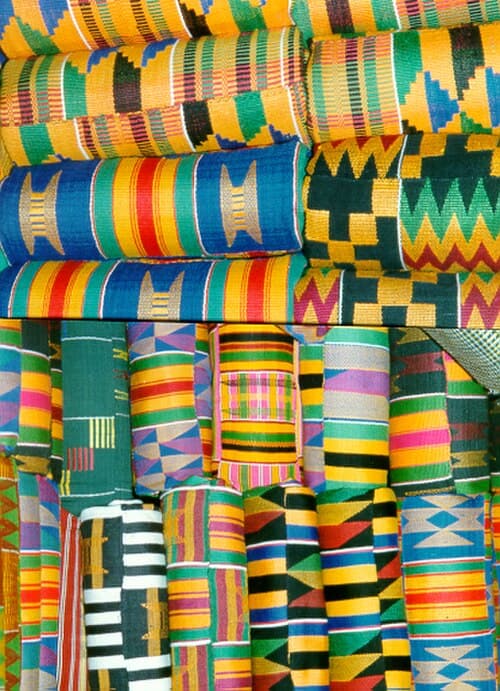
Woven silk and cotton fabric of the Akan whose patterns encode proverbs, royal achievements, and ancestral pride.

