

83
Protection
🔴
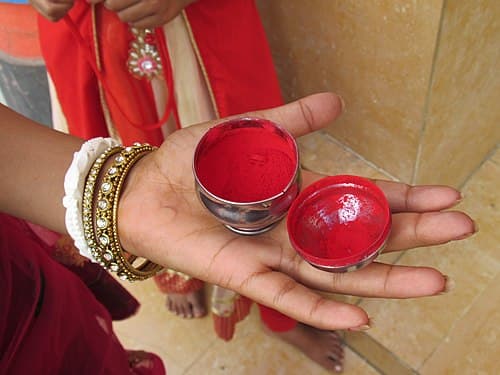
Kumkum/Tilak
India
The sacred red mark applied to the forehead activates the ajna chakra and marks the body as consecrated to the divine.
4.6Learn more →


The decorative forehead dot marks the ajna chakra, protecting the wearer and concentrating intuitive power.
The bindi (from Sanskrit 'bindu', meaning point or drop) is one of the most recognizable visual markers of South Asian culture worldwide. Originally a red dot of kumkum powder applied to the forehead between the eyebrows, the bindi marks the location of the ajna chakra — the energy center associated with intuition, foresight, and higher perception in the yogic body map. Applying the bindi is believed to retain energy and protect against the loss of prana (life force) through this sensitive spot, functioning as a kind of seal on the most spiritually active point of the face.
In traditional belief, the space between the eyebrows is considered a highly vulnerable point — a gateway through which both positive blessings and negative energies can enter the body-mind system. The red bindi placed here acts as a protective seal, preventing the entry of evil eye and malevolent influences while keeping one's own spiritual energy from dispersing. This dual protective and containing function makes the bindi much more than an ornament: it is a daily spiritual technology practiced by millions.
While the red round bindi remains the traditional and most spiritually charged form, contemporary South Asian fashion has expanded bindis into an art form encompassing countless colors, shapes, sizes, and materials. Gold, crystal, and multi-colored decorative bindis are now worn as fashion statements, particularly by younger generations. However, in temples, weddings, and traditional religious contexts, the simple red kumkum bindi retains its original sacred meaning as a mark of spiritual protection and divine grace.
Protection of the ajna chakra, sealing of the life force, concentration of intuitive power, and a visible mark of spiritual practice and identity.
Apply a round red kumkum bindi to the center of the forehead after morning prayers or before leaving the home. For maximum traditional potency, apply fresh kumkum powder using the ring finger. The bindi should be centered precisely between the eyebrows. Remove before sleeping.
NASA research referenced in studies of the forehead's electromagnetic properties has shown that the exact point where the bindi is worn corresponds to a location with measurably higher electromagnetic activity on the human skull, suggesting the tradition may have identified a real physiological hotspot millennia before instruments could detect it.
Traditional texts specify red (associated with Shakti) as the most potent color. However, regional traditions use other colors: white bindis are used by widows in some communities, yellow by devotees of certain goddesses. Modern colored bindis are primarily decorative and not assigned traditional ritual meanings.
Yes, in traditional practice. Married women wear red bindis as a mark of marital status and pray for their husband's longevity. In some communities, widows historically wore white or no bindi. Unmarried girls wear red bindis but these are understood as protective rather than marital markers.
In ritual and devotional contexts, men also receive and wear tilak marks at the same forehead location. The term 'bindi' is generally applied to the women's mark, while 'tilak' applies to men's. In certain devotional traditions, male devotees wear red marks identical to the traditional bindi without social stigma.
India
The sacred red mark applied to the forehead activates the ajna chakra and marks the body as consecrated to the divine.
India
The ornate container for sindoor (vermilion) is a sacred object symbolizing marital love, a wife's protection of her husband, and the divine feminine.

India
The nazar battu is India's traditional evil eye repellent, a black effigy or symbol that absorbs jealous glances and protects its bearer.

India
A string of 108 prayer beads used for mantra repetition, mala beads align the practitioner's energy with divine intention through meditative counting.

