

79
Protection
📿
Rudraksha Beads
India
Seeds of the Elaeocarpus ganitrus tree, rudraksha beads are the tears of Shiva — the most potent Hindu spiritual talisman.
4.8Learn more →


A string of 108 prayer beads used for mantra repetition, mala beads align the practitioner's energy with divine intention through meditative counting.
The mala (from Sanskrit 'mālā,' meaning garland) is a string of prayer beads used across Hindu, Buddhist, and Jain traditions for counting mantra repetitions during meditation. The standard mala contains 108 beads plus a guru bead (the larger bead from which counting begins and ends) and is designed to be held in the right hand, with beads drawn toward the practitioner one at a time using the thumb and middle finger, while the index finger (associated with the ego) avoids touching the beads. Each bead passed represents one repetition of the practitioner's chosen mantra.
The number 108 carries profound significance in multiple systems: there are 108 Upanishads, 108 sacred sites of Vishnu, 108 names of most major deities, 54 letters in the Sanskrit alphabet multiplied by two (male and female energy), 9 planets multiplied by 12 zodiac signs, and 108 chakra pressure points on the body. The number represents cosmic completeness — a complete revolution of spiritual attention through all dimensions of existence. One round of the mala (108 repetitions of a mantra) is thus a complete cosmic circuit rather than an arbitrary number.
Mala beads can be made from many materials, each carrying different properties and recommended for different spiritual practices: rudraksha for Shiva mantras, tulsi wood for Vishnu mantras, lotus seeds for Lakshmi mantras, bodhi seeds for Buddhist mantras, crystal for clarity, rose quartz for compassion, and sandalwood for calming meditation. The choice of material is thus not merely aesthetic but constitutes a second layer of intention, amplifying the specific quality associated with both the mantra and the bead material.
Focused intention in spiritual practice, the alignment of repetitive physical action with meditative consciousness, and the completion of cosmic cycles through dedicated mantra repetition.
Hold the mala in your right hand, beginning at the guru bead. Use your thumb to move each bead toward you as you complete one mantra repetition. When you reach the guru bead again, do not cross it — reverse direction for the next round. Wear as a necklace or wrist wrap during regular use. Store wrapped around a sacred object or image when not in use. Treat as sacred and avoid letting it touch the floor.
In the Catholic rosary tradition (which arrived in Europe through contact with Indian, Buddhist, and Islamic prayer bead traditions via the Silk Road), there are also exactly 108 full repetitions in a traditional 15-decade rosary with additional prayers. The convergence of 108 as the sacred counting number across Hindu, Buddhist, Muslim, and Catholic prayer bead traditions is one of the most striking examples of transcultural sacred numerology.
Yes, though traditional teachers note that wearing a mala purely as jewelry without the intention of practice is considered a mild disrespect to the object's purpose. Many practitioners make an agreement with their mala: even if not actively counting mantras, they mentally acknowledge its sacred function when putting it on each day. This simple intention is considered sufficient.
The tassel at the guru bead end represents the guru (teacher) whose wisdom makes the practice effective. It also symbolizes the lotus flower of the thousand-petal crown chakra (Sahasrara) blooming in enlightenment. The individual strands of the tassel represent the individual mantras completing their circuit. Some traditions use a specific knot rather than a tassel.
A broken mala is traditionally interpreted as the mala having absorbed a significant negative energy or karmic obstacle on behalf of the practitioner — similar to the interpretation of a broken evil eye charm. Thank the mala for its service. If it breaks during practice, it should be repaired by a practitioner or replaced with a new one. Do not simply discard a broken mala — bury it respectfully or burn it.
India
Seeds of the Elaeocarpus ganitrus tree, rudraksha beads are the tears of Shiva — the most potent Hindu spiritual talisman.
India
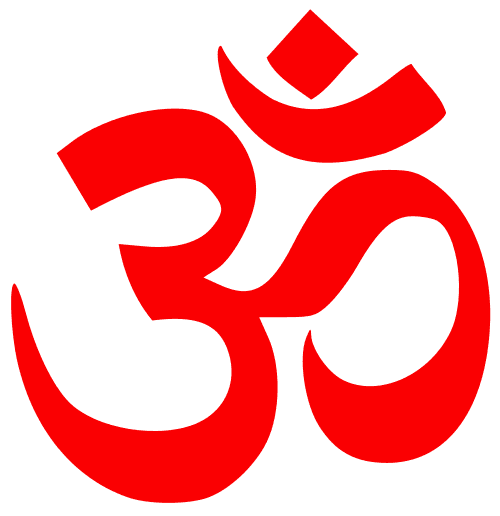
The primordial sound of the universe, Om is the most sacred symbol in Hinduism, Buddhism, and Jainism.
Nepal
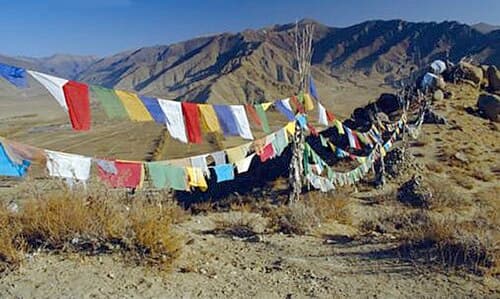
Colorful rectangular flags inscribed with mantras and prayers send blessings to all beings as the wind carries their words across the world.

