
445
Success
🐯
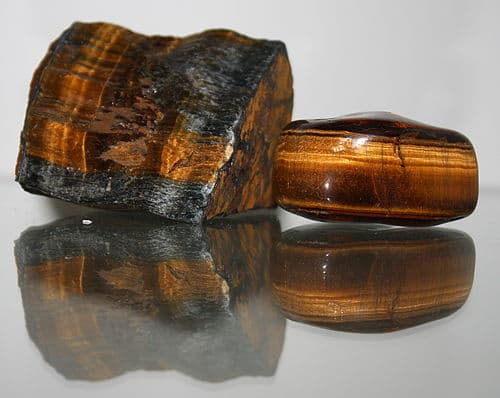
Tiger's Eye
South Africa
The chatoyant golden-brown stone of courage and discernment, worn as a charm for sharp perception, confident action, and the focused power of the predator's gaze.
4.7Learn more →


The luminous chatoyant gem of acute perception, worn as a charm of sharp intuition, protection from the evil eye, and the mysterious wisdom of the night.
Cat's Eye — in its finest form, the gemstone chrysoberyl cat's eye from Sri Lanka — displays the most dramatic chatoyant effect of any stone in the world: a razor-sharp band of white light slides across the surface of the golden or honey-coloured stone exactly like the slit pupil of a cat's eye. This optical miracle is caused by parallel fibres or hollow channels within the stone that reflect light into a single bright line. The effect is so precise that the finest specimens can show a 'milk and honey' effect — half golden, half creamy white — when illuminated from one side.
Cat's eye has been considered a powerful amulet against the Evil Eye across South Asian, Middle Eastern, and Mediterranean cultures for centuries. The stone's eye-like appearance made it a natural 'watcher' — an eye that perpetually observes without being deceived. In Sri Lanka, a fine chrysoberyl cat's eye was traditionally given to newborns to protect them from malevolent influences during the vulnerable early years of life. In Arabic tradition, cat's eye amulets were sewn into garments and mounted on weapons.
In astrological gem therapy (Jyotish), cat's eye corresponds to Ketu, the south lunar node, and is prescribed for those whose charts indicate Ketu's influence needs balancing. It is said to bring sudden wealth, protect against hidden enemies, and enhance the intuitive faculties that perceive what is not immediately visible. For anyone drawn to mystery, the night, or the development of psychic sensitivity, cat's eye is among the most potent of gem companions.
The Cat's Eye Stone traces its origins to Sri Lanka, where it has been revered for generations as a powerful symbol of safety and spiritual defense. Historical records and oral traditions suggest that early versions of this charm appeared centuries ago, when communities in Sri Lanka first began attributing supernatural qualities to objects drawn from their natural and spiritual environment.
Over time, the Cat's Eye Stone evolved from a regional folk object into a widely recognized talisman. Traders, travelers, and migrants carried it across borders, introducing it to new cultures that often adopted and adapted it to fit their own belief systems. Today it is found in sri lanka, brazil, india and beyond, each culture adding its own layer of meaning and ritual to the charm's enduring legacy.
In its homeland of Sri Lanka, the Cat's Eye Stone occupies a revered place in both daily life and ceremonial practice. It is not merely decorative — it is woven into the fabric of cultural identity, appearing in celebrations, rites of passage, and household traditions that have been passed down through generations.
Beyond Sri Lanka, the Cat's Eye Stone has gained recognition in sri lanka, brazil, india and other regions, where it is valued for its symbolic connection to spiritual guardianship. Scholars of material culture and anthropologists note that charms like the Cat's Eye Stone serve a dual psychological function: they provide a tangible focus for hope and intention, and they connect their owners to a living cultural tradition that transcends individual experience.
To get the most from your Cat's Eye Stone, keep it in a place where you will see it daily — on a desk, nightstand, or near your front entrance. Physical proximity reinforces the intention behind the charm and serves as a regular reminder of your goals.
Traditional practice recommends handling the charm with clean hands and respectful intention. Many practitioners in Sri Lanka advise setting a clear purpose when you first acquire the charm: hold it, state your wish or goal silently or aloud, and then place it in its chosen position. Periodically cleansing the charm — by passing it through incense smoke, placing it under moonlight, or simply wiping it with a clean cloth — is believed to refresh its energy.
If the charm is meant to be worn (as jewelry or a carried token), keep it close to your body throughout the day. If it is a household object, place it in the area of your home most associated with its purpose — for example, near a workspace for success charms, or by the bed for love and health charms.
Acute perception, protection against the Evil Eye and hidden enemies, sudden good fortune, psychic sensitivity, and the watchful wisdom of those who see clearly in the dark.
Wear as a ring on the middle finger of the working hand in Jyotish tradition, set in gold. Display a specimen with the cat's eye band visible to any who enter your space, as a protective threshold watcher. Meditate with the stone to develop intuitive perception — allow your gaze to follow the moving band of light.
The correct way to evaluate a cat's eye stone is to hold it under a single light source and rotate it — a fine stone will show a perfectly sharp, centred, and clearly defined band of light. Gemologists test its quality using a penlight in a darkened room, making the evaluation itself feel like a magical ritual.
In fine gemology, 'cat's eye' without further qualification always means chrysoberyl cat's eye. Other chatoyant gems (tiger's eye, cat's eye tourmaline, cat's eye aquamarine) must include the mineral name to distinguish them. The unmodified term is reserved for chrysoberyl.
Honey-yellow cat's eye is considered most auspicious in Jyotish tradition. Greenish cat's eye is also prized. The key quality is the sharpness and clarity of the chatoyant band — a crisp, centred band indicates a high-quality stone with stronger energetic properties.
In Jyotish tradition, cat's eye gems are dipped in raw cow's milk overnight before first wearing, then briefly held in incense smoke while the appropriate mantra is chanted. For non-Jyotish use, simply set a clear intention and cleanse with moonlight before first wearing.
The Cat's Eye Stone originates from Sri Lanka, where it has been used as a protection charm for centuries. Its influence has since spread to sri lanka, brazil, india and many other regions worldwide.
Wear as a ring on the middle finger of the working hand in Jyotish tradition, set in gold. Display a specimen with the cat's eye band visible to any who enter your space, as a protective threshold watcher. Meditate with the stone to develop intuitive perception — allow your gaze to follow the moving band of light. For best results, set a clear intention when you first acquire the charm and keep it in a prominent, respectful location.
Yes, giving a Cat's Eye Stone as a gift is considered a generous and meaningful gesture in most traditions. In Sri Lanka, gifted charms are often believed to carry even stronger energy than those purchased for oneself, because they come with the goodwill and intention of the giver.
Many practitioners recommend periodically cleansing your Cat's Eye Stone to refresh its energy. Common methods include passing it through incense smoke, placing it in moonlight overnight, rinsing it under clean water (if the material allows), or simply wiping it down with a clean cloth while setting a fresh intention.
While the Cat's Eye Stone originated in the cultural traditions of Sri Lanka, it is not exclusive to any single religion. It has been adopted and adapted by people of many faiths and backgrounds, each bringing their own interpretation to its symbolism and use.
South Africa
The chatoyant golden-brown stone of courage and discernment, worn as a charm for sharp perception, confident action, and the focused power of the predator's gaze.

Brazil
The premier protective crystal, worn as a powerful charm against negative energy, electromagnetic radiation, and psychic attack.

Mexico
The volcanic glass of truth and protection, carried as a powerful charm for revealing hidden truths, cutting karmic ties, and shielding against negative energy.

