Tree of Life
Ancient Mesopotamia / Multiple traditions
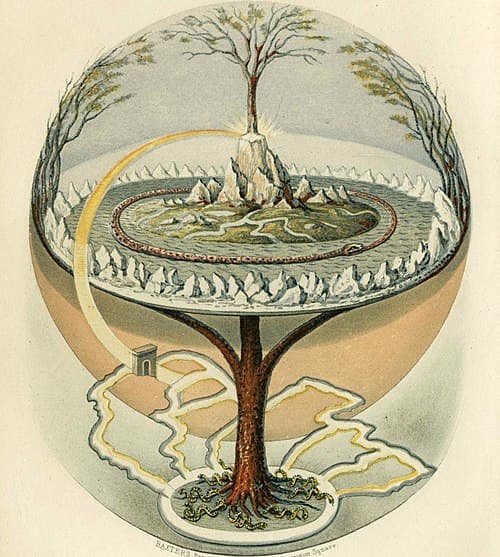
The Tree of Life is a universal symbol found in nearly every major world culture, representing the interconnection of all life, ancestral roots, and the continuous cycle of growth and renewal.
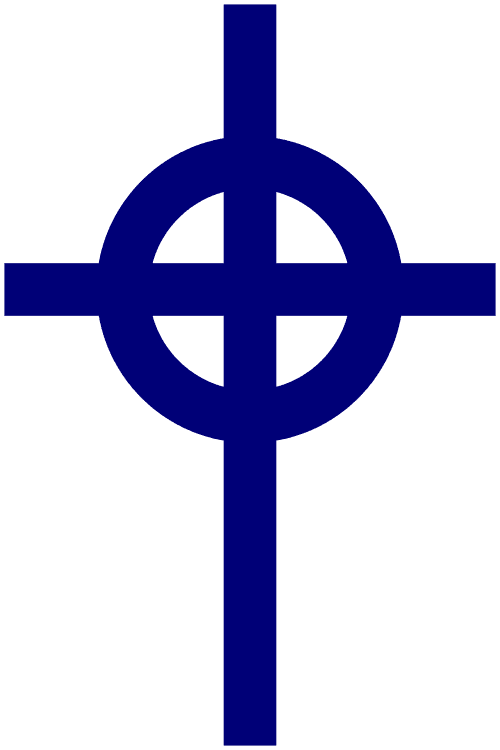
The Celtic Cross — a traditional Christian cross encircled by a ring — is an iconic symbol of Irish and Scottish heritage, faith, and eternal life used as a protective charm for millennia.
The Celtic Cross emerged in early medieval Ireland and Scotland around the eighth century CE, though its exact origin is debated. One tradition holds that St. Patrick himself created the form by combining the Christian cross with a circular sun symbol to help pagans transition to Christianity; another attributes its development to the monastery at Iona. Whatever its precise origin, the high crosses of Ireland — enormous stone carvings reaching several meters in height — became some of the most distinctive religious monuments in the world.
The ring surrounding the junction of the crossbars is the defining feature of the Celtic Cross. It has been interpreted as representing the nimbus or halo of divinity, the eternal nature of God's love with no beginning or end, the sun (linking Christian faith with earlier solar worship), and the protection of sacred space. The interlaced knotwork carved on many Celtic crosses adds another layer of meaning, representing the unbreakable bonds of eternity.
Today the Celtic Cross functions both as a religious emblem for Irish and Scottish Christians and as a broader cultural pride symbol for people of Celtic heritage worldwide. As a protective charm, it is believed to shield its wearer from harm, guide them through darkness, and connect them to the strength of their ancestors. Celtic cross pendants are among the most gifted pieces of jewelry for baptisms, confirmations, and heritage celebrations.

The Celtic Cross traces its origins to Early Medieval Ireland / Scotland, where it has been revered for generations as a powerful symbol of safety and spiritual defense. Historical records and oral traditions suggest that early versions of this charm appeared centuries ago, when communities in Early Medieval Ireland / Scotland first began attributing supernatural qualities to objects drawn from their natural and spiritual environment.
Over time, the Celtic Cross evolved from a regional folk object into a widely recognized talisman. Traders, travelers, and migrants carried it across borders, introducing it to new cultures that often adopted and adapted it to fit their own belief systems. Today it is found in ie, gb, us and beyond, each culture adding its own layer of meaning and ritual to the charm's enduring legacy.
In its homeland of Early Medieval Ireland / Scotland, the Celtic Cross occupies a revered place in both daily life and ceremonial practice. It is not merely decorative — it is woven into the fabric of cultural identity, appearing in celebrations, rites of passage, and household traditions that have been passed down through generations.
Beyond Early Medieval Ireland / Scotland, the Celtic Cross has gained recognition in ie, gb, us and other regions, where it is valued for its symbolic connection to spiritual guardianship. Scholars of material culture and anthropologists note that charms like the Celtic Cross serve a dual psychological function: they provide a tangible focus for hope and intention, and they connect their owners to a living cultural tradition that transcends individual experience.
To get the most from your Celtic Cross, keep it in a place where you will see it daily — on a desk, nightstand, or near your front entrance. Physical proximity reinforces the intention behind the charm and serves as a regular reminder of your goals.
Traditional practice recommends handling the charm with clean hands and respectful intention. Many practitioners in Early Medieval Ireland / Scotland advise setting a clear purpose when you first acquire the charm: hold it, state your wish or goal silently or aloud, and then place it in its chosen position. Periodically cleansing the charm — by passing it through incense smoke, placing it under moonlight, or simply wiping it with a clean cloth — is believed to refresh its energy.
If the charm is meant to be worn (as jewelry or a carried token), keep it close to your body throughout the day. If it is a household object, place it in the area of your home most associated with its purpose — for example, near a workspace for success charms, or by the bed for love and health charms.
Faith, eternal life, divine protection, Celtic heritage, the union of heaven and earth, and ancestral connection.
Wear a Celtic cross pendant as a statement of faith or heritage protection. Give one as a baptism or confirmation gift to mark spiritual milestones. Hang a large Celtic cross on the wall of a home to invoke blessings of protection and sanctity over the household.
The High Cross of Muiredach at Monasterboice, Ireland, carved around 923 CE, is considered one of the finest examples of Celtic Cross art in the world — its biblical scenes have remained remarkably detailed after over one thousand years of Irish weather.
Many people wear Celtic crosses as symbols of Celtic cultural heritage rather than specifically Christian faith. The ring and knotwork elements predate Christianity, and the symbol has broad cultural resonance beyond its religious use.
The defining feature is the ring where the arms intersect. Standard Latin crosses do not have this element. The ring is interpreted variously as the sun, eternity, or the halo of divinity.
Sterling silver is the most traditional choice, reflecting the silversmithing tradition of Celtic artisans. Gold Celtic crosses are also popular for special occasions and often feature more elaborate detail.
The Celtic Cross originates from Early Medieval Ireland / Scotland, where it has been used as a protection charm for centuries. Its influence has since spread to ie, gb, us and many other regions worldwide.
Wear a Celtic cross pendant as a statement of faith or heritage protection. Give one as a baptism or confirmation gift to mark spiritual milestones. Hang a large Celtic cross on the wall of a home to invoke blessings of protection and sanctity over the household. For best results, set a clear intention when you first acquire the charm and keep it in a prominent, respectful location.
Yes, giving a Celtic Cross as a gift is considered a generous and meaningful gesture in most traditions. In Early Medieval Ireland / Scotland, gifted charms are often believed to carry even stronger energy than those purchased for oneself, because they come with the goodwill and intention of the giver.
Many practitioners recommend periodically cleansing your Celtic Cross to refresh its energy. Common methods include passing it through incense smoke, placing it in moonlight overnight, rinsing it under clean water (if the material allows), or simply wiping it down with a clean cloth while setting a fresh intention.
While the Celtic Cross originated in the cultural traditions of Early Medieval Ireland / Scotland, it is not exclusive to any single religion. It has been adopted and adapted by people of many faiths and backgrounds, each bringing their own interpretation to its symbolism and use.
Ancient Mesopotamia / Multiple traditions
The Tree of Life is a universal symbol found in nearly every major world culture, representing the interconnection of all life, ancestral roots, and the continuous cycle of growth and renewal.
Early Christianity (Rome)
The Crucifix — a cross bearing the corpus (body) of Christ — is the central symbol of Christianity and one of the most powerful protective charms in the Western world.
Medieval Germany / Italy
The St. Benedict medal is considered one of the most powerful exorcism and protection medals in the Catholic tradition, used worldwide to ward off evil, overcome temptation, and invoke divine protection.