
85
General
🪔
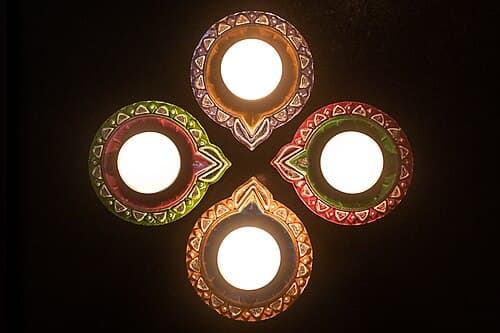
Diya Lamp
India
The clay oil lamp is the most fundamental symbol of the dispelling of darkness and the inviting of divine light into one's life.
4.8Learn more →


Coins bearing Lakshmi's image, exchanged at Diwali as prosperity tokens, carry the goddess's direct blessing of abundance.
The Diwali Lakshmi coin is a commemorative coin or medallion bearing the image of Lakshmi, the goddess of wealth, lotus flowers, and divine grace, exchanged as gifts and offerings during the Diwali festival. The tradition has ancient roots in the practice of Dhanteras (the first day of Diwali), when purchasing gold or silver is considered mandatory for attracting Lakshmi's blessing for the coming year. Even the smallest gold or silver purchase on Dhanteras is believed to multiply through the year, and coins bearing Lakshmi's image are the most spiritually charged form of this purchase.
The specific act of exchanging Lakshmi coins at Diwali creates a network of mutual blessing — each coin exchanged carries with it a sincere wish for the recipient's prosperity, and the coin bears Lakshmi's direct image as a continuous reminder of her presence. The coins are placed on the altar of Lakshmi during the Diwali puja and remain there throughout the night as the goddess is believed to visit and bless them, imbuing the metal with her energy before they are given away or placed in money boxes.
Modern Diwali Lakshmi coins are produced in gold, silver, and silver-plated forms at various price points, making them accessible as gifts at all economic levels. The most coveted versions are pure gold coins minted by recognized institutions. As a talisman, a Lakshmi coin kept in a wallet or safe is believed to attract more wealth to keep it company — the folk saying being that money attracts money, and Lakshmi attracts Lakshmi.
The Diwali Lakshmi Coin traces its origins to India, where it has been revered for generations as a powerful symbol of prosperity and abundance. Historical records and oral traditions suggest that early versions of this charm appeared centuries ago, when communities in India first began attributing supernatural qualities to objects drawn from their natural and spiritual environment.
Over time, the Diwali Lakshmi Coin evolved from a regional folk object into a widely recognized talisman. Traders, travelers, and migrants carried it across borders, introducing it to new cultures that often adopted and adapted it to fit their own belief systems. Today it is found in india, nepal, sri lanka and beyond, each culture adding its own layer of meaning and ritual to the charm's enduring legacy.
In its homeland of India, the Diwali Lakshmi Coin occupies a revered place in both daily life and ceremonial practice. It is not merely decorative — it is woven into the fabric of cultural identity, appearing in celebrations, rites of passage, and household traditions that have been passed down through generations.
Beyond India, the Diwali Lakshmi Coin has gained recognition in india, nepal, sri lanka and other regions, where it is valued for its symbolic connection to financial prosperity. Scholars of material culture and anthropologists note that charms like the Diwali Lakshmi Coin serve a dual psychological function: they provide a tangible focus for hope and intention, and they connect their owners to a living cultural tradition that transcends individual experience.
To get the most from your Diwali Lakshmi Coin, keep it in a place where you will see it daily — on a desk, nightstand, or near your front entrance. Physical proximity reinforces the intention behind the charm and serves as a regular reminder of your goals.
Traditional practice recommends handling the charm with clean hands and respectful intention. Many practitioners in India advise setting a clear purpose when you first acquire the charm: hold it, state your wish or goal silently or aloud, and then place it in its chosen position. Periodically cleansing the charm — by passing it through incense smoke, placing it under moonlight, or simply wiping it with a clean cloth — is believed to refresh its energy.
If the charm is meant to be worn (as jewelry or a carried token), keep it close to your body throughout the day. If it is a household object, place it in the area of your home most associated with its purpose — for example, near a workspace for success charms, or by the bed for love and health charms.
Direct blessing of Lakshmi for financial prosperity, the multiplication of wealth through the goddess's continued presence, and the exchange of mutual prosperity wishes.
Purchase a Lakshmi coin on Dhanteras (first night of Diwali) and place it on the altar during the full Diwali puja. After the puja, keep the coin in your wallet or safe. Never spend the coin — it functions as a seed for attracting more money. Replace the coin each Diwali with a new purchase, recycling the old one into gifts for family members.
India's gold demand spikes dramatically every Diwali — the country purchases approximately 20-25% of its annual gold consumption during the Diwali-Dhanteras period. In 2023, Indians purchased over 50 tonnes of gold during this single festival period, making the Lakshmi coin tradition one of the most economically significant religious practices in the world.
Traditional wisdom strongly favors genuine precious metal, as gold and silver are believed to inherently carry Lakshmi's energy (they are considered her 'body'). A gold-plated or silver-plated coin is considered significantly less potent. Even a tiny genuine gold or silver coin is preferred over a large gold-plated one for talismanic purposes.
Old Lakshmi coins retain their blessing and are excellent gifts for family members. The tradition of purchasing a new coin each Dhanteras is about maintaining the annual cycle of Lakshmi's visit and renewal of blessings, not about discarding the old. Old coins in a money box actually compound their prosperity energy over time.
A Lakshmi coin is specifically consecrated through the Diwali puja ritual, making it a dedicated spiritual object. Regular currency is inert from a ritual perspective until specifically blessed. The Lakshmi coin's image and the ritual context of its creation give it a specific charge that regular money does not carry. However, keeping the first currency note earned in a new business (as a lucky note) follows the same principle.
The Diwali Lakshmi Coin originates from India, where it has been used as a wealth charm for centuries. Its influence has since spread to india, nepal, sri lanka and many other regions worldwide.
Purchase a Lakshmi coin on Dhanteras (first night of Diwali) and place it on the altar during the full Diwali puja. After the puja, keep the coin in your wallet or safe. Never spend the coin — it functions as a seed for attracting more money. Replace the coin each Diwali with a new purchase, recycling the old one into gifts for family members. For best results, set a clear intention when you first acquire the charm and keep it in a prominent, respectful location.
Yes, giving a Diwali Lakshmi Coin as a gift is considered a generous and meaningful gesture in most traditions. In India, gifted charms are often believed to carry even stronger energy than those purchased for oneself, because they come with the goodwill and intention of the giver.
Many practitioners recommend periodically cleansing your Diwali Lakshmi Coin to refresh its energy. Common methods include passing it through incense smoke, placing it in moonlight overnight, rinsing it under clean water (if the material allows), or simply wiping it down with a clean cloth while setting a fresh intention.
While the Diwali Lakshmi Coin originated in the cultural traditions of India, it is not exclusive to any single religion. It has been adopted and adapted by people of many faiths and backgrounds, each bringing their own interpretation to its symbolism and use.
India
The clay oil lamp is the most fundamental symbol of the dispelling of darkness and the inviting of divine light into one's life.

India
The elephant-headed Hindu deity Ganesha is the remover of obstacles and the lord of new beginnings.

India
The world's first widely used currency, cowrie shells have been symbols of wealth, fertility, and divine feminine power across Asia for millennia.

India
Nine sacred gemstones linked to the nine celestial bodies, worn together to balance cosmic influences and attract total fortune.

