

330
General
🐴
Dala Horse
Sweden
The hand-painted red wooden horse of Dalarna, Sweden's most beloved folk art symbol.
4.6Learn more →

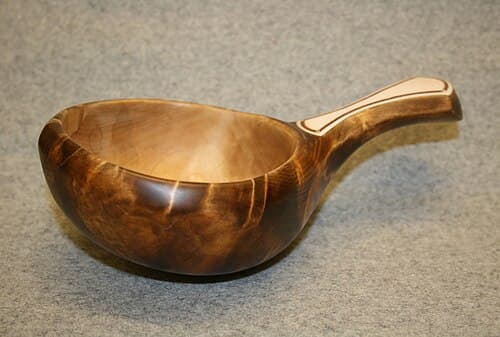
The hand-carved birch burl cup of Finnish tradition, gifted for luck and lasting friendship.
The kuksa — traditional Finnish wooden drinking cup — is one of Scandinavia's most meaningful handmade objects, a cup carved from a birch burl (the rounded growth found on birch trees) that has served Finnish people as a personal drinking vessel through hunting, reindeer herding, and wilderness travel for centuries. The Sámi people of northern Scandinavia and Finland are credited with originating the design, and their word 'guksi' is the source of the Finnish 'kuksa.'
The luck dimension of the kuksa derives from the traditional beliefs surrounding its creation and gift-giving. A kuksa is never bought for oneself — it is either made by hand or received as a gift. Carving a kuksa for someone is an act of great generosity and skill, as the process of finding a suitable burl, drying it without cracking, and carving it into a smooth cup while preserving the wood's natural character can take weeks. The gift of a kuksa is therefore the gift of someone's time and skill, which carries more weight than the most expensive purchased present.
The kuksa that is given new is 'seasoned' by filling it with salt and hot water repeatedly before use — a ritual process that closes the wood's pores and prevents leaking. This seasoning period, during which the cup cannot yet be used, is considered a time of the charm maturing, embedding the giver's good wishes into the wood itself.
The Finnish Kuksa Cup traces its origins to Finland, where it has been revered for generations as a powerful symbol of good fortune and positive energy. Historical records and oral traditions suggest that early versions of this charm appeared centuries ago, when communities in Finland first began attributing supernatural qualities to objects drawn from their natural and spiritual environment.
Over time, the Finnish Kuksa Cup evolved from a regional folk object into a widely recognized talisman. Traders, travelers, and migrants carried it across borders, introducing it to new cultures that often adopted and adapted it to fit their own belief systems. Today it is found in finland and beyond, each culture adding its own layer of meaning and ritual to the charm's enduring legacy.
In its homeland of Finland, the Finnish Kuksa Cup occupies a revered place in both daily life and ceremonial practice. It is not merely decorative — it is woven into the fabric of cultural identity, appearing in celebrations, rites of passage, and household traditions that have been passed down through generations.
Beyond Finland, the Finnish Kuksa Cup has gained recognition in finland and other regions, where it is valued for its symbolic connection to universal good luck. Scholars of material culture and anthropologists note that charms like the Finnish Kuksa Cup serve a dual psychological function: they provide a tangible focus for hope and intention, and they connect their owners to a living cultural tradition that transcends individual experience.
To get the most from your Finnish Kuksa Cup, keep it in a place where you will see it daily — on a desk, nightstand, or near your front entrance. Physical proximity reinforces the intention behind the charm and serves as a regular reminder of your goals.
Traditional practice recommends handling the charm with clean hands and respectful intention. Many practitioners in Finland advise setting a clear purpose when you first acquire the charm: hold it, state your wish or goal silently or aloud, and then place it in its chosen position. Periodically cleansing the charm — by passing it through incense smoke, placing it under moonlight, or simply wiping it with a clean cloth — is believed to refresh its energy.
If the charm is meant to be worn (as jewelry or a carried token), keep it close to your body throughout the day. If it is a household object, place it in the area of your home most associated with its purpose — for example, near a workspace for success charms, or by the bed for love and health charms.
The kuksa represents the Finnish values of sisu (inner strength and persistence), the beauty of functional craftsmanship, and the nourishing power of simple sustenance shared in wild places. As a lucky charm, it symbolises that you are held in someone's care — that a person valued you enough to invest real time in creating something for you to carry on your journey.
Carry your kuksa on outdoor journeys as a practical vessel and a connection to the tradition it embodies. The first drink from a new kuksa should be shared — take a sip and offer the cup to someone you trust. Never wash a kuksa with soap; clean it with hot water and a cloth, or leave it to dry naturally. The seasoning and care it requires teaches attentiveness.
Finnish forestry workers and military conscripts are traditionally given kuksa cups as part of their outdoor culture initiation. The Finnish Defence Forces include kuksa training in wilderness survival courses — learning to identify a good burl, carve safely, and properly season a cup is considered a practical survival skill as well as a cultural transmission.
Traditionally a kuksa was used for water, coffee, and reindeer milk. Modern users drink anything from it. The traditional recommendation against acidic drinks (citrus juice, for example) is practical — acid can degrade the wood's finish over time.
Birch burls have a dense, interlocking grain pattern without the long straight fibres of regular birch wood. This makes them extremely hard to split and crack, which is essential for a cup that must hold liquid and withstand temperature changes. The swirling grain is also beautiful.
In strict traditional terms, the luck of a kuksa comes specifically from the human investment of time and skill. Machine-made kuksa cups are functional and attractive but don't carry the same gift-of-time meaning. Many people own both: a special hand-carved gift kuksa and a practical everyday kuksa.
The Finnish Kuksa Cup originates from Finland, where it has been used as a general charm for centuries. Its influence has since spread to finland and many other regions worldwide.
Carry your kuksa on outdoor journeys as a practical vessel and a connection to the tradition it embodies. The first drink from a new kuksa should be shared — take a sip and offer the cup to someone you trust. Never wash a kuksa with soap; clean it with hot water and a cloth, or leave it to dry naturally. The seasoning and care it requires teaches attentiveness. For best results, set a clear intention when you first acquire the charm and keep it in a prominent, respectful location.
Yes, giving a Finnish Kuksa Cup as a gift is considered a generous and meaningful gesture in most traditions. In Finland, gifted charms are often believed to carry even stronger energy than those purchased for oneself, because they come with the goodwill and intention of the giver.
Many practitioners recommend periodically cleansing your Finnish Kuksa Cup to refresh its energy. Common methods include passing it through incense smoke, placing it in moonlight overnight, rinsing it under clean water (if the material allows), or simply wiping it down with a clean cloth while setting a fresh intention.
While the Finnish Kuksa Cup originated in the cultural traditions of Finland, it is not exclusive to any single religion. It has been adopted and adapted by people of many faiths and backgrounds, each bringing their own interpretation to its symbolism and use.
Sweden
The hand-painted red wooden horse of Dalarna, Sweden's most beloved folk art symbol.

Norway
The wild mountain spirit of Norse mythology, now a beloved protective household figure.

United Kingdom
The tiny seed of the mighty oak, carried for slow-growing but lasting luck.

