

269
Love
🪆
Ndebele Doll
South Africa / Zimbabwe
Fertility doll adorned with colorful geometric Ndebele beadwork, used in coming-of-age and marriage ceremonies.
4.5Learn more →

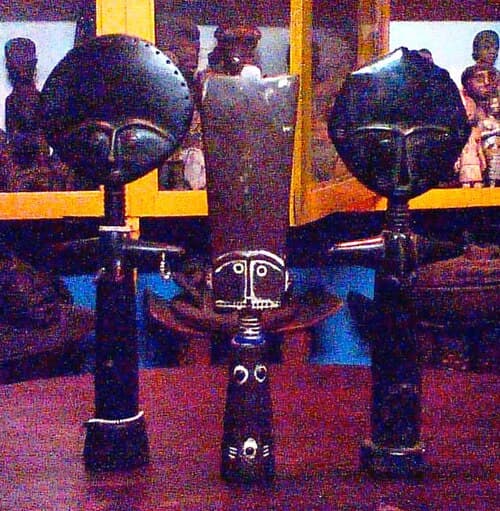
The iconic Akan wooden fertility doll — carried by women hoping for children and by pregnant women blessing their unborn.
The Akuaba (plural: akua'ba) is one of Ghana's most recognizable art forms and one of Africa's most powerful fertility charms. Made by Akan people (particularly Asante) of Ghana, these wooden figures have a distinctive and immediately recognizable form: a flat, disc-shaped head atop an elongated cylindrical neck, with a simplified body below. The exaggeratedly large, flat, circular head represents the Akan aesthetic ideal of beauty — large, high forehead, smooth skin, and regular features. The ringed neck represents the neck rings that indicate health and beauty in Akan culture. The overall form is stylized, formal, and instantly recognizable as one of Africa's iconic human figures.
The origin myth of the Akuaba tells of a woman named Akua who could not conceive a child. She commissioned a wooden figure from a priest and carried it on her back like a real baby, nursing and caring for it. Neighbors mocked her as 'Akua's baby' — 'akua'ba' — but she eventually conceived a child as beautiful as the doll. The name thus stuck for the figure type. Women who want children carry Akuaba tucked into their waist wrap at the back, treating them as surrogate infants — feeding them symbolically, keeping them clean, and imbuing them with the loving attention that they hope to direct toward a living child.
Akuaba dolls are also given to pregnant women to ensure that their unborn children will be born beautiful and healthy, reflecting the Akan belief that what a mother focuses on during pregnancy shapes the child. The figure's idealized form projects the desired qualities into the consciousness of the mother and, through her, into the developing child. As a global charm for fertility and new beginnings, the Akuaba is widely recognized and used.
Fertility and the desire for children, the projection of beauty and health onto an unborn child, the power of focused maternal love, and the blessing of women who wish to become mothers.
Women hoping to conceive carry an Akuaba at the waist, tucked into clothing at the back as if carrying a child. Treat it with the care you would give a real infant — keep it clean, speak to it, and hold it with loving intention. Pregnant women may keep one to project health and beauty to their unborn child.
There are distinct regional variations of the Akuaba across Ghana. Asante Akuaba have the circular disc head characteristic of the most famous examples. Fante Akuaba (from the coastal Fante people) have more rectangular heads with different proportions. Each version reflects its community's specific aesthetic ideals of beauty, demonstrating how even a standardized spiritual object varies meaningfully across communities.
The Akuaba tradition is centered on women's experience of fertility and pregnancy, but men also participate by honoring their partners' use of the doll and by understanding its significance. In contemporary practice, Akuaba figures are sometimes used by couples together in fertility rituals, acknowledging that bringing a child into the world is a shared endeavor.
Yes — contemporary Akan practitioners and others who work with the Akuaba often extend its meaning to include all forms of creating and nurturing family. The intention of the figure — calling new life and its blessings into one's life — is broad enough to encompass diverse paths to parenthood.
Traditional care includes keeping the figure clean, oiling the wood periodically with shea butter or another natural oil, and treating it with the same attention you would give an infant in your care. Do not leave it discarded or face down. When the purpose of the charm is fulfilled (a child is born), the Akuaba can be kept as a family heirloom or returned to a shrine with offerings of gratitude.
South Africa / Zimbabwe
Fertility doll adorned with colorful geometric Ndebele beadwork, used in coming-of-age and marriage ceremonies.
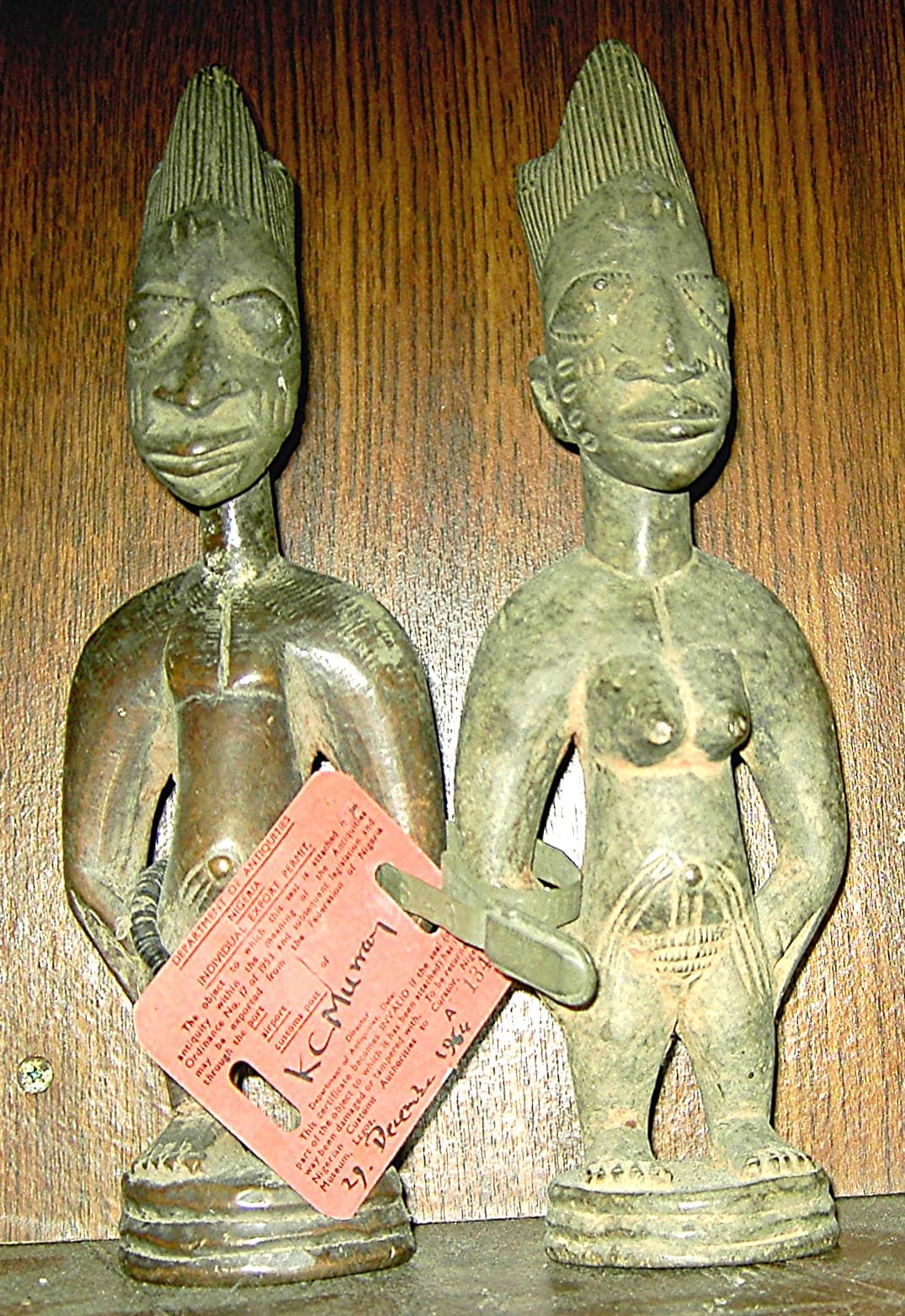
Nigeria
Sacred twin figure used to house the spirit of a deceased twin, ensuring the family's continued blessing.

East and Southern Africa
Ancient fertility and abundance symbol used since the Stone Age as a container, ornament, and sacred offering.

