

102
Protection
🔨
Thor's Hammer (Mjolnir)
Norway
The mighty hammer of the thunder god, worn as protection across the Viking world.
4.7Learn more →

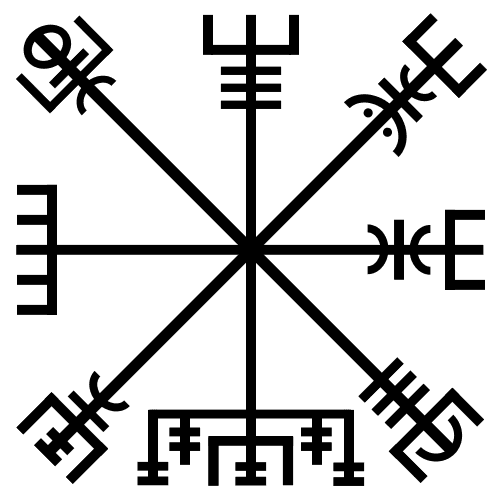
The Norse symbol of invincibility that Viking warriors wore before battle.
The Helm of Awe — Ægishjálmr — is one of the most potent protective symbols in Norse magical tradition, an eight-pronged stave used by Viking warriors to instil fear in their enemies and grant invincibility in battle. The symbol appears in the Poetic Edda and the Prose Edda, where it is described as being worn by the dragon Fáfnir to project terror and by Sigurd after he kills Fáfnir and claims it for himself.
The eight arms of the Ægishjálmr radiate from a central point, each arm terminating in an ísaz (ice) rune formation — a powerful protective symbol suggesting that the wearer is at the centre of all directions, defended from every approach. Warriors who used the symbol reportedly pressed it into their foreheads with lead before battle, literally stamping the protective force into their flesh in the belief that it would confuse, terrify, and disorient enemies while keeping its bearer perfectly clear-headed and focused.
The symbol's name combines 'ægis' (the aegis — the divine shield borrowed from Greek mythology through Norse cultural exchange) and 'hjálmr' (helm). Together they describe a helmet that is not physical armour but magical protection — an invisible force field generated by the symbol's power. Modern practitioners of Norse spirituality use the Helm of Awe in meditative contexts, drawing or visualising it when entering stressful or threatening situations as a means of centring and psychological fortification.
The Helm of Awe represents absolute centre — the point from which all threats can be seen and met, where fear cannot penetrate because you are not caught off guard by any direction of attack. It symbolises the cultivated inner stillness that makes a person genuinely formidable: not aggressive strength but impenetrable focus and clarity.
Draw the Helm of Awe on paper and place it where you most need protection. Wear it as a pendant or have it tattooed as a permanent protective mark. Before high-pressure situations — job interviews, important meetings, difficult conversations — visualise the symbol surrounding you, its eight arms extending in all directions, creating a zone of clarity and focus.
The Helm of Awe appears in the Völsunga Saga as one of the treasures Sigurd claims from the dragon Fáfnir's hoard. The saga describes Sigurd placing the helm on his own head after the kill, suggesting it was both a physical object and a magical one — a helmet that provided not just physical protection but supernatural invincibility.
Most Norse protective runes guard against specific threats. The Helm of Awe is specifically designed to provide omnidirectional protection and to actively project fear into enemies — it is both defensive and offensively intimidating, making it uniquely suited to combat and high-stakes confrontational situations.
Yes — historically, protective symbols were marked directly on the body for the most intimate and constant protection. Tattooing the Helm of Awe continues this tradition in a modern form. It is commonly tattooed between the shoulder blades or on the forehead (in modern stylised versions) — positions that mirror the historical battle practice.
The symbol appears in Norse literary sources that describe historical and mythological warriors using it. Whether it was used exactly as described is uncertain, but Norse magical practice certainly included the use of protective symbols in battle contexts, and the Ægishjálmr was one of the most discussed.
Norway
The mighty hammer of the thunder god, worn as protection across the Viking world.
Norway
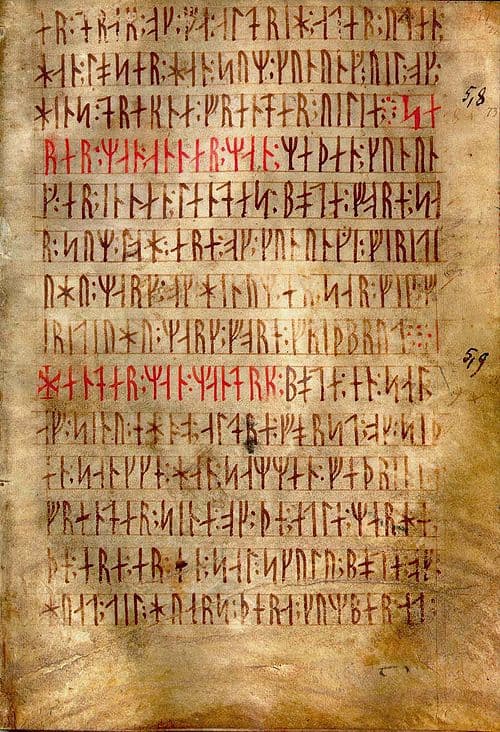
The ancient Norse alphabet stones used for divination and as powerful protective talismans.
Iceland
The Norse wayfinder compass that guides its bearer through storms to safe harbour.

