

286
Wealth
🐂
Malagasy Zebu Horn
Madagascar
Sacred horn of Madagascar's zebu cattle — the centerpiece of Malagasy spiritual life and the ultimate symbol of ancestral wealth.
4.6Learn more →

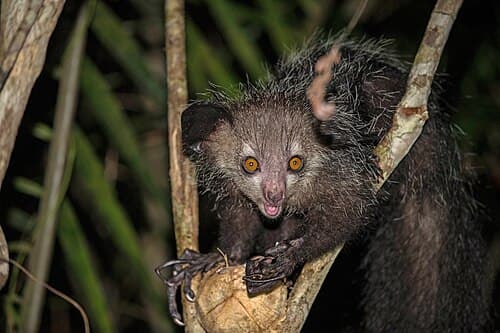
Paradoxical charm based on the feared and revered aye-aye — Madagascar's uncanny omen creature.
The aye-aye (Daubentonia madagascariensis) is perhaps the world's most peculiar primate — a nocturnal creature with enormous eyes, bat-like ears, constantly growing rodent-like teeth, and an extraordinarily elongated middle finger used to tap on wood listening for insect larvae, then extracting them from their tunnels. This alien appearance has made the aye-aye one of the most feared animals in Madagascar. In traditional Malagasy belief, the aye-aye is a powerful fady (taboo) creature: it is widely considered a harbinger of death, and many Malagasy villages have traditions that anyone who encounters an aye-aye pointing at them with its elongated finger will soon die, or that the village must be burned after an aye-aye visits.
Yet the aye-aye's very power as a creature of death and omen makes it spiritually potent for those who know how to work with rather than against its energy. In some Malagasy traditions — particularly among certain forest communities — the aye-aye is not simply feared but respected as a messenger between worlds, a creature so extraordinary that it stands at the boundary between ordinary nature and the spirit realm. Protective charms based on aye-aye imagery are sometimes used to claim the creature's power: facing the fear directly and wearing its image is believed to neutralize the threat and convert its ominous power into protection.
In the broader context of global charm traditions, the aye-aye charm represents the principle of confronting the feared and transforming it: acknowledging the reality of death and the uncanny while claiming protection against being blindsided by it. The aye-aye's extraordinary sensory adaptations — its ability to hear what is hidden and extract what is concealed — also make it a symbol of hidden knowledge and the power of unusual perception.
Protection through facing feared omens directly, the transformation of ominous energy into protective power, hidden knowledge and perception beyond the ordinary, and Madagascar's unique relationship with its extraordinary fauna.
Use an aye-aye charm when you are facing fears you cannot avoid — illness, loss, or major uncertainty. The logic is that carrying the feared image neutralizes it by showing you have faced rather than fled the fear. It can also be used as a talisman for developing perception and insight into hidden matters.
The aye-aye is the world's largest nocturnal primate and the only primate known to use echolocation-like techniques to find food — tapping on wood and listening for the hollow sound of insect galleries beneath. Critically endangered, with perhaps fewer than 1,000 individuals remaining, the very rarity that makes the aye-aye so fearsome in Malagasy tradition now makes it a conservation priority.
Views vary across Madagascar's many ethnic groups and regions. Some communities consider aye-aye sightings intensely bad omens requiring immediate ritual action. Others in forest communities live more comfortably with them. Urban Malagasy increasingly view the aye-aye as a conservation symbol. The fady (taboo) status is real and widespread but not universal.
Many charm traditions worldwide use the image of feared or dangerous things as protective objects — the Medusa head in Greek tradition, the evil eye itself used as a ward against the evil eye, and many African traditions that use images of dangerous animals for protection. The logic is that embodying the feared thing prevents it from catching you unaware.
Yes — classified as Endangered on the IUCN Red List, the aye-aye faces threats from habitat loss, hunting (due to the fady taboo — killing the creature after a sighting is common), and low reproductive rates (females have only one young every 2-3 years). Conservation efforts focus on both habitat protection and changing cultural attitudes.
Madagascar
Sacred horn of Madagascar's zebu cattle — the centerpiece of Malagasy spiritual life and the ultimate symbol of ancestral wealth.
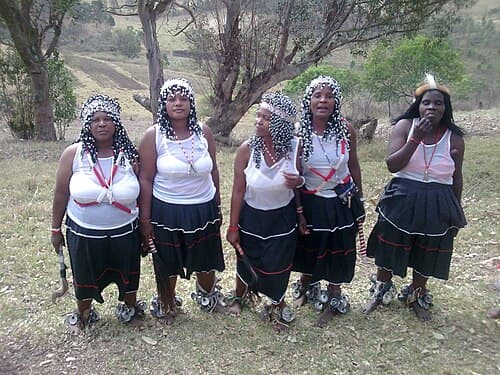
Southern Africa
The sacred divination set of the sangoma healer — bones, shells, and objects that reveal hidden truths.

Benin / Haiti / West Africa
Misunderstood figure from Vodou tradition — primarily a vessel for healing and protective spiritual work.

