

42
Protection
🏅
St Christopher Medal
France
The patron saint of travellers whose medal has accompanied millions on journeys.
4.6Learn more →


The Miraculous Medal is one of the most widely distributed religious medals in history, given to millions worldwide as a charm for divine grace, healing, and the special intercession of the Virgin Mary.
The Miraculous Medal originates from a series of apparitions of the Virgin Mary reported by Catherine Labouré, a young French novice, in the chapel of the Daughters of Charity in Paris in 1830. Mary reportedly showed Catherine an image of herself standing on a globe, crushing a serpent, with rays of light streaming from her hands — the light representing graces she wished to give humanity. She instructed Catherine to have a medal made of this image, promising that 'all who wear it will receive great graces.'
The medal was first struck in 1832 and distributed throughout Paris, where at the time cholera was killing thousands. Reports of extraordinary cures and conversions among those who received the medal were so numerous that it quickly acquired its popular name: the Miraculous Medal. Within a few years, tens of millions had been distributed across the Catholic world. Today it is estimated that billions of Miraculous Medals have been produced, making it one of the most replicated objects in human history.
The reverse of the medal features the letter M surmounted by a cross, a bar beneath, and the hearts of Jesus (crowned with thorns) and Mary (pierced by a sword), surrounded by twelve stars. The front shows Mary as described in the vision. The medal is carried by Catholics and non-Catholics alike as a charm for healing, protection, and the receipt of divine grace.
Divine grace, healing, protection through Marian intercession, conversion of heart, and the compassionate love of the divine feminine.
Wear the Miraculous Medal as a necklace pendant worn continuously as a constant invocation of divine grace. Give one to the sick as a healing charm with the accompanying prayer. Carry one in a wallet or handbag as an everyday protection charm. The traditional prayer — 'O Mary, conceived without sin, pray for us who have recourse to thee' — is recited while touching the medal.
Alphonse Ratisbonne, a Jewish anti-Catholic lawyer, visited the Church of Sant'Andrea delle Fratte in Rome in 1842 wearing a Miraculous Medal given to him as a challenge. He reportedly experienced a vision of the Virgin Mary and was immediately converted, becoming a Catholic priest — a case investigated and confirmed by the Church as miraculous.
The Church recommends having sacramentals blessed by a priest to confer additional spiritual benefit, but many people believe the medal's protective and healing qualities operate through the wearer's faith and invocation regardless.
The medal has been reported to bring blessings to people of various faith backgrounds and none. The famous Ratisbonne case involved a non-believer. Many consider it a charm for divine grace that transcends denominational boundaries.
The twelve stars represent the twelve apostles. Together with the other symbols on the medal — the cross, the hearts, and the letter M — they form a complete iconographic program of Catholic devotion to Mary and Christ.
France
The patron saint of travellers whose medal has accompanied millions on journeys.

Medieval Germany / Italy
The St. Benedict medal is considered one of the most powerful exorcism and protection medals in the Catholic tradition, used worldwide to ward off evil, overcome temptation, and invoke divine protection.
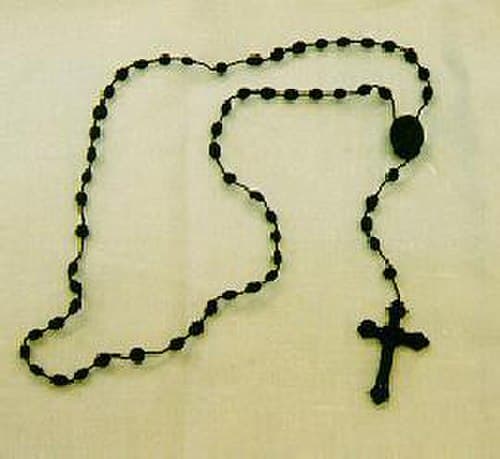
Medieval Europe
Rosary beads are the most recognizable Catholic prayer tool in the world, used by hundreds of millions for meditative prayer, protection, and the invocation of divine grace.

