Miraculous Medal
France (Paris)
The Miraculous Medal is one of the most widely distributed religious medals in history, given to millions worldwide as a charm for divine grace, healing, and the special intercession of the Virgin Mary.
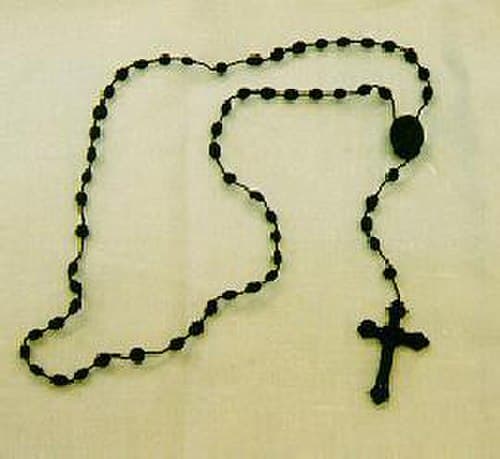
Rosary beads are the most recognizable Catholic prayer tool in the world, used by hundreds of millions for meditative prayer, protection, and the invocation of divine grace.
The Rosary as a structured set of prayers developed gradually in medieval Europe, with the Dominican Order popularizing the practice in the thirteenth century. The devotion involves meditating on specific events in the lives of Jesus and Mary (the Mysteries) while reciting prayers counted on a string of beads: typically five sets of ten small beads (decades), each preceded by one larger bead, with a crucifix at the end. The beads provide a tactile anchor for the meditative mind, keeping the practitioner engaged through the repetition.
The physical rosary beads became beloved objects in their own right, crafted from materials ranging from wildflower seeds (traditional in some Spanish countries) to precious gemstones, coral, amber, ivory, and carved wood. Royal rosaries were commissioned from the greatest goldsmiths of Europe. Military commanders carried rosaries into battle. Sailors wound them around their wrists. The physical beads, passed down through generations, became family heirlooms charged with the prayers of all who had held them.
Today, rosary beads are used by hundreds of millions of Catholics worldwide and have also been adopted as meditative and protective charms by people of many backgrounds who appreciate their tactile meditative quality. Hanging a rosary from a rearview mirror, wearing it as a necklace, or carrying it in a pocket are all common practices for accessing its protective and calming energy.

Meditative prayer, divine intercession, protection through faith, connection to Mary and Christ, and the calming power of rhythmic repetition.
Hold the rosary beads while reciting the traditional prayers in a meditative rhythm. Carry them in your pocket to have a tactile stress-relief tool available throughout the day. Hang a rosary above a child's bed to invoke protective prayer over their sleep. Use the beads simply as a mindfulness tool, focusing on each bead as a unit of breath and intention even without specific prayers.
The word 'rosary' comes from the Latin 'rosarium,' meaning 'rose garden' — the prayers were poetically imagined as roses being offered to the Virgin Mary, with each bead a single rose in an endless garden of devotion.
Yes. While the rosary is a specifically Catholic devotional practice, the beads themselves are powerful as a meditative and tactile calming tool for anyone. Many people of other faiths and none find them deeply helpful for focus and stress reduction.
Catholic tradition discourages wearing them purely as fashion accessories, but wearing them as a sincere protective charm while understanding their spiritual significance is generally considered respectful. Intent matters enormously.
Traditional materials include wood, glass, crystal, gemstones, and metals. Gemstone rosaries — rose quartz for love, amethyst for spiritual depth, black tourmaline for protection — align the prayer practice with crystal healing intentions.
France (Paris)
The Miraculous Medal is one of the most widely distributed religious medals in history, given to millions worldwide as a charm for divine grace, healing, and the special intercession of the Virgin Mary.
France
The patron saint of travellers whose medal has accompanied millions on journeys.
Medieval England / Carmelite Order
The scapular is a Catholic devotional garment — a small piece of wool worn over the shoulders — promised by the Virgin Mary to offer protection and salvation to those who wear it faithfully.