
398
General
🫒
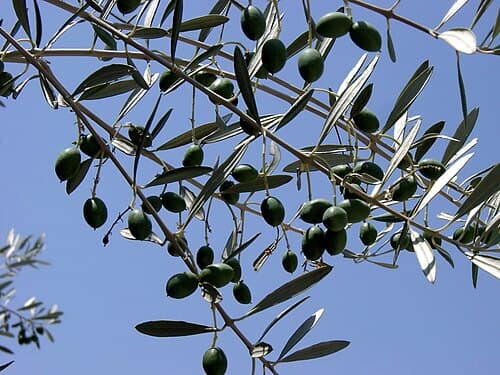
Greek Olive Branch
Greece
The sacred olive of Athena — symbol of peace, wisdom, abundance, and civilization's deepest roots.
4.5Learn more →


Montenegro's ancient coastal olive trees — some over 2,000 years old — carrying Mediterranean peace, wisdom, and the blessing of deep time.
Montenegro's Bay of Kotor and Adriatic coast host some of Europe's oldest living olive trees — some estimated at over 2,000 years old, alive during the Roman Empire's height. The Montenegrin olive (maslina) grows in the Paštrovići tribal area and Old Bar region, its gnarled, massive trunks representing one of Europe's most striking encounters with deep time in a living organism. These trees have survived the fall of Rome, the Ottoman conquest, the Venetian republic, and two world wars — rooted while empires rose and fell around them.
In Montenegrin tradition, olive trees are family members — inherited through generations, named, and deeply respected. Cutting down a family olive tree is considered a sin equivalent to harming an ancestor. The olive's oil blesses food, medicine, and religious ritual simultaneously, making it the most universal blessing substance in the Mediterranean world.
As a lucky charm, the Montenegrin olive carries the specific energy of extraordinary age and survival — a 2,000-year-old tree has seen everything and survived it all. This energy communicates to the charm holder: whatever you face, something within your tradition has faced worse and remained. The olive's deep roots in thin, rocky Adriatic soil speak to the ability to thrive in conditions that would defeat those with shallower foundations.
The Montenegrin Olive traces its origins to Montenegro, where it has been revered for generations as a powerful symbol of good fortune and positive energy. Historical records and oral traditions suggest that early versions of this charm appeared centuries ago, when communities in Montenegro first began attributing supernatural qualities to objects drawn from their natural and spiritual environment.
Over time, the Montenegrin Olive evolved from a regional folk object into a widely recognized talisman. Traders, travelers, and migrants carried it across borders, introducing it to new cultures that often adopted and adapted it to fit their own belief systems. Today it is found in montenegro and beyond, each culture adding its own layer of meaning and ritual to the charm's enduring legacy.
In its homeland of Montenegro, the Montenegrin Olive occupies a revered place in both daily life and ceremonial practice. It is not merely decorative — it is woven into the fabric of cultural identity, appearing in celebrations, rites of passage, and household traditions that have been passed down through generations.
Beyond Montenegro, the Montenegrin Olive has gained recognition in montenegro and other regions, where it is valued for its symbolic connection to universal good luck. Scholars of material culture and anthropologists note that charms like the Montenegrin Olive serve a dual psychological function: they provide a tangible focus for hope and intention, and they connect their owners to a living cultural tradition that transcends individual experience.
To get the most from your Montenegrin Olive, keep it in a place where you will see it daily — on a desk, nightstand, or near your front entrance. Physical proximity reinforces the intention behind the charm and serves as a regular reminder of your goals.
Traditional practice recommends handling the charm with clean hands and respectful intention. Many practitioners in Montenegro advise setting a clear purpose when you first acquire the charm: hold it, state your wish or goal silently or aloud, and then place it in its chosen position. Periodically cleansing the charm — by passing it through incense smoke, placing it under moonlight, or simply wiping it with a clean cloth — is believed to refresh its energy.
If the charm is meant to be worn (as jewelry or a carried token), keep it close to your body throughout the day. If it is a household object, place it in the area of your home most associated with its purpose — for example, near a workspace for success charms, or by the bed for love and health charms.
Deep-rooted survival, the wisdom of extraordinary age, Mediterranean peace, the blessing of thriving in difficult conditions, and the endurance of what is genuinely rooted.
Keep a charm made from genuine Montenegrin or old-growth Mediterranean olive wood near objects of most personal significance. Anoint with olive oil when seeking peace or wisdom. When facing overwhelming challenges, touch an olive wood charm and remember that 2,000-year-old trees have outlasted every difficulty.
The oldest olive tree in Montenegro, near the village of Old Bar, is estimated to be 2,243 years old — planted approximately 230 BCE. It is legally protected as a cultural monument, produces approximately 30 kg of olives annually, and is visited by pilgrims who leave votive offerings and wishes tied to its ancient branches.
The symbolic meanings overlap greatly — peace, wisdom, prosperity. Montenegro's specific added quality is the extraordinary age of its coastal trees and their survival through multiple conquests. The energy is Mediterranean baseline plus deep-time resilience.
Genuine olive wood shows beautiful grain patterns in cream and brown, with a distinctive texture. It has a subtle, pleasant scent when worked. Any olive wood object made from old-growth Mediterranean trees carries significant energy.
In Mediterranean tradition, yes — a small jar of quality olive oil from old trees is a blessing object. Consuming olives and olive oil grown on old trees is considered incorporating their accumulated wisdom. The oil is the most active form of the olive's blessing.
The Montenegrin Olive originates from Montenegro, where it has been used as a general charm for centuries. Its influence has since spread to montenegro and many other regions worldwide.
Keep a charm made from genuine Montenegrin or old-growth Mediterranean olive wood near objects of most personal significance. Anoint with olive oil when seeking peace or wisdom. When facing overwhelming challenges, touch an olive wood charm and remember that 2,000-year-old trees have outlasted every difficulty. For best results, set a clear intention when you first acquire the charm and keep it in a prominent, respectful location.
Yes, giving a Montenegrin Olive as a gift is considered a generous and meaningful gesture in most traditions. In Montenegro, gifted charms are often believed to carry even stronger energy than those purchased for oneself, because they come with the goodwill and intention of the giver.
Many practitioners recommend periodically cleansing your Montenegrin Olive to refresh its energy. Common methods include passing it through incense smoke, placing it in moonlight overnight, rinsing it under clean water (if the material allows), or simply wiping it down with a clean cloth while setting a fresh intention.
While the Montenegrin Olive originated in the cultural traditions of Montenegro, it is not exclusive to any single religion. It has been adopted and adapted by people of many faiths and backgrounds, each bringing their own interpretation to its symbolism and use.
Greece
The sacred olive of Athena — symbol of peace, wisdom, abundance, and civilization's deepest roots.
Cyprus
The ancient olive of Aphrodite's island — Cyprus's sacred tree carrying 5,000 years of Mediterranean blessing from the birthplace of love.

Greece
Greece's sacred fruit of Persephone — the pomegranate bursting with seeds symbolizing abundance, fertility, and eternal renewal.

