
178
Protection
🎭
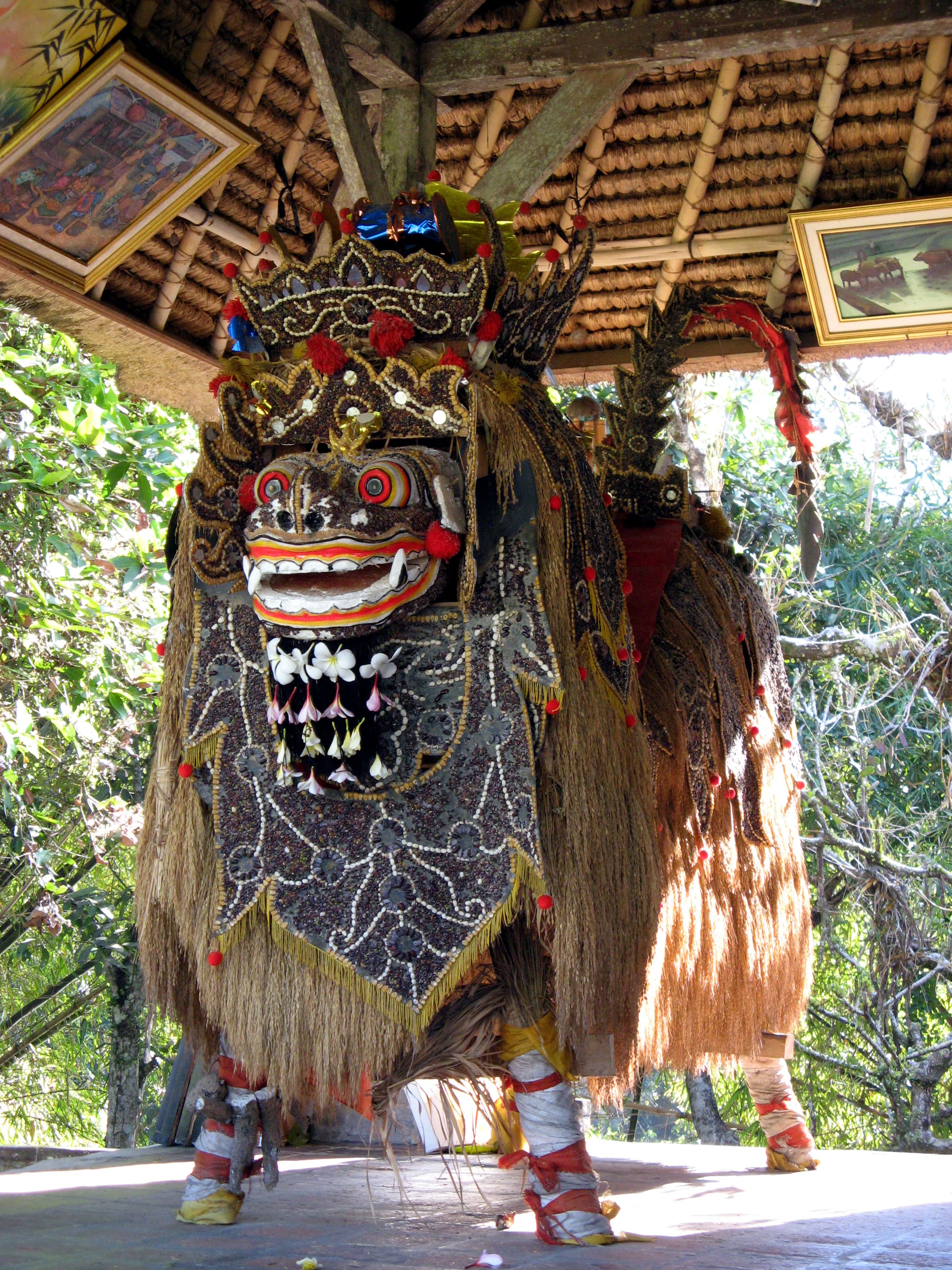
Balinese Barong Mask
Indonesia
The lion-like protective deity Barong leads a cosmic battle against evil and chaos, represented in Bali's most sacred ritual dance.
4.5Learn more →


Guardian lion-dragons flank the entrances of every Burmese temple, providing supernatural protection to sacred spaces and their communities.
The Chinthe (also spelled Chinthé) is the mythological guardian lion of Myanmar — a creature that is simultaneously a lion (the word 'chinthe' literally means 'lion' in Burmese) and a dragon, typically depicted with a lion's body, a dragon's face, and scales. These fierce protective figures stand guard in pairs at the entrances of pagodas, palaces, and temples throughout Myanmar, just as their counterparts guard Buddhist temples across Southeast Asia. They are believed to protect sacred spaces from evil spirits and malevolent forces, their terrifying aspect alone being sufficient to drive away most supernatural threats.
The Chinthe's origins connect to both Indian Buddhist temple guardian traditions (dvarapalas) and local Burmese animist beliefs about powerful animal guardians. In Burmese mythology, the Chinthe is the offspring of a princess and a lion — a royal lineage that explains its position as a guardian of palaces and sacred sites associated with royal authority. The most famous Chinthe pair in the world guard the Shwedagon Pagoda in Yangon, and the creature's image appears on Myanmar's pre-independence currency, seals, and official insignia.
For home protection, Chinthe figurines are placed at doorways and gate posts to guard the property. Smaller figurines are kept on home altars and in businesses. The Chinthe's protective power is specifically oriented toward supernatural threats — spirit attacks, black magic, and the entry of malevolent entities — making it complementary to physical security measures rather than a substitute for them. The creature's dual nature as both lion (physical power) and dragon (supernatural power) means its protection operates on both planes simultaneously.
Guardian protection of sacred spaces and homes, dual supernatural and physical protection, royal authority, and the fierce love that guards those under its care.
Place Chinthe figurines in pairs at the entrance of your home or business, one on each side of the door. They should face outward toward potential threats, not inward. Offer incense and flowers on Buddhist holy days (lunar eighth and full moon days). Keep the figurines clean and in good repair — a damaged Chinthe guardian should be respectfully replaced.
The Chinthe appears on the flag of Kachin State in Myanmar, and during the British colonial period, the Chinthe's image was so associated with Burmese identity that the British-led Burma Rifles regiment adopted the Chinthe as their symbol — a colonial force appropriating the symbol of the power they had conquered as their own protective emblem.
The Chinthe has the combined features of a lion and a dragon — you can identify it by its distinctly dragon-like face with large eyes, the presence of scales on its body, and its specific stylized Burmese aesthetic that differs from Indian Singha lions or Chinese Foo dogs. The Chinthe is specifically Burmese, while similar guardians in other cultures have their own distinct forms.
Yes. Traditionally, one Chinthe has an open mouth and one has a closed mouth. The open-mouthed figure is believed to be exhaling positive energy into the protected space, while the closed-mouthed one is inhaling and trapping negative energies before they enter. Together they create a complete protective system of both emission and absorption.
While their primary role is as threshold guardians, smaller Chinthe figures are placed inside homes on altars as general protective presences. In Burmese tradition, they can be placed wherever protection is specifically needed: near a child's sleeping area, at the top of a staircase, or in a home office. Their power is strongest at entrances but functional throughout the home.
Indonesia
The lion-like protective deity Barong leads a cosmic battle against evil and chaos, represented in Bali's most sacred ritual dance.
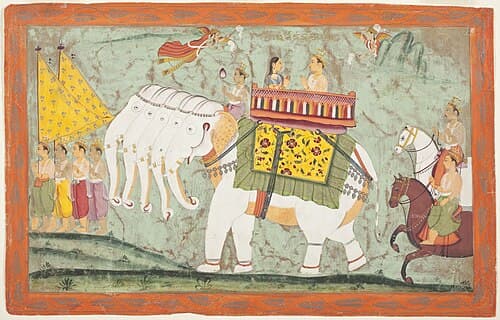
Thailand
The divine three-headed elephant Erawan serves as the mount of Indra and a supreme symbol of royal power and cosmic protection.

Cambodia
The multi-headed serpent deity Naga guards Angkor Wat and represents the cosmic bridge between the human and divine worlds.

Thailand
A miniature dwelling placed outside Thai homes and businesses to house the property's protective spirit and maintain good relations with the spirit world.

