
170
Protection
🐘
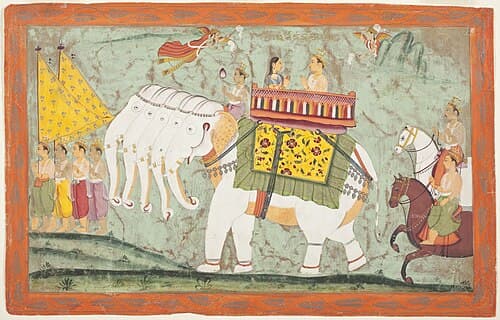
Erawan (Three-Headed Elephant)
Thailand
The divine three-headed elephant Erawan serves as the mount of Indra and a supreme symbol of royal power and cosmic protection.
4.6Learn more →


A miniature dwelling placed outside Thai homes and businesses to house the property's protective spirit and maintain good relations with the spirit world.
The spirit house (San Phra Phum) is one of the most distinctive features of the Thai landscape, found outside virtually every home, hotel, restaurant, shopping mall, and business across the country. The concept stems from an ancient animist belief, later overlaid with Hindu and Buddhist elements, that every piece of land has a spirit (chao thi) who is its original owner. When humans build on land, they must provide the spirit with a comfortable dwelling so that it does not disturb the human residents — and ideally, so that it becomes a benevolent protector of the property.
Spirit houses are architectural miniatures — typically resembling traditional Thai structures on tall columns — and they are treated as genuine dwellings: furnished with miniature furniture, provided with food and drink offerings, given fresh garland flowers, incense, and candles. The offerings are maintained daily or weekly, and the condition of the spirit house is considered a direct reflection of the household's spiritual health. A well-maintained, freshly decorated spirit house indicates a household in harmony with its spiritual environment; a neglected one signals spiritual disorder and is believed to invite misfortune.
When a spirit house is damaged or becomes too old to maintain properly, it cannot simply be thrown away — the spirit must be consulted. Old spirit houses are ceremonially retired at special temple grounds designated for this purpose, where dozens or hundreds of old spirit houses can be seen arranged respectfully. This practice of respectful retirement of sacred objects, which echoes the Thai treatment of old Buddha amulets, reflects a comprehensive cosmology of maintaining right relations with the spirit world at every stage of an object's existence.
Maintenance of harmonious relations between human inhabitants and the land's protective spirit, resulting in security, prosperity, and protection from supernatural harm.
Place the spirit house on a column in the northeast corner of your property (or wherever receives morning sunlight), at a height that honors the spirit (never lower than your waist). Offer fresh flowers, incense, water, and food daily. Include small figurines of servants, elephants, and horses. Replace old offerings regularly. Consult a monk when installing a new spirit house.
The famous Erawan Shrine in Bangkok (actually a Brahma shrine), which is one of the most visited religious sites in Thailand, was originally built as a spirit house for the Erawan Hotel in 1956 after a series of accidents during construction. When construction incidents ceased after the shrine's installation, its reputation spread across the country.
Spirit houses belong to animist tradition that predates Buddhism, and their basic principle — acknowledging and respecting the spiritual presence in a place — is universally applicable. Many non-Thai people have spirit houses at their homes and businesses in Thailand with excellent results. A qualified Thai priest should ideally perform the installation ceremony.
A fallen spirit house is taken seriously in Thai belief — it indicates the spirit is displeased or the house has been damaged by negative forces. Clean the area immediately, offer fresh flowers and incense, and consult a monk. A damaged spirit house should be repaired or replaced ceremonially, never simply discarded.
The San Phra Phum (spirit house) is specifically for the land spirit. A separate San Jao Thi is sometimes placed nearby for the household guardian deity. In practice, many Thai families maintain only one spirit house that serves both functions. The distinction matters more in larger properties and temples where multiple spiritual entities are specifically accommodated.
Thailand
The divine three-headed elephant Erawan serves as the mount of Indra and a supreme symbol of royal power and cosmic protection.

Thailand
The four-faced Brahma deity is Thailand's most widely venerated Hindu god, granting wishes to all who pray with sincere hearts.

Thailand
Thailand's goddess of prosperity and good fortune, Nang Kwak beckons customers and wealth with her raised right hand.
Thailand
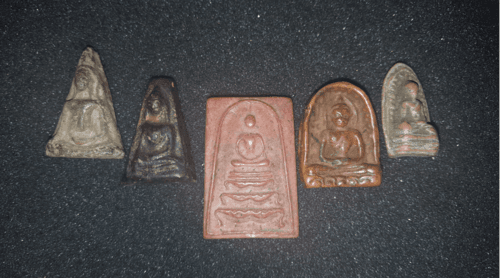
Consecrated Buddha image amulets are Thailand's most serious sacred collectibles — worn for protection, luck, and spiritual merit.

