
350
General
🦄
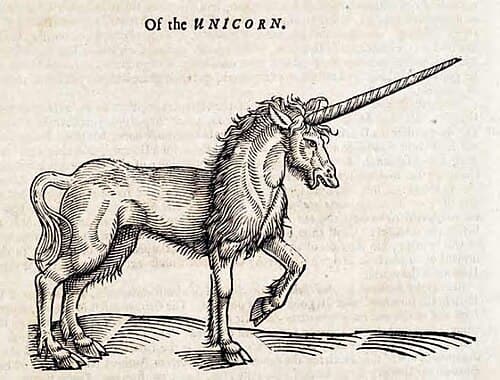
Unicorn
Ancient Persia / Medieval Europe
The unicorn — a horse with a single magical horn — has been a symbol of purity, grace, and miraculous luck across cultures for over three thousand years.
4.5Learn more →


The Phoenix — the mythical bird that rises reborn from its own ashes — is the world's most powerful symbol of resurrection, transformation, and the triumph of the human spirit over adversity.
The Phoenix myth appears in strikingly similar forms across ancient Egyptian, Greek, Roman, Persian, Chinese, and Native American traditions. In Egypt, the Bennu bird — a sacred solar heron associated with the god Ra and the sun's daily resurrection — is considered the original Phoenix archetype. In Greek and Roman literature, the Phoenix was described as a unique, glorious bird that lived for five hundred years before bursting into flame on a pyre of aromatic wood and rising three days later as a vibrant new creature from the ashes.
In Chinese tradition, the Fenghuang (often translated as phoenix, though a distinct creature) is one of the four divine animals and a symbol of virtue, grace, and imperial power. In medieval European alchemy, the Phoenix represented the successful completion of the Great Work — the transformation of base matter into gold, or the soul into its highest expression. Christian theologians adopted the Phoenix as a symbol of Christ's resurrection and the promise of eternal life.
As a lucky charm, the Phoenix is used by those who have survived great difficulty — illness, loss, failure, addiction, disaster — and are rebuilding their lives. It is the talisman of the survivor, the comeback story, the hero who returns transformed. It promises that what was destroyed can be reborn as something more beautiful.
Resurrection, transformation, renewal, perseverance, triumph over adversity, and the indestructibility of the spirit.
Wear a Phoenix charm when beginning a major new chapter after a difficult period. Give one to someone going through recovery or rebuilding to remind them of their power to rise. Place Phoenix art in your office or workspace as a daily reminder that setbacks are only the preparation for the next ascent.
The city of Phoenix, Arizona was named for the mythological bird because it was built on the ruins of an ancient Hohokam settlement — a new city rising from what had once been destroyed, mirroring the legend perfectly.
No single religion owns the Phoenix. It appears in Egyptian solar religion, Greek mythology, Roman symbolism, Chinese cosmology, Persian poetry, and Christian allegory. This universality makes it one of the most broadly resonant luck symbols in the world.
Orange, red, and gold — the colors of flame and the rising sun. Gold Phoenix charms are particularly powerful for ambition and success, while red ones emphasize passion and vitality.
Absolutely. Many people healing from serious illness find the Phoenix especially meaningful — it validates the severity of what they went through while affirming their power to emerge renewed and stronger.
Ancient Persia / Medieval Europe
The unicorn — a horse with a single magical horn — has been a symbol of purity, grace, and miraculous luck across cultures for over three thousand years.

Ancient Persia / Greece
The Griffin — a creature with the body of a lion and the head and wings of an eagle — is an ancient symbol of divine power, guardianship, and the combined strength of the greatest earthly and aerial creatures.

Ancient Egypt
The Ouroboros — a serpent or dragon consuming its own tail — is one of the oldest symbols in the world, representing the infinite cycle of creation and destruction, death and rebirth, and the eternal nature of existence.

