

191
Success
🦅
Arabian Falcon
UAE / Saudi Arabia / Qatar
The sacred hunting bird of the Arabian Peninsula, a symbol of power, precision, and the noble Bedouin tradition of falconry.
4.7Learn more →


The Arabian oryx, Qatar's national animal, a symbol of resilience — extinct in the wild and brought back through conservation.
The Arabian oryx (Oryx leucoryx) is Qatar's national animal and one of conservation's greatest comeback stories — this elegant, white antelope with long straight horns was hunted to extinction in the wild by 1972, surviving only in captivity in zoos and private collections. In 1982 a captive breeding program began reintroducing the species to the Arabian Peninsula, and by 2011 the Arabian oryx had recovered sufficiently to be downlisted from 'Extinct in the Wild' to 'Vulnerable' on the IUCN Red List — the first species ever to make that specific journey back from complete wild extinction. Qatar's commitment to oryx conservation through the breeding program at Al Wabra Wildlife Preservation was central to this achievement.
The oryx appears on Qatar Airways' logo (a stylized running oryx), and oryx imagery pervades Qatari national symbolism as a reminder of both the fragility of desert ecosystems and the possibility of restoration through committed conservation. The 2022 FIFA World Cup in Qatar used 'La'eeb,' a ghostly oryx-inspired mascot, introducing the animal to billions of global viewers and cementing its status as Qatar's international symbol. The oryx's ability to go weeks without water in the desert environment made it the perfect emblem of Bedouin resilience — surviving in conditions where survival seems impossible.
An oryx charm carries the energy of the ultimate resilience story — of coming back from the absolute edge of extinction, of the possibility that what seems irretrievably lost can be restored through dedicated effort and hope.
The Qatari Oryx traces its origins to Qatar, where it has been revered for generations as a powerful symbol of achievement and ambition. Historical records and oral traditions suggest that early versions of this charm appeared centuries ago, when communities in Qatar first began attributing supernatural qualities to objects drawn from their natural and spiritual environment.
Over time, the Qatari Oryx evolved from a regional folk object into a widely recognized talisman. Traders, travelers, and migrants carried it across borders, introducing it to new cultures that often adopted and adapted it to fit their own belief systems. Today it is found in qatar and beyond, each culture adding its own layer of meaning and ritual to the charm's enduring legacy.
In its homeland of Qatar, the Qatari Oryx occupies a revered place in both daily life and ceremonial practice. It is not merely decorative — it is woven into the fabric of cultural identity, appearing in celebrations, rites of passage, and household traditions that have been passed down through generations.
Beyond Qatar, the Qatari Oryx has gained recognition in qatar and other regions, where it is valued for its symbolic connection to personal achievement. Scholars of material culture and anthropologists note that charms like the Qatari Oryx serve a dual psychological function: they provide a tangible focus for hope and intention, and they connect their owners to a living cultural tradition that transcends individual experience.
To get the most from your Qatari Oryx, keep it in a place where you will see it daily — on a desk, nightstand, or near your front entrance. Physical proximity reinforces the intention behind the charm and serves as a regular reminder of your goals.
Traditional practice recommends handling the charm with clean hands and respectful intention. Many practitioners in Qatar advise setting a clear purpose when you first acquire the charm: hold it, state your wish or goal silently or aloud, and then place it in its chosen position. Periodically cleansing the charm — by passing it through incense smoke, placing it under moonlight, or simply wiping it with a clean cloth — is believed to refresh its energy.
If the charm is meant to be worn (as jewelry or a carried token), keep it close to your body throughout the day. If it is a household object, place it in the area of your home most associated with its purpose — for example, near a workspace for success charms, or by the bed for love and health charms.
Resilience against impossible odds, the possibility of restoration after apparent total loss, and the beauty that persists in the harshest environments through adapted elegance rather than brute force.
Carry an oryx charm during periods of recovery from significant loss or setback as a symbol of the ultimate comeback story. Gift to conservation advocates, environmentalists, or anyone who has demonstrated remarkable resilience. Display in a home as a reminder that extinction is not always permanent and hope is always rational.
The unicorn legend may have originated in sightings of the Arabian oryx viewed from the side — the animal's two horns, seen in profile, appear as a single long horn. Ancient traders and explorers encountering oryx on the Arabian Peninsula may have returned to Europe with descriptions that eventually became the unicorn, making the humble oryx the likely progenitor of one of mythology's most beloved creatures.
La'eeb means 'super-skilled player' in Arabic. The FIFA World Cup Qatar 2022 organizers chose an oryx mascot to introduce Qatar's national animal to a global audience and honor Qatar's conservation achievement in helping save the species. The ghostly, playful design was intended to evoke both Qatari heritage and the magical quality of the Arabian desert.
The World Wildlife Fund captured the last wild Arabian oryx in 1972 to start a captive breeding program in collaboration with zoos worldwide. The 'World Herd' maintained in Phoenix, Arizona became the nucleus of successful breeding. When security conditions in Oman permitted, reintroduction began in 1982, and by 2011 wild populations had recovered to over 1,000 animals across several countries.
This is a compelling but unproven theory. Arabian oryx viewed in perfect profile do appear to have one horn. Ancient Greek writers like Ctesias described one-horned animals from Asia that match oryx characteristics. However, unicorn legends appear in multiple cultures independently, and some scholars argue the narwhal tusk was more influential in European unicorn mythology than any sightings of live animals.
The Qatari Oryx originates from Qatar, where it has been used as a success charm for centuries. Its influence has since spread to qatar and many other regions worldwide.
Carry an oryx charm during periods of recovery from significant loss or setback as a symbol of the ultimate comeback story. Gift to conservation advocates, environmentalists, or anyone who has demonstrated remarkable resilience. Display in a home as a reminder that extinction is not always permanent and hope is always rational. For best results, set a clear intention when you first acquire the charm and keep it in a prominent, respectful location.
Yes, giving a Qatari Oryx as a gift is considered a generous and meaningful gesture in most traditions. In Qatar, gifted charms are often believed to carry even stronger energy than those purchased for oneself, because they come with the goodwill and intention of the giver.
Many practitioners recommend periodically cleansing your Qatari Oryx to refresh its energy. Common methods include passing it through incense smoke, placing it in moonlight overnight, rinsing it under clean water (if the material allows), or simply wiping it down with a clean cloth while setting a fresh intention.
While the Qatari Oryx originated in the cultural traditions of Qatar, it is not exclusive to any single religion. It has been adopted and adapted by people of many faiths and backgrounds, each bringing their own interpretation to its symbolism and use.
UAE / Saudi Arabia / Qatar
The sacred hunting bird of the Arabian Peninsula, a symbol of power, precision, and the noble Bedouin tradition of falconry.
Qatar
The Arabian oryx, Qatar's national animal, a symbol of resilience — extinct in the wild and brought back through conservation.
Middle East
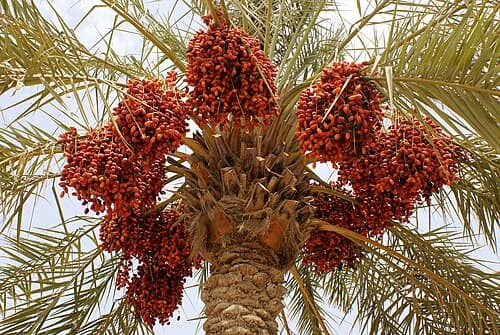
The tree of life of the desert, symbol of abundance in arid lands and the most generous of all Arabic trees.

