

2
General
🍀
Four-Leaf Clover
Ireland
The rarest clover mutation, treasured as nature's own lucky charm.
4.9Learn more →


The beloved little bird of British winter who brings good fortune wherever he appears.
The robin — Erithacus rubecula — is Britain's unofficial national bird, a tiny, round, fearless creature with a flame-red breast that appears in every British Christmas card, that hops boldly around gardeners' feet without apparent fear, and that has accumulated one of the richest bodies of luck lore of any European bird. The robin's association with Christmas, winter, and good fortune in Britain is so deep that the bird has come to represent the peculiarly British combination of cheerfulness in cold weather and the persistence of warmth through dark seasons.
The robin's red breast is explained in Christian legend by its presence at the crucifixion: as Christ hung on the cross, a robin perched nearby and sang to comfort him. A drop of Christ's blood fell on the bird's breast, permanently colouring it red and marking all robins forever as witnesses and comforters of sacred suffering. This story made the robin a bird of divine favour, and harming one was considered both impious and disastrously unlucky.
In British superstition, a robin tapping on a window announces a message from a deceased loved one — a belief that has made the bird a symbol of ongoing connection with those who have died. Seeing a robin on New Year's Day promises good fortune for the whole year. The first robin seen in spring heralds new luck. These accumulating associations have made the robin the single bird most consistently associated with good fortune in the British Isles.
The robin represents the persistence of warmth and life through the coldest seasons, the courage to be present and cheerful when conditions are difficult, and the comfort of ongoing connection with the past. Its appearance is taken as a message that you are not forgotten — by the departed, by fate, or by the forces of life that continue to send small emissaries of hope.
When a robin appears in your garden or close to you, pause and acknowledge it — speak a greeting or silently note the encounter as potentially meaningful. Robin-themed jewellery and decorations are particularly meaningful gifts at Christmas or following a bereavement. Place a robin image in your home or garden as an invitation for the fortune and comfort this bird symbolises.
Robins appear on so many British Christmas cards that postal workers in Victorian England were nicknamed 'robins' because of their red uniforms — and when Christmas cards began to be illustrated, the robin that delivered letters became associated with the human robin who did the same, creating a self-reinforcing visual tradition that continues to dominate British Christmas imagery.
In British tradition, yes — killing or disturbing a robin's nest is considered one of the most reliably unlucky acts a person can commit. The specific bad luck is usually described as affecting the hands (they might shake) or the livestock (milk might sour). The superstition is serious and widely held.
The association between robins and the deceased is pre-Christian in origin, connecting to the bird's presence in winter (the season most associated with death and the otherworld) and its fearlessness around humans (seen as characteristic of supernatural visitors rather than wild creatures). The Christian crucifixion story overlay reinforced the connection.
No — the American robin (Turdus migratorius) is a thrush, much larger than the European robin (Erithacus rubecula) and only superficially similar in its red breast. Early American settlers named the larger bird 'robin' from homesickness for the British bird. The lucky and Christmas associations belong specifically to the European species.
Ireland
The rarest clover mutation, treasured as nature's own lucky charm.
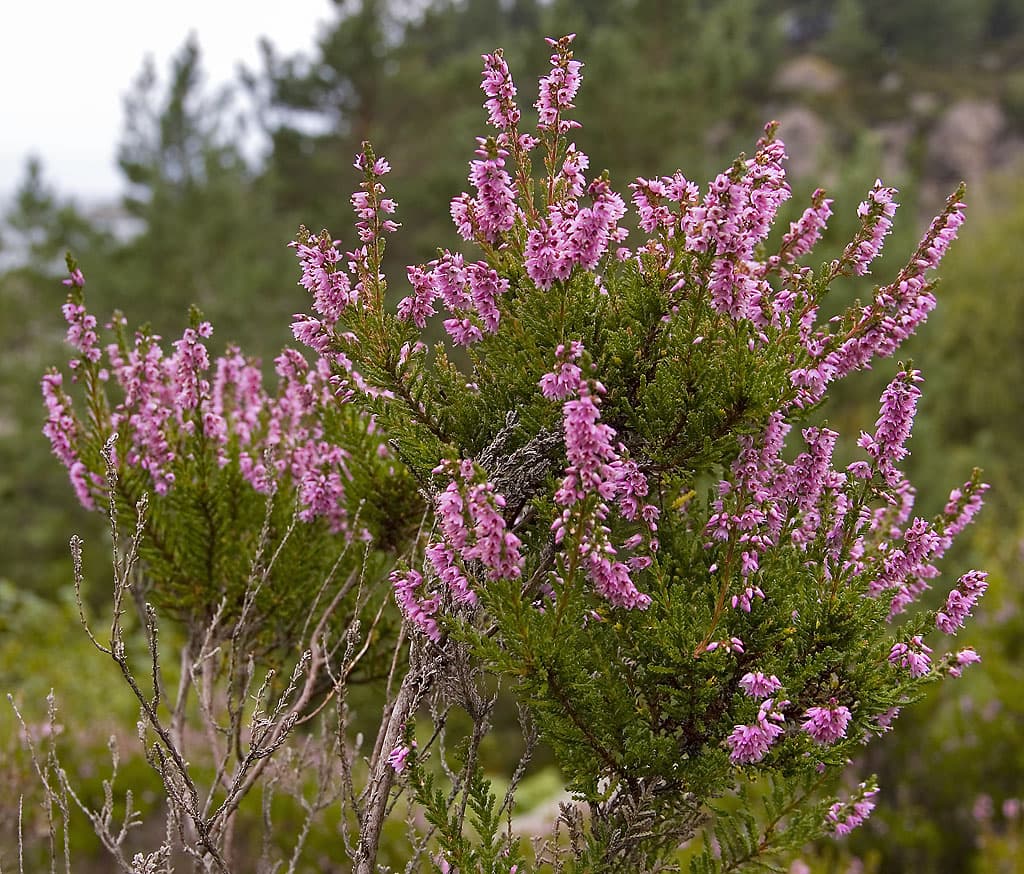
United Kingdom
Scotland's rarest bloom, whose white mutation brings extraordinary fortune to its finder.

United Kingdom
The parasite plant the druids held sacred, bridging worlds and granting protection.

