
362
Health
🎀
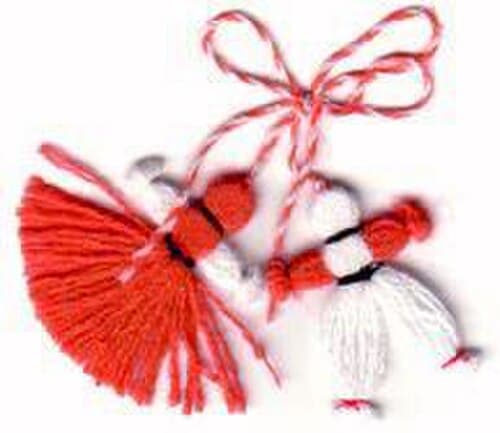
Bulgarian Martenitsa
Bulgaria
Bulgaria's red and white spring charm worn from March 1st to celebrate winter's end and invite health and happiness.
4.6Learn more →


Romania's beloved spring charm — a red and white cord worn from March 1st to welcome new beginnings and health.
The Mărțișor (little March) is Romania's most beloved seasonal tradition and one of Europe's most ancient spring celebrations. On March 1st, Romanians exchange small charms threaded on red and white twisted cord — the cord's colors representing winter (white) yielding to spring (red), or alternatively blood and snow, death and life, female and male principles in dynamic balance. The charm is worn for the first week or first month of March, then tied to a fruit tree or thrown into running water.
The custom predates recorded history, with archaeological evidence of red and white cords found in Neolithic Romanian sites. The Mărțișor encodes an ancient understanding of seasonal energy — spring is not merely a weather change but a cosmic renewal that humans can participate in and accelerate through ritual. Wearing the charm during March's first fragile warmth aligns the wearer with the returning life force.
Traditionally, a young man would give a Mărțișor to a young woman to wish her health and beauty; today all genders exchange them. The charm attached to the cord varies — four-leaf clovers, chimney sweeps, horseshoes, snowdrops — each adding specific blessings to the universal spring renewal energy.
Spring renewal, the return of vitality, health and beauty, winter's surrender to life, and the blessing of new beginnings at the year's first warmth.
Wear a Mărțișor on your left wrist from March 1st. At the end of the month, tie it to a flowering fruit tree to carry your spring intentions into nature's renewal, or throw it into a river to release what you want to leave behind. Make or give one to bless someone's health.
UNESCO inscribed the Mărțișor tradition on its Representative List of Intangible Cultural Heritage in 2017, recognizing it simultaneously for Romania, Moldova, Bulgaria, and North Macedonia, where related spring cord customs survive under different names (Martenitsa in Bulgarian, Martinki in Macedonian).
Handmade is more powerful — the maker's love and intention are woven into every twist of the cord. Making one for someone is itself a deeply meaningful act of blessing.
Health is traditional, but any spring intention works: a new beginning, a fresh relationship, recovered energy after winter's hardships, or a creative project you want to flourish with the season.
The spring renewal energy it works with is universal — the March 1st solar alignment that triggers the tradition exists everywhere in the Northern Hemisphere. Romanians in diaspora report its power is fully portable.
Bulgaria
Bulgaria's red and white spring charm worn from March 1st to celebrate winter's end and invite health and happiness.

Hungary
The beloved tulip of Hungarian folk art — a symbol of love, spring renewal, and the flowering of life's gifts.

Romania
Romania's deochi protection charm — blue beads and garlic warding off the envious gaze.

