
250
General
🎭
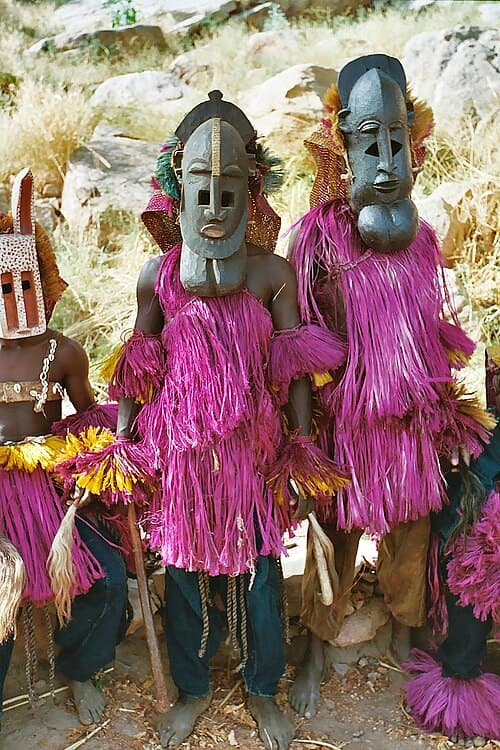
Dogon Kanaga Mask (Mali)
Mali
The cross-shaped Dogon mask used in Dama funeral ceremonies to guide the souls of the dead to their resting place.
4.7Learn more →


The hornbill-based sacred bird figure of the Senufo people — symbol of the first living being and the power of Poro initiation.
The Senufo people of Ivory Coast, Burkina Faso, and Mali have produced some of the most distinctive sculpture in West Africa, and their most iconic form is the calao — a large bird sculpture based on the hornbill (known by the Senufo as poro bird or watoho). This bird figure holds the most sacred position in Senufo cosmology: it was the first living creature brought into existence at the dawn of creation, the being who announced the first sunrise with its call, and the intermediary between the human world and the realm of the Ancient Mother (the supreme female creative force in Senufo belief). The hornbill is thus simultaneously primordial ancestor, herald of new beginnings, and divine messenger.
In the Poro — the Senufo initiation society that governs the spiritual and social education of men through a process spanning up to 21 years — the bird figures play central ceremonial roles. Large versions of the calao are carried on the heads of initiates during ceremonies, literally bearing the weight of divine tradition on their physical bodies as a test of strength and spiritual readiness. Smaller figures are used as personal protective charms and as altar objects that connect their owners to the Poro's accumulated spiritual power. The bird's combination of features — hornbill beak, python body elements, and chameleon characteristics in some examples — makes it a creature of composite power that crosses natural boundaries.
As a luck charm, the Senufo bird figure represents new beginnings (the first sunrise, the first life), protection through divine intermediary, and the patient accumulation of wisdom through sustained initiation and learning. It is particularly appropriate for those beginning long journeys — of education, spiritual development, or personal transformation.
Primordial creation and new beginnings, divine intermediary between human and creator, the accumulated wisdom of initiation, announcement of transformation, and the first light of possibility.
Display a Senufo bird figure in a space associated with learning, new projects, or spiritual development. Place it facing east — the direction of sunrise — to invoke its role as herald of new beginnings. Use it as a meditation focus at the start of important new phases of life.
The hornbill's distinctive casque (the hollow bump above its beak) is remarkable: in the Great Hornbill species, the casque functions as a resonating chamber that amplifies the bird's calls. Senufo tradition recognizes this amplification quality in their spiritual use of the bird — the calao figure amplifies prayers and spiritual intention, projecting them into the divine realm with greater force than unaided human voice.
Poro is the primary male initiation institution of the Senufo and related peoples of West Africa. Boys enter Poro at around age 7 and complete their initiation over 21 years through successive grades, learning history, governance, agricultural knowledge, spiritual practice, and warrior skills. Poro is the institution that transmits the entire cultural knowledge base of the community from one generation to the next.
Yes — the red-billed hornbill (Tockus erythrorhynchus) and other hornbill species native to West African savanna are the primary inspiration. Senufo artists incorporate additional elements from pythons, chameleons, warthogs, and other animals to create a composite creature that transcends any single species, making it a supernatural rather than natural being.
Contemporary Senufo carvers continue to work in Ivory Coast and Burkina Faso. Reliable West African art dealers and fair-trade craft organizations in those countries can connect buyers with authentic artists. Antique Senufo pieces should only be purchased through dealers who can document provenance and confirm ethical sourcing.
Mali
The cross-shaped Dogon mask used in Dama funeral ceremonies to guide the souls of the dead to their resting place.

Sub-Saharan Africa
Ceremonial mask used across Africa to embody spirits, invoke divine forces, and transform the masked dancer into a sacred intermediary.

Ghana
Miniature brass figures used to weigh gold dust — encoding Akan proverbs and wisdom in tiny sculptural form.

