
365
Love
❤️
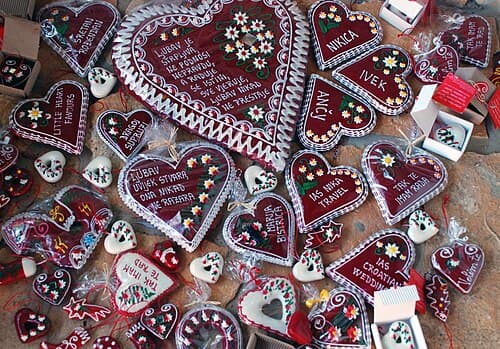
Croatian Licitar Heart
Croatia
Croatia's iconic red gingerbread heart — a UNESCO-protected folk art object and the sweetest expression of Croatian love.
4.6Learn more →


The heart-shaped linden leaf of Slovenia — the sacred tree of the Slavic world symbolizing love, justice, and the village gathering place.
The linden tree (lipa in Slovenian) is the most sacred tree in the Slavic world, and nowhere is this more true than in Slovenia, where the lipa has been present in the national consciousness since pre-Christian times. The linden's heart-shaped leaves, its intensely fragrant late-June flowers, and its role as the shade tree of village gathering places (every Slovenian village of any age has its ancient lipa at the center) make it the living heart of Slovenian community life.
In Slovenian folk belief, the linden is the tree under which justice is administered, agreements are sealed, and oaths are sworn — the tree's sacred character makes any contract made in its shade binding in a deeper sense than any document. The linden also presides over communal celebration: summer festivals, weddings, and community decisions have been held under village lipas for as long as Slovenian settlements have existed.
As a lucky charm, the Slovenian linden leaf brings the energy of genuine community, heart-centered love (the leaf's heart shape is nature's own symbol), the sweetness of connection (linden flower honey is among Europe's finest), and the wisdom of the gathering place where all voices are heard. The linden is the tree of listening and belonging.
The Slovenian Linden Leaf traces its origins to Slovenia, where it has been revered for generations as a powerful symbol of romantic devotion and emotional connection. Historical records and oral traditions suggest that early versions of this charm appeared centuries ago, when communities in Slovenia first began attributing supernatural qualities to objects drawn from their natural and spiritual environment.
Over time, the Slovenian Linden Leaf evolved from a regional folk object into a widely recognized talisman. Traders, travelers, and migrants carried it across borders, introducing it to new cultures that often adopted and adapted it to fit their own belief systems. Today it is found in slovenia and beyond, each culture adding its own layer of meaning and ritual to the charm's enduring legacy.
In its homeland of Slovenia, the Slovenian Linden Leaf occupies a revered place in both daily life and ceremonial practice. It is not merely decorative — it is woven into the fabric of cultural identity, appearing in celebrations, rites of passage, and household traditions that have been passed down through generations.
Beyond Slovenia, the Slovenian Linden Leaf has gained recognition in slovenia and other regions, where it is valued for its symbolic connection to romantic fulfillment. Scholars of material culture and anthropologists note that charms like the Slovenian Linden Leaf serve a dual psychological function: they provide a tangible focus for hope and intention, and they connect their owners to a living cultural tradition that transcends individual experience.
To get the most from your Slovenian Linden Leaf, keep it in a place where you will see it daily — on a desk, nightstand, or near your front entrance. Physical proximity reinforces the intention behind the charm and serves as a regular reminder of your goals.
Traditional practice recommends handling the charm with clean hands and respectful intention. Many practitioners in Slovenia advise setting a clear purpose when you first acquire the charm: hold it, state your wish or goal silently or aloud, and then place it in its chosen position. Periodically cleansing the charm — by passing it through incense smoke, placing it under moonlight, or simply wiping it with a clean cloth — is believed to refresh its energy.
If the charm is meant to be worn (as jewelry or a carried token), keep it close to your body throughout the day. If it is a household object, place it in the area of your home most associated with its purpose — for example, near a workspace for success charms, or by the bed for love and health charms.
Heart-centered community, genuine belonging, love that gathers rather than isolates, the sweetness of connection, justice through inclusion, and the ancient Slavic sense of sacred communal space.
Keep a dried linden leaf or leaf-shaped charm in spaces of important conversations — negotiation rooms, family discussion spaces, counseling settings — to invite the linden's quality of just, heart-centered listening. Linden flower tea drunk before difficult conversations opens the heart. Display in the home to bless community and belonging.
The famous linden tree in Nazarje, Slovenia, is estimated to be over 700 years old — planted during the Middle Ages and still producing flowers each June. Slovenians make annual pilgrimages to ancient lipa trees, which are given legal protection equivalent to historic monuments. Slovenia has the highest number of protected ancient linden trees per capita in Europe.
A pressed real linden leaf in a locket is most powerful. Silver or gold leaf-shaped pendants are elegant and durable. Linden wood carved into a leaf shape carries the tree's energy. Avoid synthetic materials for this nature-spirit charm.
The most auspicious time is the summer solstice (June 21st) when linden trees bloom — their flowers at peak fragrance, the tree in full communion with the season's maximum solar energy. Collect with gratitude and return something to the earth.
Yes — linden flower tea is a traditional Slovenian and broader Slavic remedy for anxiety, insomnia, and heart troubles (emotional as much as physical). Drinking it while setting an intention for love or community makes it a powerful tonic charm.
The Slovenian Linden Leaf originates from Slovenia, where it has been used as a love charm for centuries. Its influence has since spread to slovenia and many other regions worldwide.
Keep a dried linden leaf or leaf-shaped charm in spaces of important conversations — negotiation rooms, family discussion spaces, counseling settings — to invite the linden's quality of just, heart-centered listening. Linden flower tea drunk before difficult conversations opens the heart. Display in the home to bless community and belonging. For best results, set a clear intention when you first acquire the charm and keep it in a prominent, respectful location.
Yes, giving a Slovenian Linden Leaf as a gift is considered a generous and meaningful gesture in most traditions. In Slovenia, gifted charms are often believed to carry even stronger energy than those purchased for oneself, because they come with the goodwill and intention of the giver.
Many practitioners recommend periodically cleansing your Slovenian Linden Leaf to refresh its energy. Common methods include passing it through incense smoke, placing it in moonlight overnight, rinsing it under clean water (if the material allows), or simply wiping it down with a clean cloth while setting a fresh intention.
While the Slovenian Linden Leaf originated in the cultural traditions of Slovenia, it is not exclusive to any single religion. It has been adopted and adapted by people of many faiths and backgrounds, each bringing their own interpretation to its symbolism and use.
Croatia
Croatia's iconic red gingerbread heart — a UNESCO-protected folk art object and the sweetest expression of Croatian love.
Slovakia
Slovakia's national tree — the lipa (linden) that shades village gatherings and represents Slovak identity, freedom, and the sweetness of home.

Czech Republic
World-renowned Bohemian lead crystal, prized for its clarity and light-refracting brilliance as a symbol of refined fortune.

