

51
Protection
🔵
Turkish Nazar
Turkey
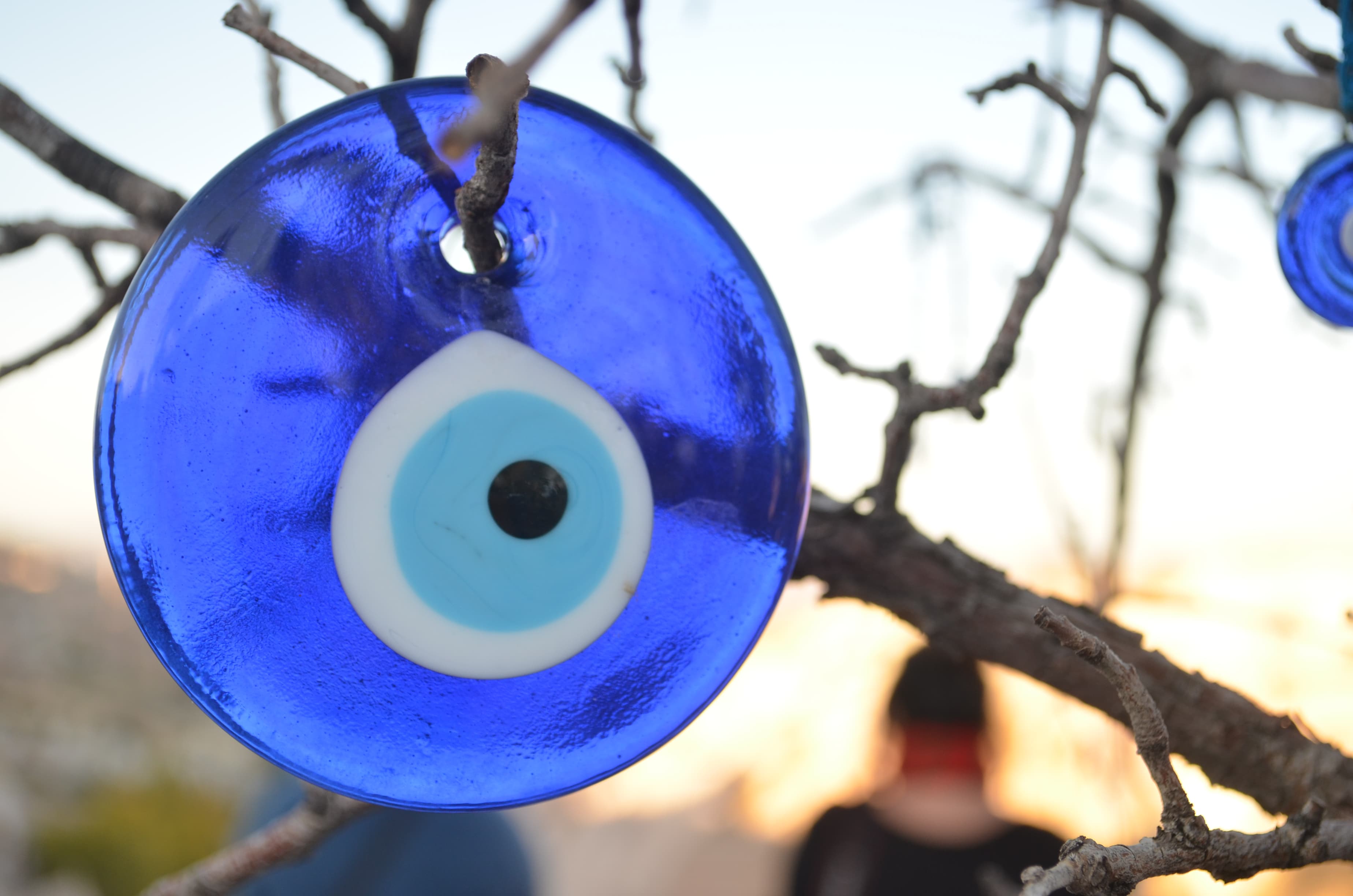
Turkey's iconic blue glass evil eye bead — the nazar boncuğu — protecting against the destructive gaze of envy.
4.9Learn more →


The open hand of protection in Turkish Iznik ceramic tradition — a symbol crossing Islamic, Jewish, and Christian blessing.
The hamsa (from Arabic for 'five') — an open hand with an eye in the palm — is one of the Middle East and Mediterranean's most universal protective symbols, predating all three Abrahamic religions and appearing in Phoenician, Carthaginian, and pre-Islamic North African art. In Turkey, the hamsa takes on distinctive ceramic form, painted in the Iznik tradition with cobalt blue, turquoise, and red patterns characteristic of Ottoman decorative arts.
The Turkish ceramic hamsa synthesizes multiple protective traditions: the eye in the palm deflects the evil eye (nazar), the open hand repels harmful energy through its flat, facing posture, and the five fingers represent the five pillars of Islam to Muslim owners while symbolizing the hand of Mary (Myriam) in Christian and Jewish traditions. This cross-cultural resonance makes the Turkish hamsa among the most broadly used protective charms in the world.
Turkish artisans produce hamsa charms in blue and white ceramic for wall display, as silver pendants, and in large painted versions as formal home protection objects. The quality of Iznik-tradition ceramic craft — with its distinctive mineral blue and flowing plant motifs — makes Turkish ceramic hamsas among the most aesthetically refined versions of this universal charm.
Omnidirectional protection, the deflection of harm through divine blessing, the five fingers representing strength and complete protection, the eye that sees all threats before they arrive.
Hang a ceramic hamsa at your home's entrance, fingers pointing downward to deflect entering negativity. Wear a small hamsa pendant at the throat for personal protection. During prayer or meditation, trace the fingers of your own hand consciously to activate its natural protective energy.
The hamsa appears in the national emblems of both Algeria and Turkey. In Israel, it is called the 'Hand of Miriam'; in Muslim tradition, the 'Hand of Fatima'; in Christian contexts of the Middle East, the 'Hand of Mary.' Three religions share one symbol — perhaps its most remarkable protective quality is transcending the divisions it spans.
Fingers down is most common for deflecting harmful energy entering a space. Fingers up is used when seeking to attract blessings. Both are valid — choose based on your primary intention.
The hamsa predates all Abrahamic religions and belongs to all of them. Use whatever meaning resonates most deeply with your own spiritual understanding. Its protective function works regardless of the tradition through which you access it.
The Iznik ceramic tradition uses specific mineral pigments — particularly cobalt blue — that are themselves protective colors in multiple traditions. The hand-painted plant motifs add layers of natural blessing energy to the protective eye symbolism.
Turkey
Turkey's iconic blue glass evil eye bead — the nazar boncuğu — protecting against the destructive gaze of envy.
Turkey
Branches hung with hundreds of nazar beads — Turkey's most spectacular evil eye installation protecting community spaces.
Greece
Greece's ancient blue eye amulet — the mati — protecting against the evil eye's harm since antiquity.

