

52
Protection
👁️
Greek Mati (Evil Eye)
Greece
Greece's ancient blue eye amulet — the mati — protecting against the evil eye's harm since antiquity.
4.8Learn more →

Turkey's iconic blue glass evil eye bead — the nazar boncuğu — protecting against the destructive gaze of envy.
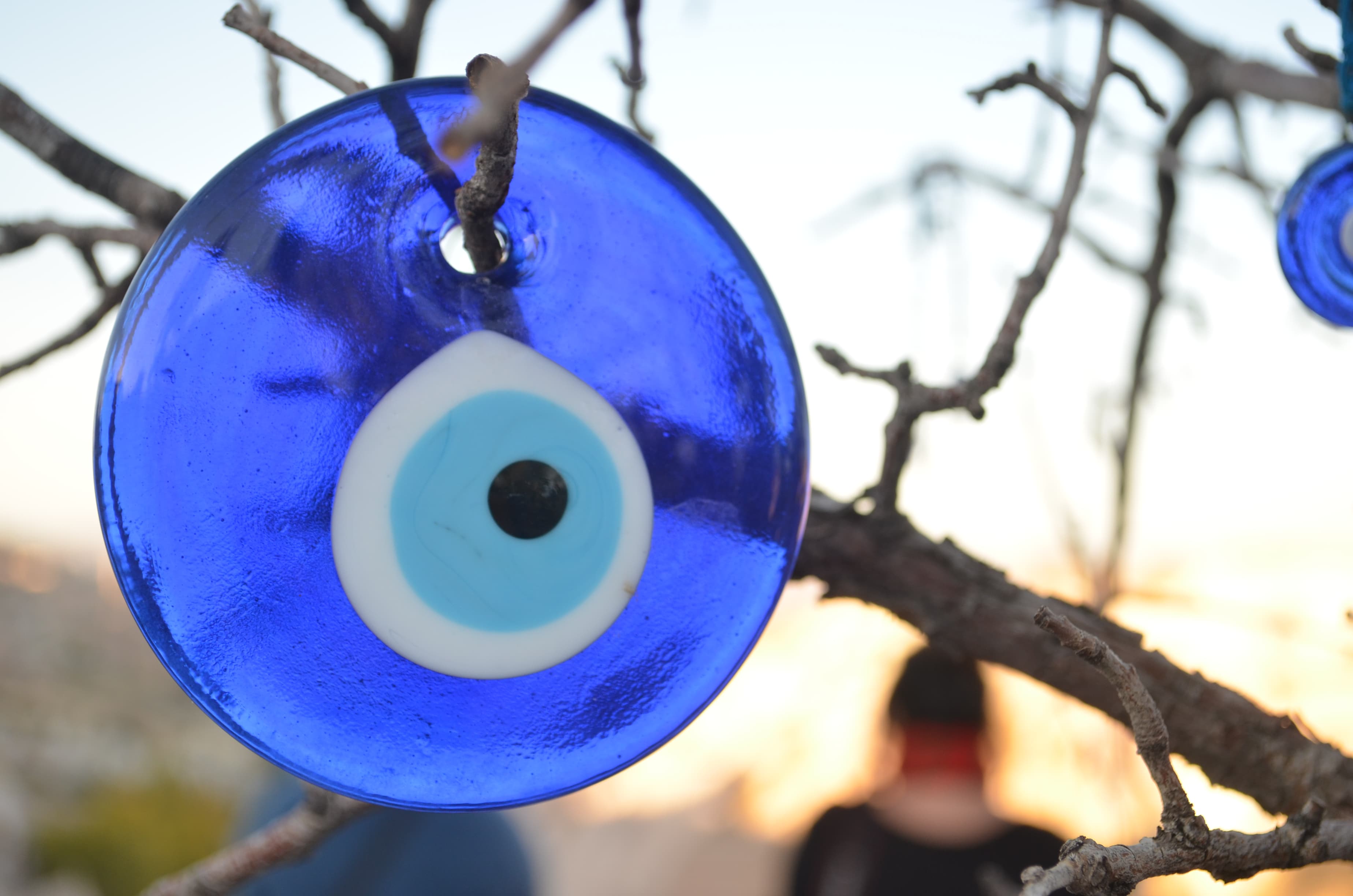
The Turkish nazar boncuğu (evil eye bead) is one of the world's most recognizable protective amulets — a handblown glass eye of concentric circles in blue, white, light blue, and dark blue. Made in furnaces heated to over 1,100°C by master glassmakers, each genuine nazar is unique, its imperfections testament to its handcrafted nature. Turkey is the world's primary producer, with the town of Görece near Izmir making millions annually for both domestic use and global export.
The nazar protects against the nazaretme (evil eye casting), which in Turkish folk belief can be delivered by any person who stares with intense admiration or envy, even without ill intent. Blue eyes were traditionally considered most dangerous — the rarest eye color in Anatolia — making the blue glass eye a perfect counter-charm. The nazar doesn't just deflect; it absorbs the harmful energy until it can hold no more, then it cracks, having sacrificed itself for the wearer.
Nazar beads are given at every significant life transition: birth (pinned to the baby's clothes immediately), marriage, new homes, new vehicles, business openings, and new jobs. They hang from rearview mirrors, adorn house entrances, swing from babies' cribs, and dangle from the eaves of coastal hotels. Turkey's love affair with the nazar is among the world's most thoroughgoing relationships between a people and a protective charm.
Protection from envy and the evil eye, deflection of harmful concentrated attention, the absorption of negative energy before it reaches the wearer.
Pin a nazar to new babies' clothes immediately after birth. Hang one at your home's entrance. Keep one in your car. When someone gives you an intense compliment or stares admiringly, your nazar has just done its job. Replace cracked beads promptly — they have used themselves up protecting you.
Turkey produces an estimated 4 million handblown nazar beads per year in the Görece workshops near Izmir. The craft requires apprentices to spend years learning to create the multiple glass layers while the bead is still hot — the eye's center must be perfectly aligned while the molten glass is being worked.
If your nazar cracks or breaks, it has absorbed harm meant for you. This is the primary sign it was working. You may also simply notice that despite envious attention, your good fortune persists — the nazar is routing the harm away.
For home protection, larger is better — at least hand-sized for door placement. For personal carry or wear, a small bead on a cord or chain works beautifully. Babies receive small ones that won't be a hazard.
Turkish tradition allows purchasing your own nazar — protection from the evil eye is considered a practical necessity, not something to wait for as a gift. However, receiving one as a gift adds the giver's loving intention to its protective power.
Greece
Greece's ancient blue eye amulet — the mati — protecting against the evil eye's harm since antiquity.
Turkey
Branches hung with hundreds of nazar beads — Turkey's most spectacular evil eye installation protecting community spaces.

Turkey
The open hand of protection in Turkish Iznik ceramic tradition — a symbol crossing Islamic, Jewish, and Christian blessing.

