

32
Protection
✝️
Crucifix
Early Christianity (Rome)
The Crucifix — a cross bearing the corpus (body) of Christ — is the central symbol of Christianity and one of the most powerful protective charms in the Western world.
4.8Learn more →

Pacific
5 charms from this country
Samoa's fa'a Samoa ('the Samoan way') is one of the Pacific's most intact traditional cultures, in which protective spiritual practice is embedded in daily social structure. The pe'a and malu (traditional full-body tattoos for men and women respectively) are not merely decorative — they are transformative protective ceremonies marking the recipient as an adult member of the community with ancestral protection. The tattoo is itself a living amulet.
The fue (fly whisk) and to'oto'o (staff) carried by orators (tulafale) are symbols of authority and protective ancestral power. The shell jewelry, particularly necklaces made from whale teeth and shells, carries traditional status and protection. Christian faith is extraordinarily strong in Samoa — the phrase 'Samoa is founded on God' is the national motto — and crosses, rosary beads, and prayer are daily protective tools.
Early Christianity (Rome)
The Crucifix — a cross bearing the corpus (body) of Christ — is the central symbol of Christianity and one of the most powerful protective charms in the Western world.
Medieval Europe
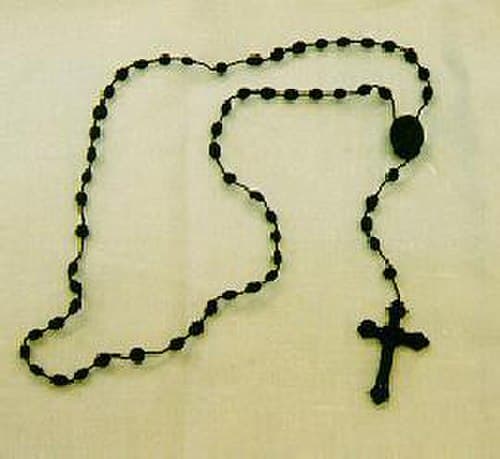
Rosary beads are the most recognizable Catholic prayer tool in the world, used by hundreds of millions for meditative prayer, protection, and the invocation of divine grace.

West Africa
Ancient African currency and fertility symbol used across the continent for centuries.

Samoa
Sacred bark cloth of Samoa, woven with geometric power, carried as a charm of identity, community, and the enduring fabric of culture.

United Kingdom
The symbol of steadfast hope that holds a life firm against the strongest currents.

