

26
Love
🌸
Rose Quartz
Brazil
The stone of unconditional love, carried as the most universal charm for opening the heart to romantic love, self-love, and compassionate healing.
4.9Learn more →

Tiny figures made of wire and thread, worry dolls have helped generations of Guatemalan children sleep peacefully. Modern psychology is now confirming what indigenous wisdom has long known about externalising anxiety.
They are tiny — often no bigger than a fingernail. Made from wire, wrapped in colourful thread, sometimes given rudimentary faces and little woven outfits, they are sold in small wooden boxes lined with fabric. Yet muñecas quitapenas — "dolls that take away worries," known in English as worry dolls — have become one of the most cross-culturally resonant healing charms of the modern era, found in therapists' offices, children's hospitals, and mindfulness practice kits worldwide.
Their origin is Guatemalan, and their story connects ancient Mayan wisdom, colonial history, the psychology of anxiety, and the remarkable power of small symbolic acts.
The traditional legend of the worry doll tells of a Mayan princess named Ixmucane who was granted the gift of solving all human worries by the sun god. As ruler, she devoted herself to her people's emotional burdens — but as time passed, the weight of their collective anxiety became too heavy for one person to bear. She began making tiny figures to hold each person's specific worry, allowing the doll to carry the burden overnight so the person could sleep, and finding her own burden lightened by distributing it this way.
Whether or not this legend has a specific pre-Columbian origin (some scholars believe it was developed after Spanish colonisation as a way of preserving and transmitting indigenous emotional practices within a hostile cultural context), it captures the essential mechanism of worry dolls perfectly: externalisation of the internal burden.
The traditional worry doll practice is simple and elegant:
1. Before sleep, take out the box of worry dolls (typically a set of six) 2. Tell each doll a specific worry — one worry per doll, whispered or spoken aloud 3. Place the dolls under your pillow 4. Sleep, knowing the dolls will worry on your behalf through the night 5. Wake refreshed, with the worries having been processed
For children, this practice is particularly powerful. The worry doll externalises the amorphous, overwhelming feeling of anxiety into a specific, manageable list of concerns, and then hands those concerns to a designated caretaker — even a symbolic one.
Modern anxiety research provides multiple frameworks that help explain why worry dolls are therapeutically effective:
Narrative therapy, developed by Michael White and David Epston in the 1980s, uses externalisation as a core therapeutic technique: the problem (including anxiety) is separated from the person's identity and treated as an external entity that can be examined, negotiated with, and ultimately resolved. Telling your worry to a small figure is a physical enactment of this therapeutic principle — you are literally taking the worry out of yourself and placing it elsewhere.
Cognitive behavioural therapy for anxiety frequently uses the technique of worry scheduling: designating a specific time and place to do your worrying, rather than allowing it to intrude throughout the day and night. The bedtime worry doll ritual creates a structured worry window — a defined moment when anxiety is acknowledged and processed — freeing the rest of the night and the following day from its intrusion.
Research by Borkovec and colleagues consistently shows that worry scheduling reduces the total amount of time spent worrying and decreases its emotional intensity. The worry doll practice is essentially a worry-scheduling ritual that has been refined by generations of indigenous wisdom.
Anxiety thrives on the feeling of helplessness — the sense that nothing can be done about the feared outcome. Ritual action, however small, restores a sense of agency. Placing a worry in a doll's care is an act of intentional choice: "I am choosing to let go of this worry for now and trust something else to hold it."
This mirrors the mechanism of serenity prayer practices in recovery traditions and loving-kindness meditation techniques — the deliberate act of releasing control to a higher or other power, which paradoxically reduces anxiety by reducing the cognitive burden of compulsive controlling.
For children and adults experiencing anxiety, tactile engagement with a physical object provides sensory grounding — a technique widely used in trauma therapy to anchor the person in the present moment and interrupt the anxiety cycle. The small, detailed, texturally rich nature of worry dolls makes them particularly effective grounding objects.
The worry doll has found particular acceptance in child psychology and educational settings because it addresses a fundamental challenge in working with anxious children: giving them something they can do.
Children experiencing anxiety often feel passive in the face of their fears. Adults tell them not to worry, that there is nothing to be scared of, that everything will be fine — advice that is well-intentioned but experientially useless. The worry doll gives the child an action: "Tell the doll your worry. Let the doll hold it tonight."
Child psychologists have noted that worry dolls can be particularly effective for:
Increasing numbers of psychotherapists and counsellors are incorporating worry dolls into adult practice, particularly in:
Trauma therapy: The externalisation principle is central to EMDR and somatic trauma approaches; worry dolls provide a tangible anchor for this process.
Mindfulness-based stress reduction: Worry dolls can serve as a mindfulness object — a focus for loving attention that creates a space of intentional non-grasping around anxious thought.
Grief counselling: Grieving adults often find that worry dolls provide a non-verbal way to express and externalise the specific fears that accompany loss — fear of forgetting the person, fear of not being able to cope, fear of the future.
Traditional Guatemalan worry dolls are made by indigenous artisans, particularly in the Mayan communities of the Guatemalan highlands. Purchasing authentic dolls directly from fair-trade sources supports these communities and connects you to the living tradition.
But the practice of making your own worry dolls is also ancient — the act of crafting a tiny figure and imbuing it with your intention is itself therapeutically valuable. Simple wire wrapped with embroidery thread, given a tiny face with a marker, makes a perfectly serviceable worry doll and one that carries your own creative and intentional energy.
In an era of globalised anxiety — climate change, economic uncertainty, social division, digital overload — the humble worry doll offers something that sophisticated pharmaceutical and digital solutions often fail to provide: a simple, embodied, ritualised way to acknowledge anxiety without being consumed by it.
The Guatemalan wisdom encoded in these tiny figures — that worries should be named, externalised, and consciously released — is among the most practically valuable pieces of folk psychology anywhere in the world. Modern science is only now catching up to what generations of Mayan parents knew: give a child (or an adult) a way to hand their worry to someone else for the night, and both the child and the night become more peaceful.
Brazil
The stone of unconditional love, carried as the most universal charm for opening the heart to romantic love, self-love, and compassionate healing.

India
The primordial sound of the universe, Om is the most sacred symbol in Hinduism, Buddhism, and Jainism.
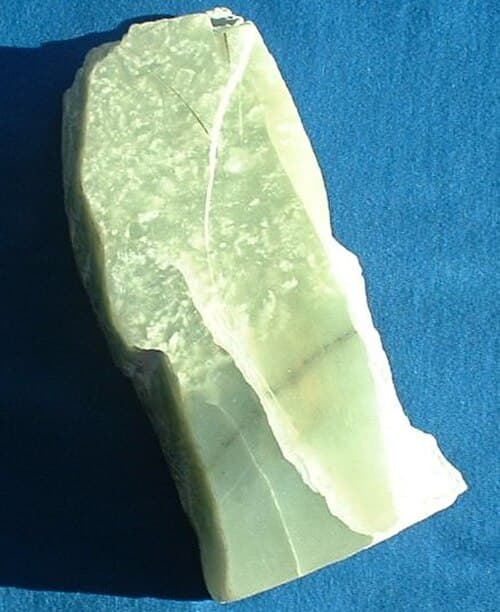
China
Revered for over 7,000 years, jade is the stone of heaven in Chinese culture, believed to protect health, ward off evil, and connect the wearer to divine virtue.
No stone has been more consistently revered for its healing properties across more cultures and millennia than jade. From Neolithic China to pre-Columbian Mesoamerica, trace jade's extraordinary journey as the world's premier healing gem.
Millions of people around the world use crystals for healing and wellbeing. But what does the research actually say? We examine the evidence honestly — and find a more nuanced story than either believers or sceptics typically tell.
Every human culture has developed its own system of healing charms. From Australian Aboriginal spirit stones to Native American medicine pouches, explore the remarkable global tapestry of health-focused talismans.

