
8
Health
💚
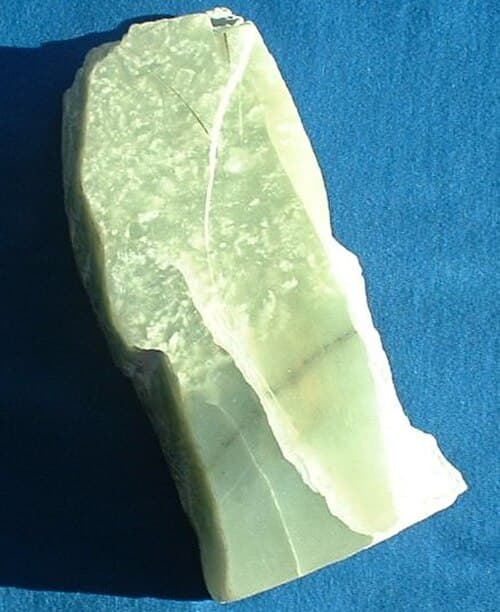
Jade
China
Revered for over 7,000 years, jade is the stone of heaven in Chinese culture, believed to protect health, ward off evil, and connect the wearer to divine virtue.
4.9Learn more →

No stone has been more consistently revered for its healing properties across more cultures and millennia than jade. From Neolithic China to pre-Columbian Mesoamerica, trace jade's extraordinary journey as the world's premier healing gem.
Of all the stones that humanity has invested with sacred meaning, jade occupies a unique position. Revered independently — and with remarkable consistency — in ancient China, pre-Columbian Mesoamerica, New Zealand, and Southeast Asia, jade is the only gemstone to have achieved the status of the sacred in multiple civilisations with no known contact with one another. This convergence suggests something genuinely compelling about this stone: perhaps its physical properties, perhaps its aesthetic beauty, perhaps something that science has not yet fully articulated.
Whatever the reason, jade's 8,000-year history as a healing charm is the longest continuous such tradition in human history and one of the most fascinating stories in the archaeology of belief.
Before diving into history, a clarification: "jade" is actually two distinct minerals that have been conflated throughout history.
Nephrite is a calcium-magnesium silicate that ranges in colour from creamy white through green to black. It is tougher (though softer) than jadeite and was the primary jade used in ancient China, New Zealand, and Central America before Spanish colonisation.
Jadeite is a sodium-aluminium silicate that ranges from white through vivid imperial green to lavender and other colours. It is harder and more intensely coloured than nephrite. The most prized jadeite — "Imperial Jade" — is a vivid emerald green and is mined primarily in Myanmar.
Both minerals have been used in healing traditions, and the distinction between them was not recognised by Western gemologists until 1863.
The earliest jade objects found in China date to approximately 6000 BCE, from the Hemudu and Kuahuqiao cultures of the Yangtze River delta. By the Liangzhu culture (3300–2300 BCE), jade had already become the defining marker of elite status, ritual practice, and connection to the divine.
Chinese jade culture is the most extensively documented and theologically developed of any jade tradition. In the Confucian tradition, the gentleman (junzi) was expected to cultivate the five virtues embodied by jade: benevolence (its warm lustre), wisdom (its translucent clarity), courage (its hardness), justice (its sharp edge), and purity (its perfect sound when struck).
In Chinese medicine, jade's healing properties were extensive and specific:
The jade roller — a modern beauty product that often appears as a "wellness trend" — is in fact a continuation of practices depicted in Chinese court paintings from the Ming Dynasty (1368–1644 CE). These rollers were used in the facial massage routines of empresses and concubines and are among the most direct living connections to ancient jade healing practice.
When Spanish conquistadors arrived in the Aztec empire in 1519, they were initially uninterested in the jade objects they encountered — searching instead for gold and silver. They were astonished to discover that the indigenous peoples valued jade more highly than gold.
For the Aztecs, Maya, Olmec, and other Mesoamerican civilisations, jade (chalchihuitl in Nahuatl) was the "green stone of life" — the material embodiment of water, maize, blood, and the life force itself. Jade was placed in the mouths of the deceased to serve as the heart in the afterlife (the Maya believed jade could ensure spiritual immortality). Jade masks covered the faces of kings.
Mesoamerican jade healing focused on its association with water and breath:
The convergence with Chinese jade healing — fever-drawing, skin toning, organ strengthening — across cultures with no known contact is one of the genuinely puzzling phenomena in the study of healing traditions.
For Māori people, pounamu (New Zealand greenstone, a form of nephrite) is among the most sacred of all materials. The South Island, the primary source of pounamu, is itself called Te Waka o Māui in some traditions and Pounamu in others — the island is literally named for its most sacred stone.
Pounamu's healing and protective power is understood through the concept of mana — spiritual authority and vital force. The mana of a pounamu object increases with age, with the significance of its carver, and with the depth of the relationships through which it has passed. A pounamu hei-tiki pendant worn by many generations of a family carries the accumulated mana of all those ancestors and becomes a powerful healing object.
Specific pounamu forms have specific healing associations:
In Māori tradition, pounamu must be gifted rather than purchased to retain its full spiritual power — commercial acquisition diminishes its mana.
Contemporary science has investigated some specific aspects of jade's reputed healing properties:
Thermal properties: Jade has a naturally cool surface temperature and a high heat capacity, meaning it stays cool against the skin for longer than most materials. This physical property may partly explain why jade was associated with drawing heat from fevers and inflammatory conditions — applied to inflamed tissue, it provides genuine cooling.
Far-infrared emission: Some forms of nephrite, when gently warmed, emit far-infrared wavelengths in the range of 8–14 microns — the same range emitted by warm living tissue and associated with some therapeutic effects. This is the claimed mechanism behind jade-infused far-infrared heating pads popular in South Korean wellness practice.
Calcium and magnesium: Nephrite jade contains calcium and magnesium silicates. While the absorption of minerals through unbroken skin is minimal, the skin's interaction with stone surfaces over time in massage practice does involve trace mineral contact.
If you want to welcome jade into your health and wellness practice, a few guidelines from various traditions apply:
Authenticity matters: Much commercially sold "jade" is actually aventurine, serpentine, or dyed quartzite. Purchase from reputable sources, and ask for authentication if possible.
Skin contact: Many traditions emphasise jade's benefits through direct skin contact. Wearing jade pendants, jade bracelets, or using jade rollers on the face are the most common modern applications.
Cleansing: Rinse jade regularly in clean, cool water. Avoid prolonged exposure to harsh chemicals (perfumes, cleaning products) that can damage its surface.
Receiving jade as gift: In Chinese, Māori, and many Southeast Asian traditions, jade is most powerfully transmitted as a gift — carrying the intention of the giver into the healing relationship. If you receive jade, honour the tradition by wearing it with awareness of that intention.
Eight thousand years is a span of human experience difficult to comprehend. In that time, countless healing traditions have arisen and disappeared. Jade alone has persisted — adopted, revered, and continuously reinvented by culture after culture.
Whether its healing power lies in physical properties, psychological resonance, or the simple beauty that has made human beings reach for this stone for eight millennia, jade remains the world's most enduring healing charm — and perhaps the most eloquent argument that some aspects of human experience transcend the cultural differences that otherwise divide us.
China
Revered for over 7,000 years, jade is the stone of heaven in Chinese culture, believed to protect health, ward off evil, and connect the wearer to divine virtue.

Brazil
The stone of unconditional love, carried as the most universal charm for opening the heart to romantic love, self-love, and compassionate healing.

Brazil
The golden abundance crystal, known as the Merchant's Stone, carried to attract wealth, success, and the warm energy of solar prosperity.

India
The primordial sound of the universe, Om is the most sacred symbol in Hinduism, Buddhism, and Jainism.

China
The Chinese dragon is the supreme symbol of imperial power, auspicious fortune, and the dynamic yang energy that drives all achievement and transformation.
Tiny figures made of wire and thread, worry dolls have helped generations of Guatemalan children sleep peacefully. Modern psychology is now confirming what indigenous wisdom has long known about externalising anxiety.
Millions of people around the world use crystals for healing and wellbeing. But what does the research actually say? We examine the evidence honestly — and find a more nuanced story than either believers or sceptics typically tell.
Every human culture has developed its own system of healing charms. From Australian Aboriginal spirit stones to Native American medicine pouches, explore the remarkable global tapestry of health-focused talismans.

