

132
Health
🫙
Wu Lou (Gourd)
China
The Wu Lou bottle gourd is China's most important health and longevity charm, carried by the Eight Immortals and believed to contain the elixir of immortal life.
4.5Learn more →

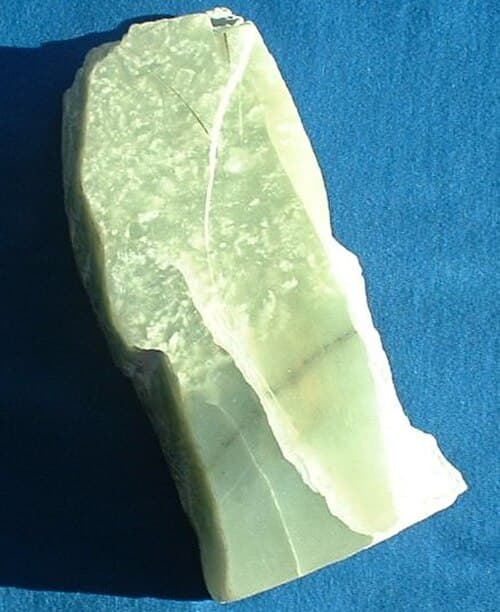
Revered for over 7,000 years, jade is the stone of heaven in Chinese culture, believed to protect health, ward off evil, and connect the wearer to divine virtue.
No stone holds a more exalted position in Chinese civilization than jade. For over seven millennia, from the Neolithic Hongshan and Liangzhu cultures through to the present day, jade has been the material of ritual, royalty, and moral philosophy. The Confucian scholar Xu Shen, writing in 100 CE, enumerated five virtues of jade corresponding to the five Confucian virtues: its warmth and luster symbolize benevolence; its translucency, wisdom; its unyieldingness, courage; its purity, morality; and its harmlessness, justice. To wear jade was to aspire to these virtues.
In Chinese medicine and folk belief, jade is considered a stone of profound health benefits. It is thought to purify the blood, balance the body's energy (qi), calm the nervous system, and extend life. The imperial court maintained enormous jade workshops not merely for aesthetic reasons but because jade objects — cups, amulets, burial suits — were believed to preserve the body and the spirit. Han dynasty nobles were buried in suits made from thousands of jade tiles sewn with gold wire, intended to confer immortality on their corpses. This belief in jade's life-preserving power persists in everyday folk practice today.
The preferred variety in Chinese culture is nephrite jade (traditionally called 'true jade' or Hetian jade), though jadeite from Myanmar became enormously fashionable after the 18th century. Both are considered powerful, but nephrite carries deeper historical roots. Jade bangles are the most popular personal charm: worn continuously on the wrist, they are believed to absorb negative energy and protect the wearer from harm. A cracked bangle is interpreted as the jade sacrificing itself to deflect a blow that would otherwise have injured the wearer.
Health, longevity, moral virtue, spiritual purity, protection from evil, and the enduring power of heaven's blessing made tangible in stone.
Wear jade as close to the skin as possible — a bangle on the left wrist is traditional, as the left side is closer to the heart. For stationary protection, place a jade carving (particularly of a Buddha, Guanyin, or a ruyi scepter) in a prominent position in the home. Cleanse jade monthly by rinsing in cool water and leaving it in moonlight overnight.
The most expensive piece of jade ever sold was a jadeite necklace from the Hutton-Mdivani collection that fetched over $27 million at Sotheby's in 2014 — but in the Chinese antique market, a single piece of imperial nephrite has commanded even higher prices on record.
Real nephrite jade feels cold to the touch and warms slowly. It is heavier than glass, will not scratch easily with a fingernail, and produces a clear ringing tone when tapped. The most reliable test is professional gemological verification, as the market is flooded with dyed quartzite and glass sold as jade.
In Chinese folk belief, a broken bangle means the jade absorbed a serious harm that was destined for the wearer — making it an act of protection, not bad luck. The broken pieces should be wrapped in red cloth and either buried respectfully or kept, never discarded carelessly.
Absolutely. Men have worn jade throughout Chinese history. Confucius specifically addressed male jade-wearing as a mark of virtue. Male jade jewelry typically takes the form of pendants, rings, or carved figurines rather than the bangle style more common among women.
China
The Wu Lou bottle gourd is China's most important health and longevity charm, carried by the Eight Immortals and believed to contain the elixir of immortal life.

China
Pixiu is a mythical Chinese creature with a dragon's head, horse's body, and lion's feet that eats gold but cannot excrete it — the ultimate symbol of wealth accumulation.

China
The peach in Chinese mythology is the fruit of the immortals, ripening once every three thousand years in the garden of the Queen Mother of the West to grant eternal life.

