

22
Success
🐉
Dragon
China
The Chinese dragon is the supreme symbol of imperial power, auspicious fortune, and the dynamic yang energy that drives all achievement and transformation.
4.8Learn more →


Pixiu is a mythical Chinese creature with a dragon's head, horse's body, and lion's feet that eats gold but cannot excrete it — the ultimate symbol of wealth accumulation.
Pixiu (also written Pi Xiu or Pi Yao) is one of Chinese mythology's most economically specialized creatures — a divine beast whose entire existence is oriented around the attraction and retention of wealth. According to legend, Pixiu once ate so much gold, silver, and jewels in the heavenly realm that the Jade Emperor was forced to seal its anus shut, meaning the creature could consume infinite wealth but release none. This mythological digestive arrangement makes Pixiu the perfect wealth charm: it voraciously absorbs money, luck, and treasure from all directions and has no mechanism for releasing any of it.
Pixiu appears as a composite creature with the head of a Chinese dragon, the body of a lion or horse, and feathered wings, though winged versions (Tianlu) are distinguished from terrestrial ones (Bixie). It is considered the ninth son of the Dragon King, giving it both divine lineage and the full power of dragon energy. Unlike most Chinese mythological creatures who serve broad functions, Pixiu has a singular specialization: it is drawn specifically to the energy of gold, silver, and jewels, patrolling the celestial and earthly realms in constant search of valuables to bring back to its master.
Modern feng shui practitioners particularly recommend Pixiu for gamblers, investors, and business owners — essentially anyone involved in activities where large sums of money move rapidly. The charm is considered especially helpful for preventing wealth from flowing back out once it has entered: where a Maneki-neko attracts money, Pixiu holds it. Wearing Pixiu as a bracelet or ring is considered among the most direct methods of activating its wealth-retention power.
The Pixiu traces its origins to China, where it has been revered for generations as a powerful symbol of prosperity and abundance. Historical records and oral traditions suggest that early versions of this charm appeared centuries ago, when communities in China first began attributing supernatural qualities to objects drawn from their natural and spiritual environment.
Over time, the Pixiu evolved from a regional folk object into a widely recognized talisman. Traders, travelers, and migrants carried it across borders, introducing it to new cultures that often adopted and adapted it to fit their own belief systems. Today it is found in china, taiwan, vietnam and beyond, each culture adding its own layer of meaning and ritual to the charm's enduring legacy.
In its homeland of China, the Pixiu occupies a revered place in both daily life and ceremonial practice. It is not merely decorative — it is woven into the fabric of cultural identity, appearing in celebrations, rites of passage, and household traditions that have been passed down through generations.
Beyond China, the Pixiu has gained recognition in china, taiwan, vietnam and other regions, where it is valued for its symbolic connection to financial prosperity. Scholars of material culture and anthropologists note that charms like the Pixiu serve a dual psychological function: they provide a tangible focus for hope and intention, and they connect their owners to a living cultural tradition that transcends individual experience.
To get the most from your Pixiu, keep it in a place where you will see it daily — on a desk, nightstand, or near your front entrance. Physical proximity reinforces the intention behind the charm and serves as a regular reminder of your goals.
Traditional practice recommends handling the charm with clean hands and respectful intention. Many practitioners in China advise setting a clear purpose when you first acquire the charm: hold it, state your wish or goal silently or aloud, and then place it in its chosen position. Periodically cleansing the charm — by passing it through incense smoke, placing it under moonlight, or simply wiping it with a clean cloth — is believed to refresh its energy.
If the charm is meant to be worn (as jewelry or a carried token), keep it close to your body throughout the day. If it is a household object, place it in the area of your home most associated with its purpose — for example, near a workspace for success charms, or by the bed for love and health charms.
Voracious attraction of wealth from all directions, absolute retention of fortune once gained, protection of financial assets, and the divine favor of the Dragon King's lineage applied to earthly prosperity.
Wear Pixiu as a bracelet on the left wrist (the receiving hand), with the head facing outward. Touch and stroke the figurine regularly to awaken its energy, but never touch its eyes or mouth — these are how it seeks and consumes wealth. Place a figurine in the wealth corner of your home or office, facing a window or door. Do not place in the bedroom or bathroom.
In Chinese casino culture, Pixiu is considered the ultimate gambling charm: in Macau and Las Vegas Chinese gaming rooms, Pixiu pendants, figurines on tables, and temporary Pixiu tattoos are all observable as routine gambling rituals, making it one of the few ancient mythological creatures with a dedicated gambling constituency.
Wash the charm in clean water (never tap water — use spring water or rainwater), pat dry with a clean cloth, and then hold it in your hands while setting your wealth intention clearly. Some practitioners leave it overnight under moonlight. After activation, touch it regularly to maintain the energetic bond.
Yes, but traditional guidelines suggest women who are pregnant or menstruating should temporarily remove the charm, as these states are associated with strong yin energy that may conflict with Pixiu's powerful yang nature. Most modern practitioners consider this guidance optional rather than mandatory.
Obsidian (black jade) Pixiu is considered most powerful for protection while attracting wealth. Gold or brass Pixiu is most directly aligned with wealth energy. Green jade Pixiu is favored for health and long-term steady wealth. All materials are valid; the choice should align with your primary intention.
The Pixiu originates from China, where it has been used as a wealth charm for centuries. Its influence has since spread to china, taiwan, vietnam and many other regions worldwide.
Wear Pixiu as a bracelet on the left wrist (the receiving hand), with the head facing outward. Touch and stroke the figurine regularly to awaken its energy, but never touch its eyes or mouth — these are how it seeks and consumes wealth. Place a figurine in the wealth corner of your home or office, facing a window or door. Do not place in the bedroom or bathroom. For best results, set a clear intention when you first acquire the charm and keep it in a prominent, respectful location.
Yes, giving a Pixiu as a gift is considered a generous and meaningful gesture in most traditions. In China, gifted charms are often believed to carry even stronger energy than those purchased for oneself, because they come with the goodwill and intention of the giver.
Many practitioners recommend periodically cleansing your Pixiu to refresh its energy. Common methods include passing it through incense smoke, placing it in moonlight overnight, rinsing it under clean water (if the material allows), or simply wiping it down with a clean cloth while setting a fresh intention.
While the Pixiu originated in the cultural traditions of China, it is not exclusive to any single religion. It has been adopted and adapted by people of many faiths and backgrounds, each bringing their own interpretation to its symbolism and use.
China
The Chinese dragon is the supreme symbol of imperial power, auspicious fortune, and the dynamic yang energy that drives all achievement and transformation.
China
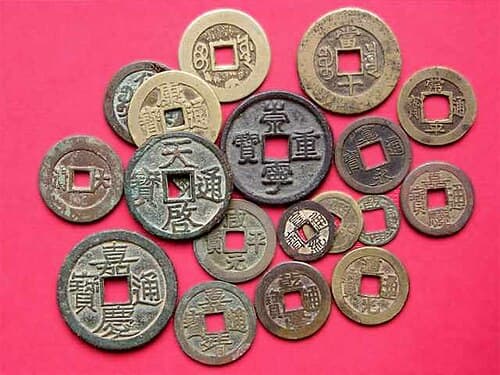
Ancient Chinese coins with square holes, tied in groups of three with red string, are powerful feng shui wealth activators connecting the circular heavens with the square earth.
China
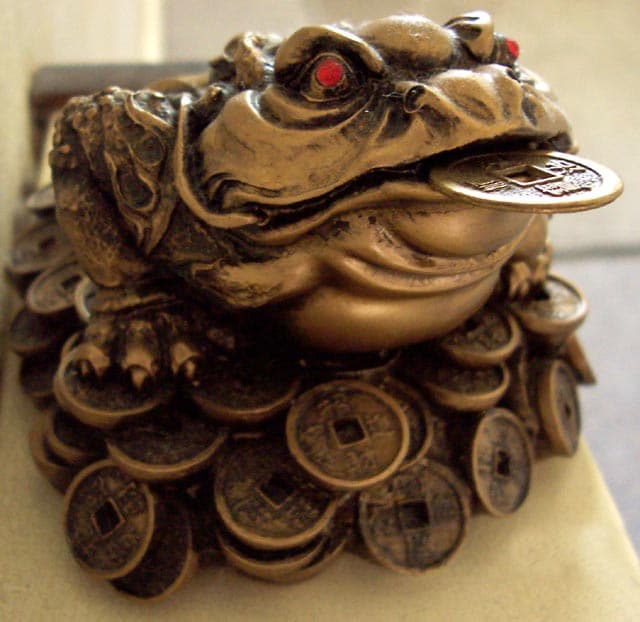
The three-legged toad sitting on coins with a coin in its mouth is one of feng shui's most potent wealth activators, said to attract money and prevent it from leaving.

China
The Ru Yi scepter — its name literally meaning 'as you wish' — is China's ultimate symbol of authority, fulfilled ambitions, and the power to make everything proceed according to one's will.

