
123
Success
🐢
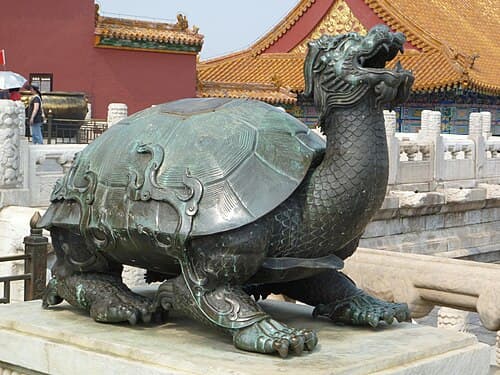
Dragon Turtle
China
The Dragon Turtle combines the protective wisdom of the turtle with the powerful success energy of the dragon, creating one of feng shui's most potent talismans for career advancement.
4.5Learn more →


The Chinese dragon is the supreme symbol of imperial power, auspicious fortune, and the dynamic yang energy that drives all achievement and transformation.
The Chinese dragon (long) is categorically different from its Western counterpart. Where European dragons are malevolent monsters to be slain, the Chinese dragon is a divine, benevolent creature associated with the emperor, the sky, water, and the most dynamic positive forces in the universe. It is the first and greatest of the four divine animals, a composite creature made of the best parts of the universe: the antlers of a deer, the head of a camel, the eyes of a demon, the neck of a snake, the belly of a clam, the scales of a carp, the claws of an eagle, the pads of a tiger, and the ears of a cow. This bricolage construction represents the dragon's mastery over all realms.
For over two thousand years, the dragon was the exclusive symbol of the Chinese emperor, reserved only for imperial use on clothing, architecture, and ceremonial objects. The five-clawed dragon appeared solely on imperial robes; nobles were permitted only four-clawed versions, and commoners three. This strict hierarchy of claws encoded the entire feudal social order into a single decorative motif. The dragon throne, the dragon robe, the dragon boat — all expressed the emperor's mandate from heaven through this supreme symbol. When the imperial system fell, the dragon's symbolism democratized, and it became available to all Chinese people as a shared emblem of power, luck, and national identity.
In the Chinese zodiac, the Year of the Dragon is the most coveted birth year, associated with success, charisma, and exceptional fortune. Birth rates in Chinese communities worldwide spike measurably in Dragon years as families time pregnancies to give their children this celestial advantage. Dragon charms and figurines activate what feng shui calls the 'creative energy of heaven,' making them particularly powerful for career advancement, business success, and ambitious personal projects.
The Dragon traces its origins to China, where it has been revered for generations as a powerful symbol of achievement and ambition. Historical records and oral traditions suggest that early versions of this charm appeared centuries ago, when communities in China first began attributing supernatural qualities to objects drawn from their natural and spiritual environment.
Over time, the Dragon evolved from a regional folk object into a widely recognized talisman. Traders, travelers, and migrants carried it across borders, introducing it to new cultures that often adopted and adapted it to fit their own belief systems. Today it is found in china, taiwan, japan and beyond, each culture adding its own layer of meaning and ritual to the charm's enduring legacy.
In its homeland of China, the Dragon occupies a revered place in both daily life and ceremonial practice. It is not merely decorative — it is woven into the fabric of cultural identity, appearing in celebrations, rites of passage, and household traditions that have been passed down through generations.
Beyond China, the Dragon has gained recognition in china, taiwan, japan and other regions, where it is valued for its symbolic connection to personal achievement. Scholars of material culture and anthropologists note that charms like the Dragon serve a dual psychological function: they provide a tangible focus for hope and intention, and they connect their owners to a living cultural tradition that transcends individual experience.
To get the most from your Dragon, keep it in a place where you will see it daily — on a desk, nightstand, or near your front entrance. Physical proximity reinforces the intention behind the charm and serves as a regular reminder of your goals.
Traditional practice recommends handling the charm with clean hands and respectful intention. Many practitioners in China advise setting a clear purpose when you first acquire the charm: hold it, state your wish or goal silently or aloud, and then place it in its chosen position. Periodically cleansing the charm — by passing it through incense smoke, placing it under moonlight, or simply wiping it with a clean cloth — is believed to refresh its energy.
If the charm is meant to be worn (as jewelry or a carried token), keep it close to your body throughout the day. If it is a household object, place it in the area of your home most associated with its purpose — for example, near a workspace for success charms, or by the bed for love and health charms.
Imperial power, divine protection, the unstoppable force of achievement, yang energy in its most creative form, and the mandate of heaven blessing all righteous endeavors.
Place a dragon figurine in the east sector of your home or office (the dragon's natural direction) or in the career area. The dragon should face toward open space, never toward a wall. A dragon holding a pearl in its claw is especially powerful for success. Dragon imagery on clothing or jewelry worn during important meetings or presentations is believed to channel the dragon's authority.
The Chinese word for dragon (long) is embedded in numerous Mandarin words for excellent and powerful things: longzhong means outstanding, longteng means to soar, and the phrase 'hoping your son becomes a dragon' (wang zi cheng long) is still one of the most common parental wishes for a child's future success.
Dragon charms are for everyone. While the dragon is associated with yang (masculine) energy, it is widely used by people of all genders. The dragon is often paired with the phoenix (yang/yin, dragon/phoenix) as a symbol of perfect partnership, and both are used in wedding decorations for couples.
Five-clawed dragons are the most powerful and were historically imperial. For personal use, five-clawed dragons are now widely available and considered the most auspicious. Four-clawed dragons are also common and considered very lucky. Three-clawed versions are found in Japanese dragon imagery.
Never place a dragon facing a wall, in a confined space, in the bedroom (its powerful yang energy is too stimulating for sleep), or in the bathroom. The dragon needs open space in front of it to represent the open path of opportunity it is meant to facilitate.
The Dragon originates from China, where it has been used as a success charm for centuries. Its influence has since spread to china, taiwan, japan and many other regions worldwide.
Place a dragon figurine in the east sector of your home or office (the dragon's natural direction) or in the career area. The dragon should face toward open space, never toward a wall. A dragon holding a pearl in its claw is especially powerful for success. Dragon imagery on clothing or jewelry worn during important meetings or presentations is believed to channel the dragon's authority. For best results, set a clear intention when you first acquire the charm and keep it in a prominent, respectful location.
Yes, giving a Dragon as a gift is considered a generous and meaningful gesture in most traditions. In China, gifted charms are often believed to carry even stronger energy than those purchased for oneself, because they come with the goodwill and intention of the giver.
Many practitioners recommend periodically cleansing your Dragon to refresh its energy. Common methods include passing it through incense smoke, placing it in moonlight overnight, rinsing it under clean water (if the material allows), or simply wiping it down with a clean cloth while setting a fresh intention.
While the Dragon originated in the cultural traditions of China, it is not exclusive to any single religion. It has been adopted and adapted by people of many faiths and backgrounds, each bringing their own interpretation to its symbolism and use.
China
The Dragon Turtle combines the protective wisdom of the turtle with the powerful success energy of the dragon, creating one of feng shui's most potent talismans for career advancement.

Japan
The koi fish symbolizes perseverance, ambition, and transformation — the legendary carp that swam upstream and leaped the Dragon Gate to become a dragon.

China
The Ru Yi scepter — its name literally meaning 'as you wish' — is China's ultimate symbol of authority, fulfilled ambitions, and the power to make everything proceed according to one's will.

China
Pixiu is a mythical Chinese creature with a dragon's head, horse's body, and lion's feet that eats gold but cannot excrete it — the ultimate symbol of wealth accumulation.

