
8
Health
💚
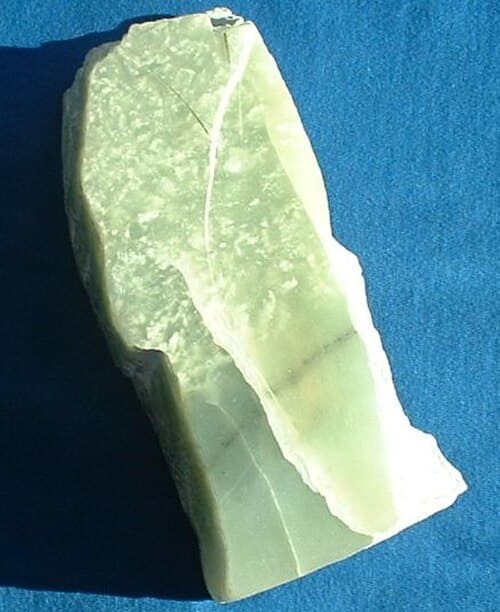
Jade
China
Revered for over 7,000 years, jade is the stone of heaven in Chinese culture, believed to protect health, ward off evil, and connect the wearer to divine virtue.
4.9Learn more →


The Wu Lou bottle gourd is China's most important health and longevity charm, carried by the Eight Immortals and believed to contain the elixir of immortal life.
The Wu Lou (bottle gourd, also written Hu Lu) holds a unique position in Chinese culture as the primary symbol of health, longevity, and the healing arts. Its distinctive double-bulb silhouette — a larger lower chamber connected by a narrow neck to a smaller upper chamber — was considered by ancient Chinese thinkers to represent heaven and earth connected at their meeting point: the narrow passage through which life force flows. This cosmological geometry made the gourd the perfect vessel for containing medicine, elixirs, and the concentrated power of healing.
In Taoist mythology, the gourd is the attribute of Li Tieguai, one of the Eight Immortals, who carries a Wu Lou from which healing vapors flow and who uses it to collect the spirits of the sick for healing and restoration. More broadly, the gourd is the universal prop of the Taoist immortal (xian ren): wandering masters are depicted carrying gourds on their backs, which contain their entire world — a compressed infinity of mountains, rivers, and celestial palaces within the double-chambered vessel. This image of the gourd as a container for infinite possibility reinforced its association with inexhaustible life force.
In practical feng shui health medicine, the Wu Lou is considered the most powerful single object for improving health luck and protecting against illness. Placed by the bedside, it is believed to absorb negative energies that cause sickness before they can affect the sleeping person. Given as a gift to the elderly, it expresses the wish for long life more eloquently than any words. The material matters: brass or metal Wu Lou are used for protection against illness; carved jade ones carry both health and the additional protective power of jade; crystal versions amplify healing energy.
The Wu Lou (Gourd) traces its origins to China, where it has been revered for generations as a powerful symbol of healing and vitality. Historical records and oral traditions suggest that early versions of this charm appeared centuries ago, when communities in China first began attributing supernatural qualities to objects drawn from their natural and spiritual environment.
Over time, the Wu Lou (Gourd) evolved from a regional folk object into a widely recognized talisman. Traders, travelers, and migrants carried it across borders, introducing it to new cultures that often adopted and adapted it to fit their own belief systems. Today it is found in china, taiwan, japan and beyond, each culture adding its own layer of meaning and ritual to the charm's enduring legacy.
In its homeland of China, the Wu Lou (Gourd) occupies a revered place in both daily life and ceremonial practice. It is not merely decorative — it is woven into the fabric of cultural identity, appearing in celebrations, rites of passage, and household traditions that have been passed down through generations.
Beyond China, the Wu Lou (Gourd) has gained recognition in china, taiwan, japan and other regions, where it is valued for its symbolic connection to physical and mental wellbeing. Scholars of material culture and anthropologists note that charms like the Wu Lou (Gourd) serve a dual psychological function: they provide a tangible focus for hope and intention, and they connect their owners to a living cultural tradition that transcends individual experience.
To get the most from your Wu Lou (Gourd), keep it in a place where you will see it daily — on a desk, nightstand, or near your front entrance. Physical proximity reinforces the intention behind the charm and serves as a regular reminder of your goals.
Traditional practice recommends handling the charm with clean hands and respectful intention. Many practitioners in China advise setting a clear purpose when you first acquire the charm: hold it, state your wish or goal silently or aloud, and then place it in its chosen position. Periodically cleansing the charm — by passing it through incense smoke, placing it under moonlight, or simply wiping it with a clean cloth — is believed to refresh its energy.
If the charm is meant to be worn (as jewelry or a carried token), keep it close to your body throughout the day. If it is a household object, place it in the area of your home most associated with its purpose — for example, near a workspace for success charms, or by the bed for love and health charms.
Longevity, healing of illness, the containment and preservation of life force, protection against disease entering the household, and the Taoist immortal's wisdom made accessible to ordinary people.
Place a Wu Lou on the bedside table on your side of the bed to protect against night-time illness energy. In feng shui, the illness star (flying star 2) is neutralized by a metal Wu Lou placed in the sector it occupies — consult an annual flying star chart for the specific sector. Give brass Wu Lou to elderly family members as a longevity wish. Hang a small jade Wu Lou pendant for continuous personal health protection.
The phrase 'what's in the gourd' (hulu li mai de shenme yao) is a Chinese idiom meaning 'what are you hiding?' — derived from the tradition of Taoist masters keeping their most powerful healing secrets and elixirs inside sealed gourds that no one else could examine.
For health protection and illness neutralization in feng shui, metal (brass, copper, or bronze) is most powerful as the metal element controls the earth element illness energies. Jade Wu Lou adds protective and health-preserving jade energy. Natural dried gourd is considered the most traditional and organically powerful. Avoid plastic versions.
By the bedside on your side of the bed is the primary placement. If using flying star feng shui, place it in the annual illness star sector (sector 2 or 5, depending on the year). The health area of the home according to the bagua (east sector) is also appropriate. It should be at the same height as or slightly lower than a sleeping or seated person.
Yes. A small hanging Wu Lou from the rearview mirror (in addition to or instead of other car charms) is believed to protect the driver and passengers from accidents and sudden illness. Choose a small metal version that will not obstruct vision.
The Wu Lou (Gourd) originates from China, where it has been used as a health charm for centuries. Its influence has since spread to china, taiwan, japan and many other regions worldwide.
Place a Wu Lou on the bedside table on your side of the bed to protect against night-time illness energy. In feng shui, the illness star (flying star 2) is neutralized by a metal Wu Lou placed in the sector it occupies — consult an annual flying star chart for the specific sector. Give brass Wu Lou to elderly family members as a longevity wish. Hang a small jade Wu Lou pendant for continuous personal health protection. For best results, set a clear intention when you first acquire the charm and keep it in a prominent, respectful location.
Yes, giving a Wu Lou (Gourd) as a gift is considered a generous and meaningful gesture in most traditions. In China, gifted charms are often believed to carry even stronger energy than those purchased for oneself, because they come with the goodwill and intention of the giver.
Many practitioners recommend periodically cleansing your Wu Lou (Gourd) to refresh its energy. Common methods include passing it through incense smoke, placing it in moonlight overnight, rinsing it under clean water (if the material allows), or simply wiping it down with a clean cloth while setting a fresh intention.
While the Wu Lou (Gourd) originated in the cultural traditions of China, it is not exclusive to any single religion. It has been adopted and adapted by people of many faiths and backgrounds, each bringing their own interpretation to its symbolism and use.
China
Revered for over 7,000 years, jade is the stone of heaven in Chinese culture, believed to protect health, ward off evil, and connect the wearer to divine virtue.

China
The peach in Chinese mythology is the fruit of the immortals, ripening once every three thousand years in the garden of the Queen Mother of the West to grant eternal life.

China
Pixiu is a mythical Chinese creature with a dragon's head, horse's body, and lion's feet that eats gold but cannot excrete it — the ultimate symbol of wealth accumulation.

China
The Bagua Mirror is feng shui's most powerful deflection tool — an octagonal mirror ringed with the eight trigrams of the I Ching, used exclusively for exterior protection.

