

282
Success
🥉
Benin Bronze Plaque
Nigeria
Masterpiece of African metalwork from the Benin Kingdom — recording royal history in cast bronze with extraordinary skill.
4.9Learn more →


Carved ivory talisman historically embodying royal power, ancestral memory, and the strength of the elephant.
Throughout sub-Saharan Africa, the elephant has long been regarded as the king of animals — a creature of intelligence, memory, loyalty, and immense physical power. Elephant tusks, carved into elaborate forms depicting ancestral figures, hunting scenes, and abstract patterns, became among the most prized royal objects across central and west African kingdoms. In the Benin Kingdom of Nigeria, elaborately carved ivory tusks stood mounted on bronze heads at royal altars, functioning as records of dynastic history and conduits to the power of royal ancestors. In the Congo Basin and among Kongo peoples, smaller carved ivory objects served as personal charms of prestige and protection.
The spiritual logic of the carved tusk draws on the elephant's qualities: its legendary memory (believed to connect it to ancestors), its protective instincts toward its herd, and its sheer durability. Ivory, as a material, was believed to absorb and store spiritual power over time, making inherited pieces especially potent. Chiefs and rulers wore or displayed carved ivory objects not merely as status symbols but as genuine tools of governance — objects that mediated between the living ruler and the power of those who had ruled before.
In modern contexts, with ivory trade now heavily regulated and largely banned, replica carvings made from bone, resin, or sustainable wood serve the same symbolic purpose. These objects continue to represent the aspirational qualities of the elephant — strength, memory, loyalty, and longevity — and are used as lucky charms for leaders, elders, and anyone who wants to cultivate those qualities in their own life.
Royal authority, ancestral memory and connection, strength, longevity, wisdom accumulated over time, and protection of the community or family.
Place a small carved elephant figure (made from ethical materials) on a home altar or office desk to invoke wisdom and steady strength. Use during meditation to connect with ancestral guidance. Elders and leaders may keep one as an object of authority during important decisions.
The famous Benin Bronzes, now spread across museums worldwide, were created alongside ivory carvings as paired objects on royal altars. While the bronzes depicted military and political power, ivory carvings were associated specifically with spiritual lineage — the idea that royal power flows through bloodlines anchored in divine sanction.
The international ivory trade is banned under CITES regulations due to the devastating impact on elephant populations. Authentic antique ivory pieces (pre-1947) are legal in some jurisdictions, but new ivory is not. Ethical alternatives include bone, resin, wood, and synthetic ivory, all of which carry the same symbolic meaning.
Their combination of intelligence, social memory, physical power, and extreme longevity made them natural symbols of ideal kingship — powerful yet wise, protective of their family, and commanding vast territories. Their social structures, centered on elder matriarchs, also paralleled many African governance systems.
In traditional contexts, yes — consecration through rituals involving prayers, libations, and sometimes the breath or blood of the owner activated the piece. In modern personal use, a sincere dedication ceremony with prayer and intention is considered sufficient by most practitioners.
Nigeria
Masterpiece of African metalwork from the Benin Kingdom — recording royal history in cast bronze with extraordinary skill.
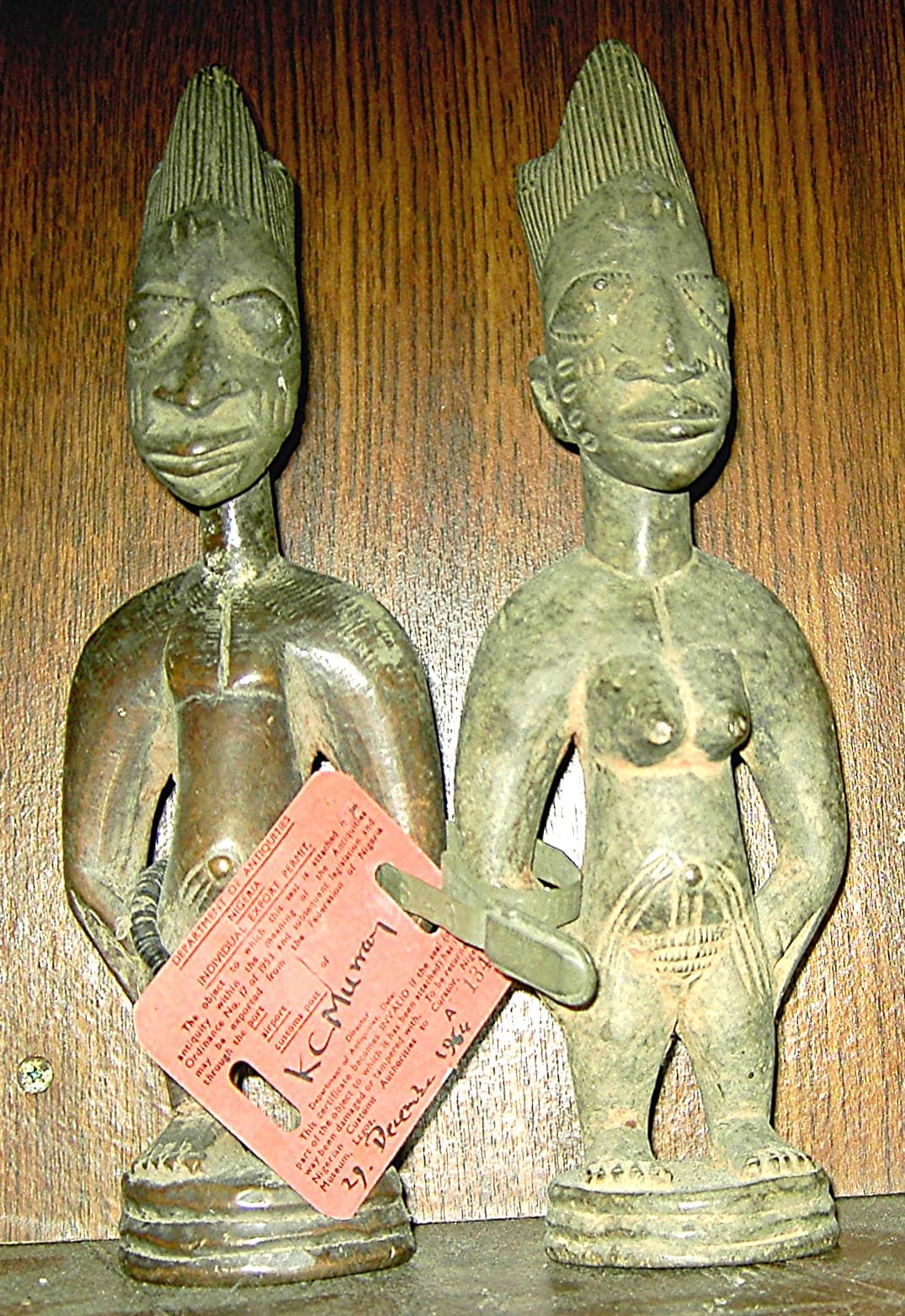
Nigeria
Sacred twin figure used to house the spirit of a deceased twin, ensuring the family's continued blessing.

Congo
Kongo power figure bristling with nails that activate its protective power and bind agreements between parties.

