

213
General
⭐
Moroccan Star
Morocco
The eight-pointed star of Moroccan Islamic art, a geometric symbol of cosmic harmony and divine order.
4.4Learn more →


A miniature of Islamic architecture's most stunning art form, carrying the protective power of geometric perfection.
The brilliant geometric patterning of Islamic tilework — blue, white, turquoise, and gold in mathematically precise arrangements — represents one of humanity's greatest artistic achievements and carries deep spiritual significance rooted in the Islamic understanding that geometric perfection reflects divine order. In Moroccan medinas, Iranian mosques, and Andalusian palaces, these tiles cover walls, floors, fountains, and ceilings in patterns so complex they can take master craftsmen weeks to design and produce. The Arabic word for this tile art is 'zellige' in Morocco, 'kashi' in Iran, and 'hazar' in Turkey, but the spiritual intention is shared: to fill sacred space with a visual reminder that beneath the apparent chaos of the world lies a perfect divine geometry.
Blue, the predominant color of Islamic tilework, was historically one of the most expensive pigments in the world — cobalt blue required ingredients sourced from distant lands, making blue tiles a sign of royal patronage and devotion. The Prophet's Mosque in Medina, the Dome of the Rock in Jerusalem, the Shah Mosque in Isfahan, and the Hassan II Mosque in Casablanca all feature extraordinary blue tile programs that have awed visitors for centuries. Small tile-shaped charms and reproductions bring a piece of this sacred geometric art into everyday life.
As lucky charms, blue ceramic tile pieces or tile-shaped amulets carry the energy of divine mathematical order, the beauty of Islamic artistic achievement, and the cooling, calming energy associated with the color blue. They are particularly appropriate as gifts for those who work in creative or design fields.
Divine geometric order, the beauty that arises from perfect mathematical relationships, and the calming clarity of patterns that reveal the hidden structure of the cosmos beneath apparent surface complexity.
Display a zellige tile fragment or reproduction in a creative workspace to invite geometric inspiration. Hang on a wall near where you work to bring order and focus. Gift to architects, designers, and mathematicians as an emblem of their craft's connection to divine pattern-making.
Traditional Moroccan zellige tilework uses no machine cutting — each tiny piece is hand-cut with a hammer and chisel by artisans who have memorized hundreds of interlocking shapes. A single square meter of fine zellige can require over 800 individually cut pieces and days of skilled labor.
Blue was historically precious and expensive, making it a natural choice for showing devotion and royal patronage. It was also associated with the sky, divinity, and protection across Middle Eastern cultures. The striking contrast of cobalt blue against white geometric patterns creates a visual effect that feels simultaneously calming and energizing.
Islamic theology prohibits representational images of God or the Prophet, directing artistic energy into geometry, calligraphy, and arabesque. The infinite-seeming patterns of Islamic geometry represent the infinite nature of God — patterns that appear to continue beyond any boundary echo the divine quality of having no beginning and no end.
The Shah (Imam) Mosque in Isfahan, Iran; the Alhambra in Granada, Spain; the Hassan II Mosque in Casablanca, Morocco; the Süleymaniye Mosque in Istanbul; and the Dome of the Rock in Jerusalem are among the finest examples. Marrakech's Medersa Ben Youssef and the Bahia Palace also feature extraordinary tilework.
Morocco
The eight-pointed star of Moroccan Islamic art, a geometric symbol of cosmic harmony and divine order.

Morocco
A miniature of the iconic conical Moroccan cooking pot, symbolizing abundance, hospitality, and the warmth of home.
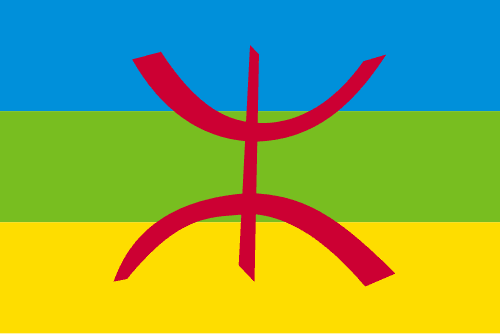
Morocco / Algeria / Tunisia
Ancient Amazigh geometric cross amulets carried for protection and tribal identity across North Africa's indigenous people.

