

402
General
🔷
Blue Ceramic Tile
Middle East / North Africa
A miniature of Islamic architecture's most stunning art form, carrying the protective power of geometric perfection.
4.2Learn more →


The eight-pointed star of Moroccan Islamic art, a geometric symbol of cosmic harmony and divine order.
The eight-pointed star — formed by two overlapping squares rotated 45 degrees — is perhaps the most characteristic motif of Moroccan Islamic decorative art, appearing in zellige tilework, wooden lattice screens (mashrabiya), carved plaster (stucco), embroidered textiles, and hammered metalwork across the country. Known in Arabic as the 'Khatim Suleiman' (Seal of Solomon), this star geometry encodes rich symbolic meaning: the eight points represent the eight gates of paradise, the eight angels bearing the divine throne, and the harmonious union of masculine (the upward triangle) and feminine (the downward triangle) principles that creates cosmic balance.
In Moroccan cities like Fez, Marrakech, Meknes, and Rabat, this star pattern structures the visual environment of the medina — it is the grammar of Moroccan architectural decoration, the repeating visual statement that order and beauty are divine gifts available to all who know how to look. Moroccan master craftsmen called 'maallems' spend years learning to execute this and related geometric patterns with the mathematical precision required for the patterns to tile perfectly, a skill passed from master to apprentice across centuries.
Small Moroccan star pendants and charms in silver, brass, or ceramic carry the energy of this extraordinary artistic tradition and the spiritual intention behind it — the belief that surrounding yourself with perfect geometric order cultivates an ordered and harmonious mind and life. They are particularly popular gifts connecting recipients to the beauty and depth of Moroccan culture.
Cosmic balance, the harmony of opposites, the eight gates of paradise, and the divine order that becomes visible through mathematical beauty. The Moroccan star promises that the same hidden order that governs the cosmos can govern and harmonize your personal life.
Display a Moroccan star amulet or tile in your home's main gathering space to encourage harmonious social interactions. Wear as a pendant to carry the energy of balanced perspective. Gift to anyone embarking on creative or artistic work to invite geometric inspiration into their process.
The eight-pointed star appears in cultures from ancient Mesopotamia to medieval Europe entirely independently — Sumerian records from 3000 BCE show star-of-Ishtar motifs with eight points, and the symbol appears in Buddhist mandalas, Christian church floors, and Islamic art, suggesting it taps into something deeply universal in human geometric perception.
The Seal of Solomon traditionally refers to the six-pointed Star of David hexagram, but in Moroccan Islamic tradition the eight-pointed star also carries the name 'Khatim Suleiman.' Both represent divine wisdom and protection. The eight-pointed version appears in Sufi tradition as a symbol of the eight types of divine compassion.
The star form in zellige is created by hand-cutting dozens of precisely angled pieces that fit together without gaps or overlaps. The master craftsman must cut each piece with a hammer and chisel to exact angles — no two batches are identical, and the skill lies in achieving mathematical precision through physical intuition developed over years of practice.
No, it appears across the Islamic world and beyond, but Morocco has developed particularly refined and distinctive versions of the motif. Moroccan zellige uses it in especially complex multi-star arrangements, and the Moroccan mastery of this geometric vocabulary is recognized as among the finest in Islamic art history.
Middle East / North Africa
A miniature of Islamic architecture's most stunning art form, carrying the protective power of geometric perfection.
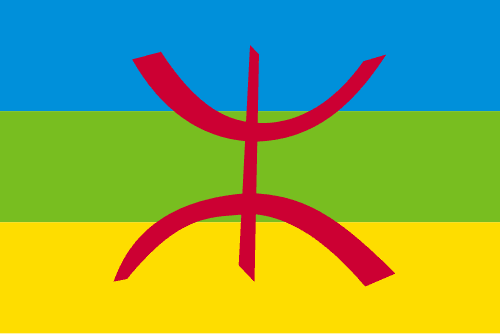
Morocco / Algeria / Tunisia
Ancient Amazigh geometric cross amulets carried for protection and tribal identity across North Africa's indigenous people.

Morocco
A miniature of the iconic conical Moroccan cooking pot, symbolizing abundance, hospitality, and the warmth of home.

