

64
General
🪷
Lotus Flower
India
Rising pure from muddy water, the lotus is the universal symbol of spiritual awakening and untouched beauty across Asia.
4.8Learn more →


The eight-spoked wheel represents the Buddha's Noble Eightfold Path and the turning of cosmic law, one of the most universal Buddhist symbols.
The Dharma Wheel (Dharmachakra in Sanskrit, Dhamma Chakka in Pali) is arguably the most universal symbol of Buddhism and one of the oldest symbols in Indian civilization — wheel imagery appears in the Indus Valley Civilization seals dating to 2500 BCE, centuries before the Buddha's birth. The specific eight-spoked wheel representing the Eightfold Path was set in motion by the Buddha with his first sermon at Sarnath, an event called 'the turning of the Dharma Wheel,' which launched the Buddhist teaching tradition. This moment is depicted in countless Buddhist artworks, with the deer who were present at that first sermon appearing on either side of the wheel — including in the modern Indian national emblem.
The eight spokes of the Dharma Wheel correspond directly to the eight elements of the Noble Eightfold Path: Right View, Right Intention, Right Speech, Right Action, Right Livelihood, Right Effort, Right Mindfulness, and Right Concentration. Each spoke is of identical length and perfectly balanced with the others, visually encoding the teaching that spiritual progress requires all eight elements to be developed simultaneously — no single spoke can bear the wheel's weight without the others. The hub at the center represents the stability of meditation practice, and the outer rim represents the mindfulness that contains and integrates all elements.
The Dharma Wheel is found on the national flag of India (where it appears as the Ashoka Chakra, the wheel of the 3rd-century BCE Emperor Ashoka who spread Buddhism across Asia), on the flag of Sri Lanka, and in the official symbols of multiple Southeast Asian nations — evidence of how deeply Buddhist symbols have been woven into the political and national identities of South and Southeast Asian countries.
The complete path to liberation from suffering, the cosmic order (dharma) that governs all existence, and the transformative power of the Buddha's teaching set in continuous motion.
Place a Dharma Wheel image or sculpture in your meditation space, study, or prayer area. Contemplate each spoke as a reminder of the Eightfold Path element it represents. Wear a Dharma Wheel pendant for continuous connection to Buddhist teaching. The wheel should always be displayed at eye level or above, never on the floor.
The Ashoka Chakra (Dharma Wheel) at the center of India's national flag has exactly 24 spokes, not 8 — representing the 24 hours of the day as well as the 24 attributes of God listed in the Atharva Veda. Emperor Ashoka's original wheel had 24 spokes, and this pre-Buddhist symbolism was incorporated into the specifically Buddhist Dharma Wheel tradition.
The Dharma Wheel specifically depicts the Buddha's teaching path and is distinguished by its exact eight spokes of equal length and the three-sectioned hub representing the Three Jewels (Buddha, Dharma, Sangha). A generic chakra symbol may have varying numbers of petals or spokes corresponding to energy centers. The specific eight-spoked version is uniquely Buddhist.
Yes. The Dharma Wheel represents universal cosmic law and ethical right action — values that transcend Buddhist boundaries. Many people of other traditions or secular backgrounds use the symbol as a reminder of balanced, ethical living. In India especially, it is also a national symbol, making it comfortable for people of all religions.
Unlike the Hindu swastika where rotation direction carries specific meaning, the Dharma Wheel does not have a directional rotation requirement in most Buddhist traditions. The wheel is depicted from the front as a stationary symbol. Some traditions show it spinning clockwise to indicate the active turning of the teaching, but this is artistic rather than prescribed.
India
Rising pure from muddy water, the lotus is the universal symbol of spiritual awakening and untouched beauty across Asia.

India
A leaf from the sacred Bodhi tree, site of the Buddha's enlightenment, is a tangible connection to the moment of history's most celebrated awakening.

India
A string of 108 prayer beads used for mantra repetition, mala beads align the practitioner's energy with divine intention through meditative counting.
India
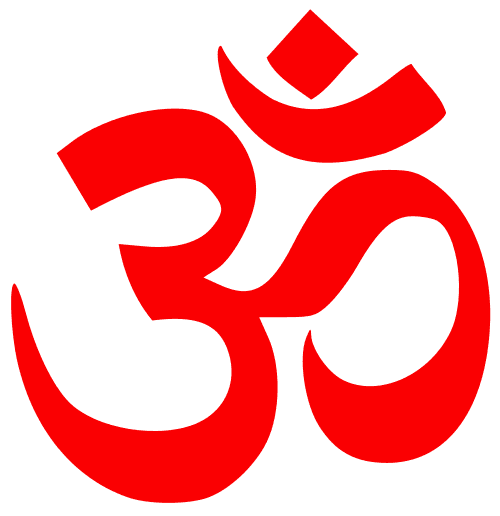
The primordial sound of the universe, Om is the most sacred symbol in Hinduism, Buddhism, and Jainism.

