

21
Health
☥
Ankh
Egypt
The ancient Egyptian key of life, a symbol of immortality and the union of masculine and feminine forces.
4.7Learn more →

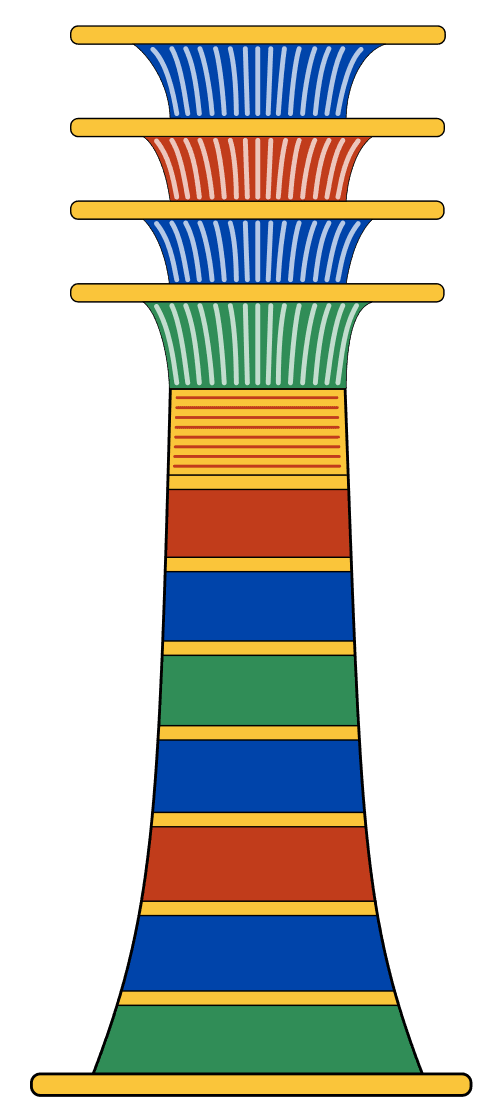
The ancient Egyptian symbol of stability, endurance, and the spine of the god Osiris.
The Djed Pillar is one of ancient Egypt's oldest and most sacred symbols, a column with a broad base and multiple horizontal bands at the top that Egyptologists believe represents either a bundle of reeds, a tree stripped of its branches, or most significantly, the backbone of Osiris, the god of the underworld and resurrection. The word 'djed' translates as 'stability' or 'endurance,' and the symbol appears in hieroglyphic texts as the word for those concepts. In the mythological narrative, the djed was a pillar that contained or concealed the body of the slain Osiris, and its raising became an annual ritual re-enactment of the god's resurrection.
Every year in ancient Egypt the pharaoh and priests performed the 'Raising of the Djed' ceremony, during which a great Djed Pillar column was hoisted upright as a public ritual celebrating the victory of order and life over chaos and death. This ceremony, connected to agricultural fertility and the Nile's annual flood cycle, was one of the most important civic and religious events of the year. The Djed's association with the spine gave it additional meaning as a symbol of personal strength, backbone, and the power to stand upright in the face of adversity.
As an amulet the Djed was placed on the neck of mummies to ensure the stability and power of the deceased in the afterlife. Today it is less commonly known than the Ankh or Eye of Horus, making it a more specialist's choice for those with a deep interest in Egyptian symbolism — prized by collectors and Egyptian spirituality practitioners for its powerful but understated energy.
Stability, endurance, and the eternal spine of divine order. The Djed promises that though life brings disorder and death, the underlying structure of the cosmos is stable and ultimately restorative.
Place a Djed amulet in the home's foundation or at its center to ensure household stability and longevity. Carry during times of personal instability or transition to invoke the quality of groundedness. Place on a work desk to encourage perseverance on long-term projects.
The Raising of the Djed ceremony is one of the earliest documented public religious festivals in recorded history, with depictions dating to the Old Kingdom period over 4,500 years ago. Some Egyptologists believe the ritual may be even older, rooting back to predynastic fertility ceremonies.
The Djed represents stability, duration, and the backbone of Osiris. It was considered the pillar that holds up the sky and the spine that gives the dead the strength to rise again. Wearing it promised the bearer that even in death their essence would stand firm.
Some comparative mythology scholars have drawn connections between the Djed Pillar mythology and biblical references to sacred pillars and resurrection, but these connections remain speculative. The Djed is firmly documented within the Egyptian religious context.
Djed symbols appear extensively in the temples at Abydos (the cult center of Osiris), on columns throughout Karnak and Luxor temples, in the tomb decorations of the Valley of the Kings, and in many museum collections worldwide. Egyptian Museum in Cairo has numerous djed amulets on display.
Egypt
The ancient Egyptian key of life, a symbol of immortality and the union of masculine and feminine forces.

Egypt
The sacred eye of the falcon god, a powerful amulet of healing, protection, and royal authority.

Egypt
The sacred Egyptian beetle of Khepri, symbol of transformation, rebirth, and the rising sun.

