

308
Wealth
🐂
Peruvian Bull (Torito de Pucará)
Peru (Pucará, Puno region)
Brightly painted ceramic bulls from the Puno altiplano region — Peru's most widely displayed home luck charm for prosperity and family protection.
4.8Learn more →

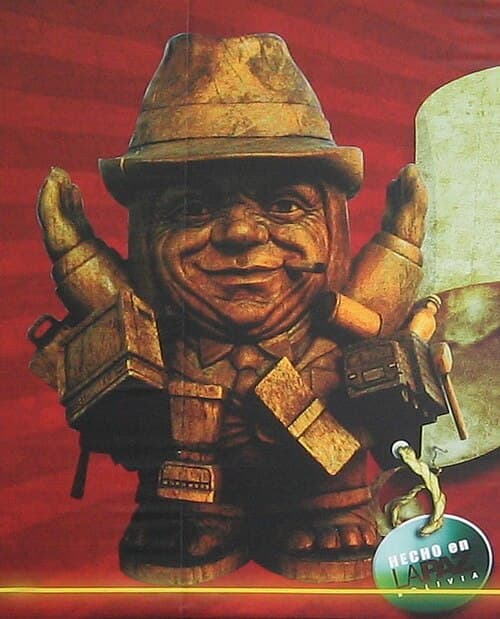
The rotund, cheerful Aymara deity of abundance — a small figure loaded with miniature goods that grant their real-world equivalents to devoted owners.
Ekeko is one of the most distinctive and beloved deities of the Andean world — a short, round, perpetually smiling figure of an Aymara man dressed in traditional clothing, literally festooned from head to toe with miniature versions of everything the heart could desire: houses, cars, bags of food, money, diplomas, airline tickets, consumer goods, and all manner of wealth. The name Ekeko likely derives from the Aymara word for 'dwarf' or 'short person,' though tradition identifies him as a fully divine entity rather than a merely human character.
Ekeko's origins are ancient — archaeologists have found pottery figures with similar forms dating to the Tiwanaku civilization (400-1100 CE) near Lake Titicaca, suggesting this deity's association with abundance and material gifts predates the Inca conquest of the Aymara people. In contemporary Bolivian practice, Ekeko is the patron deity of the famous Alasitas festival held each January 24th in La Paz, where miniature versions of desired goods are purchased, blessed by Catholic priests and/or yatiris (Aymara spiritual specialists), and given to Ekeko figures in the belief that the real objects will follow within the year.
The miniature goods hung on an Ekeko figure are understood not as decorations but as active petitions — specific requests made concrete through the purchasing and offering of miniature versions. A miniature diploma says 'I want to graduate.' A miniature house says 'I want to own a home.' The act of finding and hanging the right miniature is itself a creative visualization practice, declaring in physical terms exactly what you intend to attract.
Ekeko represents the belief that the universe responds to specific, concrete desires expressed with joy and gratitude rather than anxiety and desperation. His perpetual smile teaches that abundance flows toward those who welcome it cheerfully, and his loaded figure demonstrates that it is both acceptable and spiritually good to want things — to desire a good life filled with the material provisions of comfort and security.
Place your Ekeko figure in a prominent spot in your home, ideally in the main living area or your workspace. Hang miniature versions of the things you desire to attract on his body — available at Bolivian craft markets and some import shops. On January 24th, bring your Ekeko to an Alasitas market if possible, or simply renew your intentions by adding new miniatures and thanking him for what has already arrived.
Bolivia's Alasitas festival has grown into one of the largest luck-charm markets in the world, with hundreds of vendors selling miniature versions of every imaginable object and hundreds of thousands of Bolivians participating in what is simultaneously a major Catholic festival and a living Aymara ritual tradition. The festival was declared UNESCO Intangible Cultural Heritage in 2017.
There is no prescribed number. Start with miniatures representing your most important current desires — three to seven is a manageable and meaningful number. As desires are fulfilled, you can remove the relevant miniatures with gratitude and add new ones. The key is that each miniature represents a genuine, specific desire rather than a general wish for 'more stuff.'
You can substitute photographs, hand-drawn images, or handwritten notes describing your desire. Some practitioners cut images from magazines in the tradition of vision boarding and attach them to the Ekeko. The specificity and sincerity of your desire matters more than the material form of its representation.
Bolivian folk tradition typically faces Ekeko toward the entrance of the home so he sees those entering — and so those entering see his abundance and can share in it. Some practitioners face him toward the east (direction of the rising sun and new beginnings) or toward a window with natural light, connecting his abundance energy to solar vitality.
Peru (Pucará, Puno region)
Brightly painted ceramic bulls from the Puno altiplano region — Peru's most widely displayed home luck charm for prosperity and family protection.

Peru, Bolivia (Inca civilization)
A miniature llama representing the sacred Andean animal that built an empire — carrier of burdens, provider of wool and meat, and beloved companion of Andean peoples.

Peru (Andean civilizations)
The stepped cross of the Andes representing the cosmic order of Andean cosmology — the three worlds of the Pachamama universe.

