

308
Wealth
🐂
Peruvian Bull (Torito de Pucará)
Peru (Pucará, Puno region)
Brightly painted ceramic bulls from the Puno altiplano region — Peru's most widely displayed home luck charm for prosperity and family protection.
4.8Learn more →


A miniature llama representing the sacred Andean animal that built an empire — carrier of burdens, provider of wool and meat, and beloved companion of Andean peoples.
The llama (Lama glama) is so central to Andean civilization that the Inca empire literally could not have existed without it. For five thousand years, llamas served as the primary pack animals of South America's high altiplano, carrying goods over the Inca road system (Qhapaq Ñan), providing fiber for clothing, meat for food, and fat for lamps. Llama caravans were the arteries of Andean commerce, connecting highland and coastal communities across thousands of miles of mountain terrain. The llama was not merely useful but sacred — white llamas were sacrificed in the most important Inca state ceremonies, particularly at Inti Raymi (Festival of the Sun), as the most valued offering to the sun god Inti.
Miniature llama figurines, called conopas, were the most common type of Inca household charm. Made of stone, clay, or precious metals, conopas were placed on domestic altars with small offerings of coca leaves and chicha (corn beer) to ensure the health and increase of the family's actual llama herds. This practice continues in some Andean communities today, where ceramic llama figures are maintained on small altars with ongoing offerings, maintaining the ancient relationship between household luck charms and actual animal prosperity.
Contemporary llama figurines for luck range from simple clay versions bought as Peruvian souvenirs to sophisticated silver pieces that echo Inca metalworking traditions. The global popularity of llamas as charming, somewhat comic animals in internet culture has given the llama figurine a playful second life as a good-luck object accessible to everyone.
The llama figurine represents hard work rewarded, the carrying of burdens with grace, abundance from practical skill and dedicated labor, and connection to Andean ancestral wisdom. It embodies the Andean value of ayni — reciprocity and mutual care — between humans and the animals who sustain them. As a luck charm, the llama attracts practical prosperity and the steady accumulation of good things through honest effort.
Keep a llama figurine on your desk or work altar to attract the steady prosperity associated with diligent work. Place llama figures in pairs (reflecting the Andean preference for duality) in your home. Offer small amounts of dried herbs or a sprinkle of corn as symbolic offerings to llama conopas in the traditional way to activate their protective power.
Llamas are one of only a few animals that produce a humming sound — a gentle 'mmm' that indicates contentment — and they are known to hum lullabies to their young. In Inca tradition, the sound of the llama herd humming was considered auspicious and calming. Modern therapy llama programs at hospitals report that patients find the animals' gentle humming genuinely soothing.
Llamas are the larger of the two Andean camelids, historically associated with transport and trade — they carry burdens. Alpacas are smaller and bred primarily for their exceptionally fine fiber. A llama figurine emphasizes work, trade, and practical prosperity. An alpaca figurine emphasizes comfort, creativity, and the abundance of beautiful things. Both are valid lucky charms; your choice depends on what kind of abundance you're attracting.
Traditional offerings to llama conopas include dried coca leaves (the most sacred Andean plant), chicha (corn beer or corn flour mixed with water), small pieces of incense, and occasionally drops of wine or aguardiente (sugarcane spirit). The offering should be made with sincere gratitude and a clear request for the llama's blessing.
Traditional stone conopas often had a small hollow or cup carved in the back specifically to hold offerings of coca leaves, corn kernels, or drops of chicha. This design made the figure an active ritual object requiring the owner's ongoing participation — you could not simply place it and forget it, but needed to engage with it regularly through offerings.
Peru (Pucará, Puno region)
Brightly painted ceramic bulls from the Puno altiplano region — Peru's most widely displayed home luck charm for prosperity and family protection.
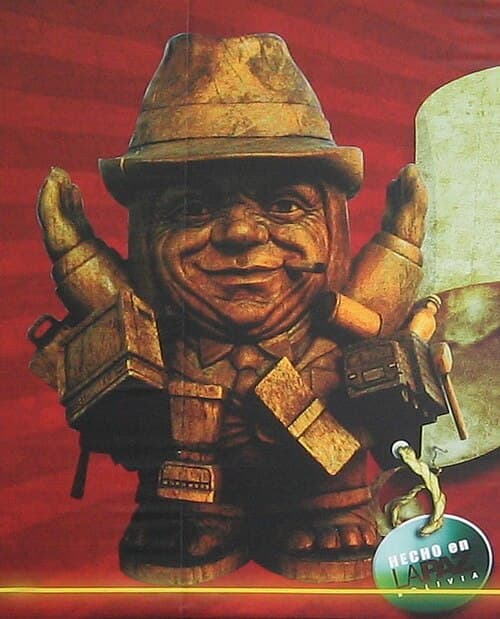
Bolivia (Tiwanaku civilization and Aymara people)
The rotund, cheerful Aymara deity of abundance — a small figure loaded with miniature goods that grant their real-world equivalents to devoted owners.

Peru (Andean civilizations)
The stepped cross of the Andes representing the cosmic order of Andean cosmology — the three worlds of the Pachamama universe.

