

32
Protection
✝️
Crucifix
Early Christianity (Rome)
The Crucifix — a cross bearing the corpus (body) of Christ — is the central symbol of Christianity and one of the most powerful protective charms in the Western world.
4.8Learn more →

Americas - South
8 charms from this country
Peru has one of the world's richest Indigenous lucky-charm traditions, rooted in the Inca civilization and the many Andean cultures that preceded and coexist with it. The Peruvian tumi — the ceremonial sacrificial knife with a semicircular blade — is the supreme symbol of Peruvian national luck, displayed in homes and offices for good fortune. The chakana (Andean cross) encodes Inca cosmology in a cross of equal arms with stepped sides, representing the three worlds: Hanan Pacha (upper), Kay Pacha (this world), and Ukhu Pacha (inner).
The torito de Pucará — the ceramic bull from Pucará — is placed on the rooftops of new homes to bless the structure and its inhabitants. The ekeko — the small figurine from Tiahuanaco origin, laden with miniature goods — is the Andean deity of abundance and luck, and his image surrounded by tiny food, vehicles, and money is placed in homes to attract the real thing. Worry dolls are a Guatemalan tradition that has permeated Peruvian tourist culture.
Early Christianity (Rome)
The Crucifix — a cross bearing the corpus (body) of Christ — is the central symbol of Christianity and one of the most powerful protective charms in the Western world.
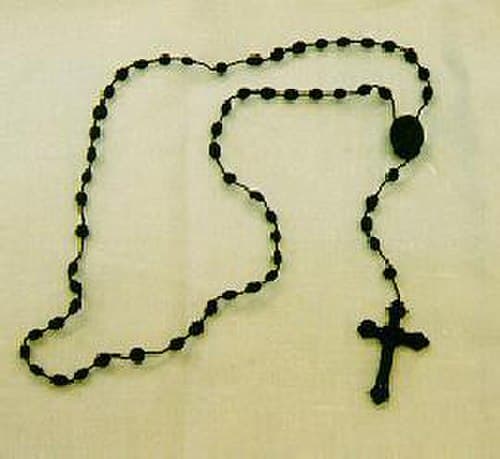
Medieval Europe
Rosary beads are the most recognizable Catholic prayer tool in the world, used by hundreds of millions for meditative prayer, protection, and the invocation of divine grace.

Peru (Chimú and Inca civilization)
The iconic ceremonial sacrificial knife of ancient Andean civilization, now a symbol of Peruvian identity and good fortune.

Peru (Andean civilizations)
The stepped cross of the Andes representing the cosmic order of Andean cosmology — the three worlds of the Pachamama universe.

Peru (Pucará, Puno region)
Brightly painted ceramic bulls from the Puno altiplano region — Peru's most widely displayed home luck charm for prosperity and family protection.
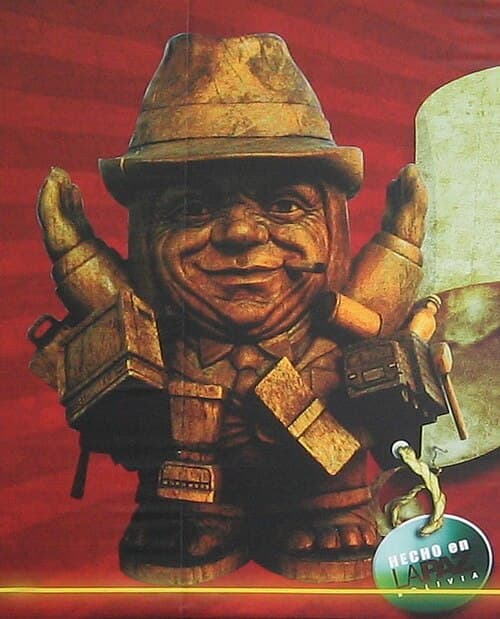
Bolivia (Tiwanaku civilization and Aymara people)
The rotund, cheerful Aymara deity of abundance — a small figure loaded with miniature goods that grant their real-world equivalents to devoted owners.

Peru, Bolivia (Inca civilization)
A miniature llama representing the sacred Andean animal that built an empire — carrier of burdens, provider of wool and meat, and beloved companion of Andean peoples.

Spain
The golden metallic mineral of abundance and confidence, carried as a charm to attract wealth, repel negative energy, and activate the solar will to succeed.

