
127
General
🪢
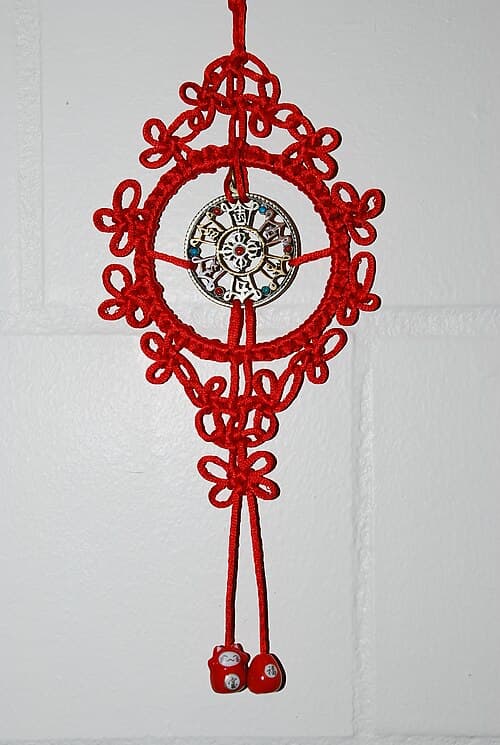
Chinese Knot
China
Chinese decorative knots are intricate single-cord creations representing unity, good fortune, and the endless continuity of blessings — each pattern carries its own specific meaning.
4.3Learn more →

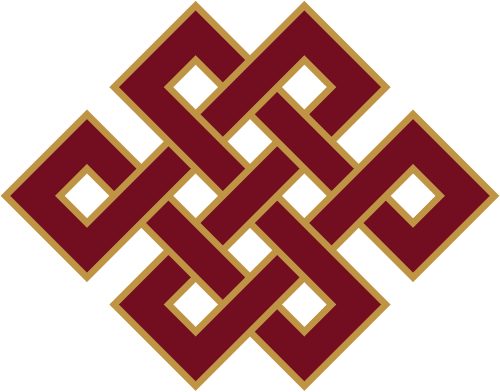
The Mongolian Eternal Knot (Ulzii) is one of the eight auspicious symbols of Tibetan Buddhism, representing the endless interdependence of all phenomena and the infinite compassion of the Buddha.
The Ulzii (Mongolian Eternal Knot) is the Mongolian name for the Buddhist endless knot (Shrivatsa), one of the Ashtamangala — the eight auspicious symbols of Tibetan Buddhism that appear in temple art, ritual objects, ceremonial textiles, and protective talismans across the Buddhist world. The endless knot's defining visual characteristic is precisely its name: it forms a continuous interlaced pattern with no beginning and no end, no loose thread and no terminus, creating a perfectly self-referential geometric object that is both complete and infinite.
In Mongolian Buddhist tradition (which blends Tibetan Buddhism with pre-Buddhist Tengrism, the shamanic religion of the steppe peoples), the Ulzii carries layered meanings at different levels of interpretation. At the cosmic level, it represents the interdependence of all phenomena — the Buddhist teaching that nothing exists independently but only in relation to everything else. At the social level, it represents the interconnection of compassion and wisdom, the two qualities that together constitute enlightenment. At the personal level, it represents the endless continuity of positive karma that rewards right action — what you send out returns to you continuously.
In Mongolian daily life, the Ulzii appears on the national flag, on the traditional deel (robe), on silver jewelry and snuff bottles, woven into felt ger (yurt) wall decorations, embroidered into horse saddle blankets, and cast onto bronze ritual objects. Its ubiquity in Mongolian material culture marks it as perhaps the single most visually prominent Mongolian cultural symbol, carrying the full weight of Buddhist metaphysics expressed in the aesthetic language of nomadic art.
The endless interdependence of all existence, the infinite loop of cause and effect wherein good action returns as good fortune, the unity of compassion and wisdom, and the harmonious complexity of a life well-lived.
Wear the Ulzii as a silver pendant or ring for continuous protection and the reminder of interconnection. Hang the pattern on a home wall as a meditation object — trace the knot's lines mentally as a mindfulness practice. Use in meditation spaces alongside other Buddhist symbols. Give as a gift with the explicit message of wishing the recipient the endless return of whatever good they put into the world.
The Mongolian endless knot appears on the current Mongolian national flag within the Soyombo symbol — a unique composite symbol developed in 1686 by the Buddhist monk and scholar Zanabazar, who encoded the complete cosmology of Mongolian Buddhist civilization into a single design that now appears on every Mongolian passport, coin, and official document.
Yes — they are the same symbol. The Mongolian Ulzii is the regional name for the Buddhist Shrivatsa or endless knot, one of the eight auspicious symbols (Ashtamangala). The visual form is identical; the regional name reflects the symbol's deep integration into specifically Mongolian Buddhist cultural tradition.
They are closely related and visually similar. The Buddhist endless knot emphasizes spiritual interdependence and the infinite compassion-wisdom loop. The Chinese mystic knot (Pan Chang knot) emphasizes the endless circulation of good fortune and is used more in feng shui wealth contexts. Both express 'infinity and interconnection' but with different primary associations.
Yes — the endless knot is widely used across all Buddhist countries by both practitioners and non-practitioners as a generally auspicious symbol. Its meaning of interconnection and the endless return of good karma is universally applicable. The important thing is to wear it with respect for its sacred origins in Buddhist iconography.
China
Chinese decorative knots are intricate single-cord creations representing unity, good fortune, and the endless continuity of blessings — each pattern carries its own specific meaning.
China
The Mystic Knot (Pan Chang Knot) is feng shui's most powerful good fortune symbol — an endless interlaced pattern representing the infinite flow of luck and the interconnection of all blessings.

China
The red string bracelet is one of East Asia's most widely worn protective charms, believed to ward off evil, bind fated relationships, and carry the protective power of the color red.

South Korea
Pujok are Korean shamanistic talismans made from yellow paper with red ink inscriptions, used for protection against evil spirits, illness, and misfortune in homes and on the body.

